Business news and discussion on TalkFuse.
Jensen Huang is back, and so is the slop in our floating paradise
Developed over time first seen 1 day ago
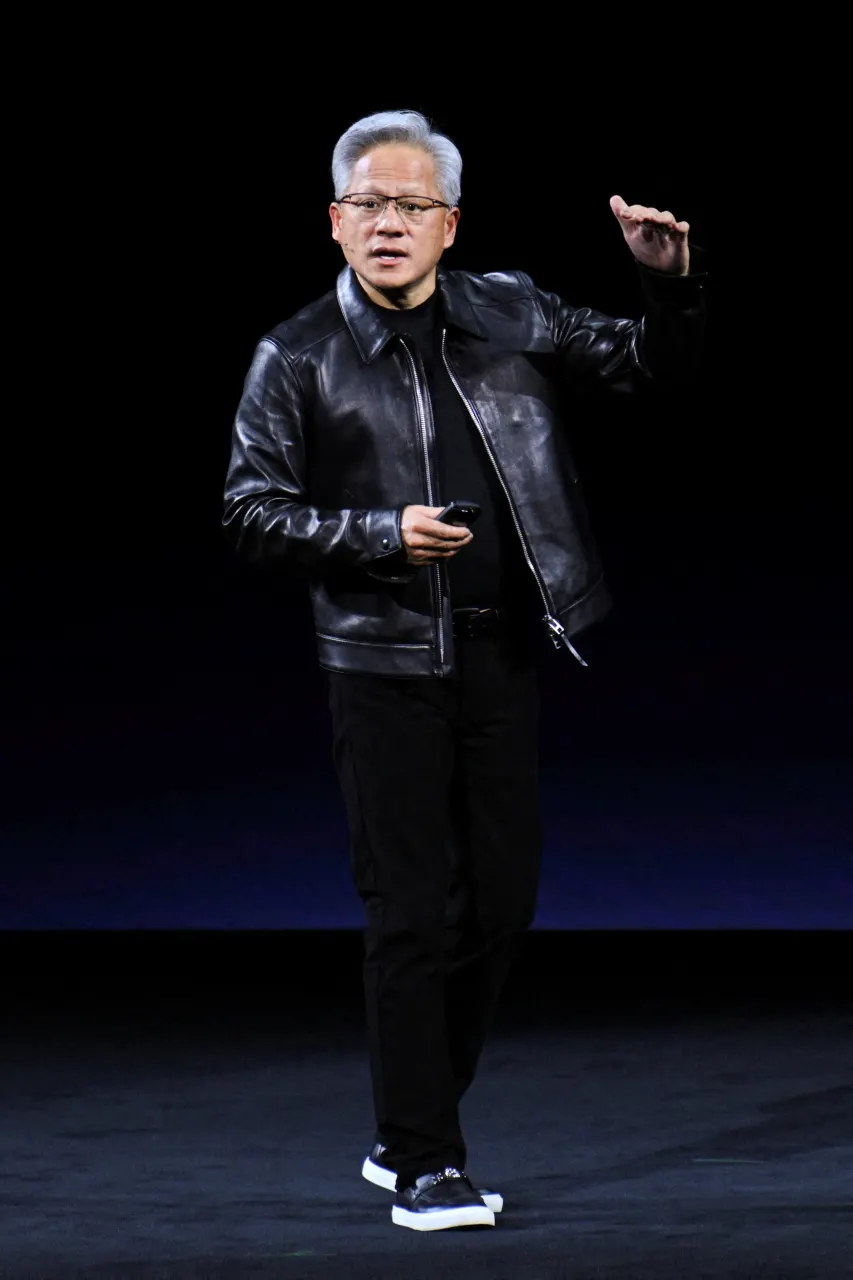
Jensen Huang has returned as Nvidia’s chief executive, prompting debate over whether journalism should be judged by whether it secures a particular outcome. The opinion article argues that reporting should establish the facts, noting that details behind concerns about Huang and national security remain unclear.
It also covers two other technology and culture disputes. The Caine Prize committee upheld Zimbabwean writer Simba Steyn Kundizeza’s award after an AI detector estimated his story was about 98% generated; the article says the committee’s Instagram post was later estimated at 99%. Finally, it describes Palmer Luckey’s proposed floating city, SLAB, as a project intended to let industries such as medical research and metal processing operate beyond state and local laws.
- Sources
- 2
- Outlets
- 2
- Left · Centre · Right
- 0 · 1 · 1
In short
- Jensen Huang has returned to lead Nvidia.
- The Caine Prize committee upheld a disputed award.
- Palmer Luckey proposes a floating city for industry.
How this story developed
- 14 hours ago The new coverage brings together three technology and culture controversies: Jensen Huang’s return as Nvidia chief executive, an AI authorship dispute over an African writing prize, and a proposed floating city.
- 20 hours ago The opinion piece links Jensen Huang’s return as Nvidia chief executive to wider arguments about media accountability, artificial intelligence and regulation.
- 20 hours ago Jensen Huang has returned as Nvidia’s chief executive, prompting debate over whether journalism should be judged by whether it secures a particular outcome.
Full account
Jensen Huang’s return as Nvidia chief executive has revived questions around the company’s leadership and the media’s role in scrutinising it. One opinion writer argued that the reinstatement should not be treated as proof that accountability reporting has failed: the press can investigate and report what is known, while the outcome need not match journalists’ personal preferences. The writer said reports had left some details of the controversy unclear and did not establish whether Huang had compromised US national security. The account also noted that Huang said he would attend therapy and appeared without his customary leather jacket after returning.
The same commentary turned to a separate literary dispute. Zimbabwean writer Simbarashe “Simba” Steyn Kundizeza won the Caine Prize, worth $13,000, for “The Blue Fighter”, a story about a family pushed into poverty in postcolonial Africa. After an Atlantic writer used the Pangram detector, which estimated that the story was about 98 per cent AI-generated, the prize committee conducted what it described as a human-centred inquiry, including speaking with the author about his writing process. The committee concluded the story was not AI-generated. The commentary then said a Pangram check of the committee’s Instagram announcement estimated it was 99 per cent AI-generated, and disputed claims circulating on X that the detector was biased against non-native English speakers.
A third subject in the commentary was SLAB, a proposed floating settlement unveiled by Palmer Luckey. It is presented as a place where industries such as medical research and metal processing could operate with fewer state and local restrictions. Luckey has described the project as a way to strengthen the United States and encourage competition in governance. The writer took a critical view, arguing that the prospect of building a city offshore reflects how difficult it has become to develop certain industries on land.
Separately, Denny’s marked Huang’s return by restoring a plaque at a Silicon Valley restaurant. The plaque identifies a booth where Huang and his co-founders discussed the idea for Nvidia, founded in 1993. The chain said it learnt on 13 November, the day after Huang’s resignation, that the plaque had been taken down, and that it had since put it back. It did not say who removed it or explain why.
Where outlets differ
From the full account, which is AI-written from the sources:
The first source is a sharply opinionated column covering Huang’s reinstatement, the Caine Prize AI dispute and Luckey’s floating-city proposal. The second is a brief, largely factual report focused on Denny’s restoring the Nvidia plaque; it supplies no account of the wider controversy around Huang’s departure or return.
The first source treats Pangram’s AI estimates as accurate and rejects allegations of bias, while reporting that the Caine committee reached a different conclusion about the story after speaking with its author. The second source does not address AI detection or the prize.
The first source characterises SLAB as evidence of difficulties facing industry on land and frames the project critically. The second source makes no mention of SLAB.
Centre outlets 1
Only here: booth, waiting, denny, welcomes, nvidia
Right-leaning outlets 1
Only here: slop, floating, paradise
Every side used: jensen, huang, back
Headline columns compared word for word; nothing in them is AI-written.
Steelman: both sides, in good faith
The strongest fair case each way — we don't pick a winner.
The case for
Journalism is most trustworthy when it establishes what can be verified and makes uncertainty clear, rather than shaping its reporting to secure a preferred outcome. In the Caine Prize dispute, an AI detector’s estimate is not conclusive proof of authorship, so upholding the award may reflect a fair insistence on evidence and human judgement. A floating city could also offer room to test new technologies and ways of organising industry.
The case against
Journalism can pursue accountability and inform the public about consequences without abandoning factual standards; concerns about national security may warrant scrutiny even when some details remain unclear. In the prize dispute, a detector’s limitations do not make questions about possible AI use irrelevant, and readers may reasonably expect transparent, consistent review. A project designed to operate beyond state and local laws also raises legitimate concerns about oversight, public protections and who bears the risks.
Explained simply
Jensen Huang is the co-founder and chief executive of Nvidia, a company whose chips are widely used to develop and run artificial intelligence. His role has put him at the centre of debate about how technology firms should be scrutinised, including when questions are raised about national security.
The Caine Prize is a literary award for African writing. Its committee’s use of an AI detector to assess a story has raised questions about how reliable such tools are when judging creative work.
Palmer Luckey, who founded defence technology company Anduril, has proposed SLAB, a floating city intended to host industries such as medical research and metal processing outside state and local laws. The idea touches on broader questions about who sets rules for new technologies and where those rules apply.
Coverage · 2 sources
Bias meters
From 2 rated sources.