World news and discussion on TalkFuse.
Why was this madman on the streets at all? Questions as Huntingdon train knifeman convicted of trying to murder 14
Developed over time first seen 1 day ago
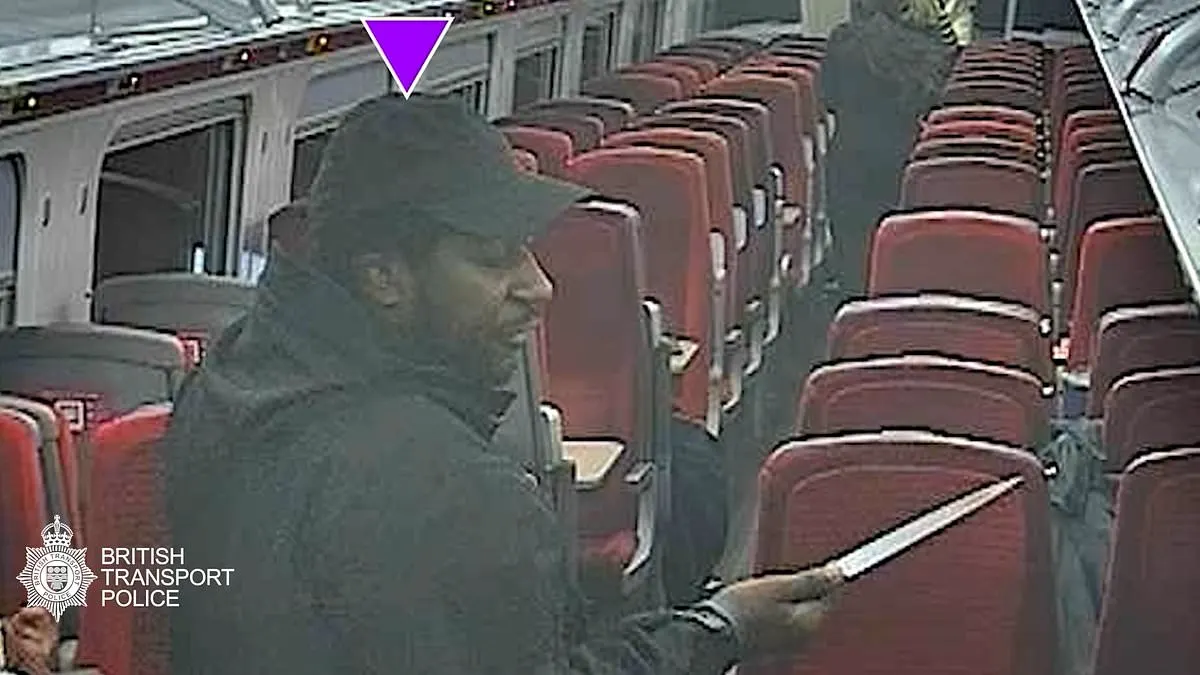
Anthony Williams has been convicted of trying to murder 14 people during attacks between Peterborough and London over Halloween weekend, including a five-minute stabbing rampage on an LNER train. The case has raised questions about whether earlier police or healthcare intervention could have prevented some or all of the attacks.
Two Cambridgeshire police officers face a gross misconduct hearing over their failure to investigate an allegation that Williams injured a man with a knife days before the attacks. Police also received reports of his erratic behaviour but arrived too late; NHS England is investigating the care he received. Williams, 33, had schizophrenia and had stopped taking his medication days earlier, but psychiatrists said he retained the capacity to form intent. He remains at Rampton high-security psychiatric hospital pending sentencing in February.
- Sources
- 3
- Outlets
- 2
- Left · Centre · Right
- 0 · 0 · 3
In short
- Anthony Williams was convicted of trying to murder 14 people.
- Ten people were injured in a five-minute attack on an LNER train.
- Police conduct and Williams’s healthcare are under investigation.
How this story developed
- 8 hours ago Two Cambridgeshire police officers face a gross misconduct hearing over their failure to investigate an allegation that Anthony Williams had injured a man with a knife days before his attacks.
- 14 hours ago Anthony Williams has been convicted of trying to murder 14 people during a series of attacks across England, including a five-minute stabbing spree on an LNER train. The case has raised questions about whether police or healthcare services could have intervened before the Halloween weekend rampage.
- 14 hours ago Anthony Williams has been convicted of trying to murder 14 people during attacks between Peterborough and London over Halloween weekend, including a five-minute stabbing rampage on an LNER train.
- Daily Mail The moment I never thought I'd see my family again: Huntingdon attack victim shares chilling footage of hero passengers fighting back against knifeman during train rampage
- Daily Mail Why was this madman on the streets at all? Questions as Huntingdon train knifeman convicted of trying to murder 14
- GB News Huntingdon train attack survivor speaks to GB News after knifeman found guilty of 14 counts of attempted murder
Full account
Anthony Williams has been convicted of attempting to murder 14 people in a series of knife attacks that ended on a train near Huntingdon. The verdict has brought renewed scrutiny to earlier reports about his behaviour and to the care he received before the violence.
Ten of the attempted murder convictions relate to passengers and staff on an LNER service travelling from Doncaster to London on the evening of 1 November 2025. The other four relate to attacks before he boarded the train. The reports provided do not establish that any particular intervention would have prevented the later attacks, but they describe several occasions when concerns about Williams came to the attention of police.
Passengers on the train fled through the carriages as warnings spread that someone had been stabbed. Some hid in toilets or beneath seats; others gathered at the far end of the train. According to one report, Williams spoke about the devil and told passengers they would die. People who tried to hold him back suffered serious injuries.
Among them was LNER employee Samir Zitouni, 48. He helped form a barrier to slow Williams and used a pan to defend those behind him. He was repeatedly attacked and sustained life-threatening injuries, including damage to his lungs and spleen. Stephen Crean, 61, urged passengers in the buffet car to close a door before Williams stabbed him in several places.
Raza Aslam, a 45-year-old father of four, was travelling home to north London after delivering a car for the dealership where he worked. He said he was looking at his phone when another passenger shouted that there had been a stabbing and told everyone to run. Within minutes, Mr Aslam had picked up a pan and joined the effort to resist Williams.
Mr Aslam said the speed of the train, the darkness outside and the lack of any obvious way to escape left him frightened that he would not survive. He recalled calling for people to move away while also urging them to help anyone who fell. He was stabbed in the arm, suffering damage to a nerve, and said he faces a lengthy recovery as well as anxiety and post-traumatic stress.
Where outlets differ
From the full account, which is AI-written from the sources:
Both supplied reports are from the Daily Mail. The first concentrates on the police and healthcare questions, the earlier incidents, the trial evidence and the injuries to several victims. The second centres on Raza Aslam’s account of the train attack and its continuing effect on him.
The first describes the earlier violence as taking place over the Halloween weekend, while the second says the four other victims were attacked in the 24 hours before the train stabbings. The excerpts do not provide enough detail to reconcile those time frames.
Steelman: both sides, in good faith
The strongest fair case each way — we don't pick a winner.
The case for
The case warrants scrutiny of whether police and healthcare services missed opportunities to reduce a foreseeable risk, especially given the earlier knife-injury allegation and Williams’s recent treatment history. Examining decisions and care could identify gaps in coordination and help prevent similar harm while ensuring people in crisis receive appropriate support.
The case against
A serious attack does not by itself show that authorities had enough evidence or legal grounds to detain Williams or impose treatment beforehand. Schizophrenia does not automatically make someone violent, and any review should distinguish what was reasonably knowable at the time from what became clear after the attacks, while protecting fair process for those involved.
Explained simply
Schizophrenia is a mental health condition that can affect a person’s thoughts and perceptions. Treatment may include medication and support from health services, but having the condition does not by itself establish why someone committed a crime or whether they were legally responsible.
In England, police investigate reported offences, while NHS services assess and care for people with mental health needs. Concerns about an earlier incident can prompt separate reviews of police conduct and clinical care, which examine what information was available and how agencies responded.
The case involves both the criminal justice system and questions about public services’ roles when someone may pose a risk. Those reviews are separate from the court’s decision on the offences and may inform scrutiny of how agencies work together.
Coverage · 3 sources
Bias meters
From 3 rated sources.
- Daily MailRightWhy was this madman on the streets at all? Questions as Huntingdon train knifeman convicted of trying to murder 14
- Daily MailRightThe moment I never thought I'd see my family again: Huntingdon attack victim shares chilling footage of hero passengers fighting back against knifeman during train rampage
- GB NewsRightHuntingdon train attack survivor speaks to GB News after knifeman found guilty of 14 counts of attempted murder