World news and discussion on TalkFuse.
Trump’s portfolio made 43 Nvidia trades, including sale after China visit
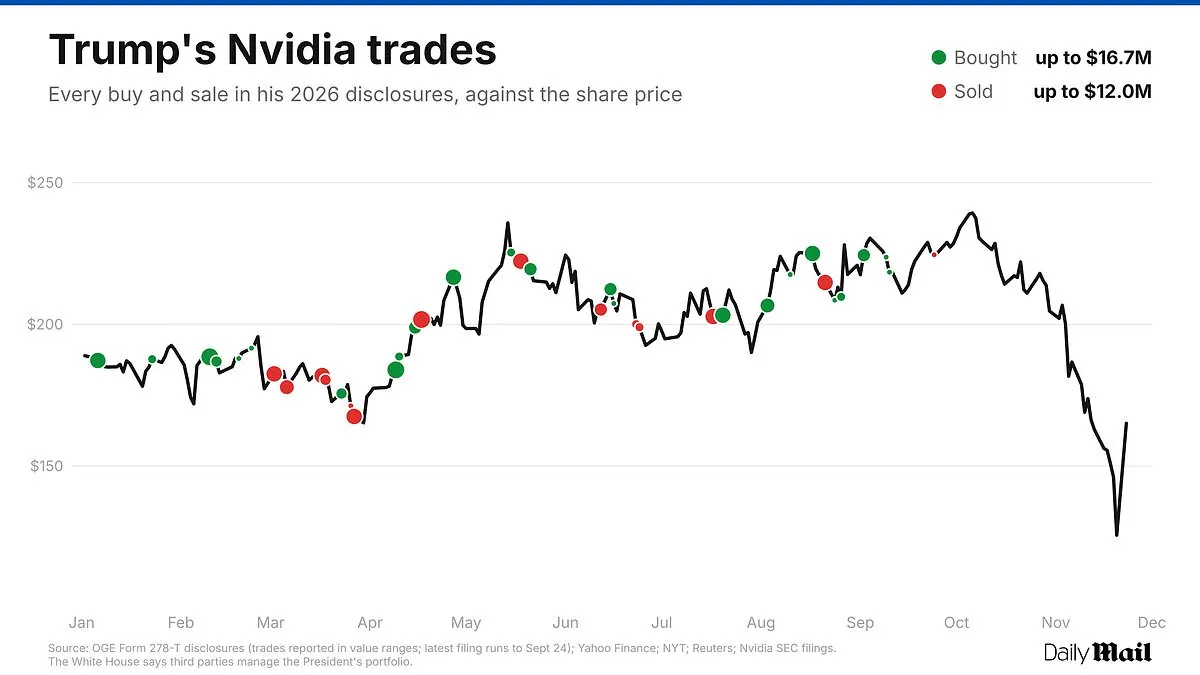
Donald Trump's stock portfolio bought and sold Nvidia shares dozens of times this year, including a sale of between $500,000 and $1 million on 18 May, the first Monday after he returned from a state visit to China with Nvidia chief executive Jensen Huang. The sale came days after Marco Rubio reportedly briefed Trump on Huang's ties to Alice Huang, a Megaspeed executive whom US officials believe is a Chinese intelligence asset. Trump has denied receiving the briefing and questioned the intelligence, and the timing has renewed scrutiny of the president's financial interests in a company central to US-China technology policy.
Between January and September, filings with the US Office of Government Ethics list 28 Nvidia purchases worth up to $16.7 million and 15 sales totalling up to $12 million. The forms report trades in broad value bands rather than exact sums, so these totals use the top of each band; at the bottom of the bands, purchases come to $5.1 million and sales to $4.4 million. The White House says third-party institutions manage the portfolio independently and that Trump and his family cannot direct its investments. The disclosures do not show who decided on each trade, and there is no evidence that Trump directed any of them.
In short
- Trump's portfolio traded Nvidia shares amid scrutiny of Jensen Huang's ties.
- Reported figures use the top of value bands, so actual amounts may be lower.
- The White House says third parties manage the portfolio, and no evidence links Trump to trades.
Steelman: both sides, in good faith
The strongest fair case each way — we don't pick a winner.
The case for
Defenders of the president's position would argue that a passive, third-party-managed portfolio is precisely what the law intends to separate public office from private wealth, and that the absence of any evidence that Trump directed these trades, together with the White House's account that his family cannot direct the investments, means the timing is coincidental rather than meaningful. They would stress that Trump has publicly disputed the intelligence about Huang and that holding a large, diversified market position in a leading American firm is ordinary for an investor, not evidence of improper influence. On this view, asking for proof of intent before drawing conclusions is the fair standard, and scrutiny that rests on proximity in time risks treating a financial holding as guilt by association.
The case against
Critics would argue that the appearance of conflict matters in its own right, because a sitting president whose holdings include a company at the centre of US-China chip policy creates a standing incentive that the public is entitled to see clearly. They would note that 43 trades in a single year, one of them falling just after a China visit and days after a briefing about a potential security concern, is the kind of pattern that ethics rules exist to make transparent, and that the forms' broad value bands and undisclosed decision-makers prevent the public from judging the matter properly. On this view, the remedy is not a finding of wrongdoing but full disclosure and stronger safeguards, such as divestment or a blind trust, so that the presidency cannot be questioned on the strength of a portfolio's timing.
Explained simply
Nvidia is a US technology company that designs the powerful computer chips used to build and run artificial intelligence, and it is now one of the most valuable firms in the world. The United States has restricted the sale of its most advanced chips to China on security grounds, which puts Nvidia at the centre of a wider contest between Washington and Beijing over technology. Its chief executive, Jensen Huang, has been a prominent voice in those debates.
US presidents are not legally required to hand their investments to a blind trust, but they must file public financial disclosures, which are the main way outsiders can see what they own and trade. These filings go to the Office of Government Ethics, a federal body that oversees conflicts of interest in the executive branch. The White House says the president's portfolio is managed by outside financial institutions and that the Trump family cannot direct its investments, while the filings report trades in value ranges rather than exact sums.
The central question is whether a president's personal holdings in a company so tied to national security and trade policy could create a conflict of interest, a matter that is separate from whether any wrongdoing has occurred. Separate reporting has also raised concerns about Nvidia-linked business ties involving China, which Trump has disputed. Because the public record does not show who made each decision, readers are left to judge how much weight the timing and size of the trades should carry.
Read the full article at the source →
Originally published by Daily Mail as “Trump’s 43 Nvidia trades laid bare… and the sale ‘days after Rubio’s Jensen Huang spy warning’”.