World news and discussion on TalkFuse.
China becomes the second country to recover a rocket booster
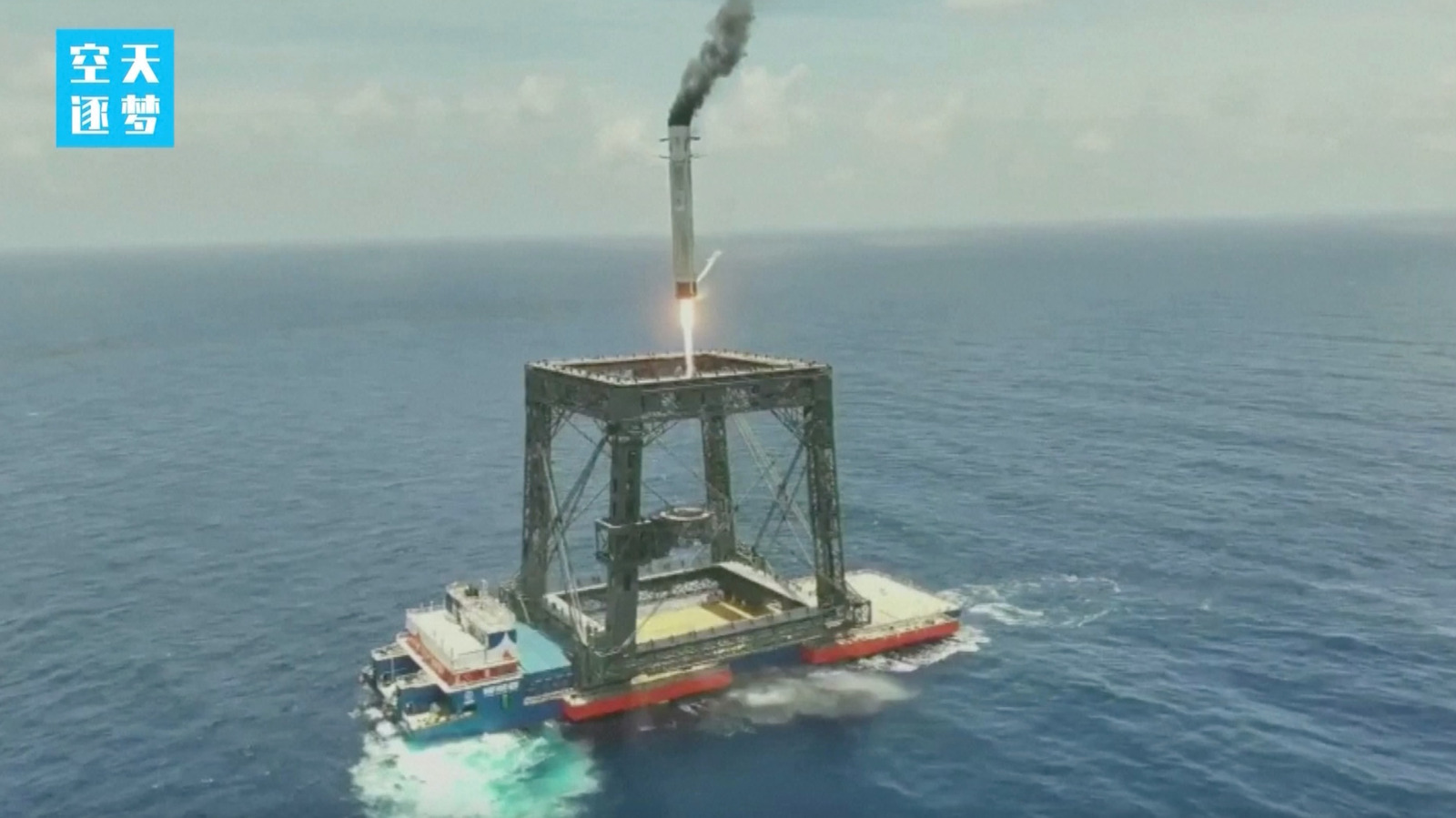
China has become only the second country, after the United States, to recover a reusable rocket booster, according to state broadcaster CCTV. Footage showed a Long March 10B booster descending under its own power before being caught intact in a net anchored at sea, a technique the developer says has never been achieved before. The rocket was built by the state-owned China Academy of Launch Vehicle Technology (CALT), which hailed the maiden-flight recovery as a historic breakthrough for the country's reusable rocket ambitions.
Rather than the retractable landing legs used by SpaceX's Falcon 9 or the mechanical catch arms for Starship, the Long March 10 relied on hooks and a net to capture the booster, which CALT expects to fly again by the end of the year. The achievement supports China's goal of becoming a space power by 2030, though its launch cadence still trails the US, which carried out 193 orbital launches last year (165 by SpaceX) against China's 92 attempts. CALT's first recovery simulation in February 2026 saw a booster splash down 200 metres from the platform, while rival firm LandSpace's SpaceX-style ZhuQue-3 attempt ended in a fireball.
In short
- China is the second nation to recover a reusable rocket booster.
- A Long March 10B booster was caught intact in a sea net.
- CALT expects to refly the booster by year's end.
Explained simply
Reusable rockets are a central goal of modern spaceflight technology. Instead of being discarded after use, these vehicles are designed to land safely and be used again, potentially reducing the enormous cost of launching satellites, supplies, and astronauts into orbit.
The United States has pioneered this field for the past decade through companies like SpaceX, which has successfully landed and reflown rocket boosters hundreds of times. This represents a significant technological advantage, as cheaper launches give a nation's space industry a competitive edge.
China has made advancing its space capabilities a national priority, with ambitious goals to become a major space power this decade. The development of reusable rocket technology is seen as essential to that ambition, allowing the country to launch more frequently and at lower cost than its current capacity allows.