World news and discussion on TalkFuse.
US wants Iran to pledge to stop shooting at ships in Strait of Hormuz
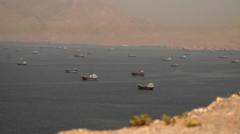
The United States is compelling Iran to issue a formal statement guaranteeing unobstructed passage for merchant traffic through the Strait of Hormuz and pledging an end to ship attacks, with negotiations scheduled for Saturday between high-ranking American officials and Iranian representatives. This pressure follows the most serious military confrontation since a ceasefire arrangement took effect last month, with US officials signalling that Iran's compliance with the demand is essential to avoiding worse consequences.
Behind the scenes, Iranian officials reportedly acknowledged to Trump's team that the recent attacks constituted a strategic miscalculation and attributed them to hardline factions acting independently of central leadership. However, Iran maintains its position that the waterway should be managed under its administration in coordination with Oman, and contests that its own designated shipping corridor represents the genuine safe passage route, creating a fundamental dispute over control and sovereignty in this economically critical region.
In short
- US demands Iran publicly pledge to halt attacks on commercial ships in Strait of Hormuz before Saturday negotiations
- Iran privately told Trump advisers the attacks were a mistake caused by hardline factions, though insists its own shipping corridor is the legitimate safe route
- Escalating tensions threaten a ceasefire agreement reached in June; high-level US delegation to lead talks in Oman
Steelman: both sides, in good faith
The strongest fair case each way — we don't pick a winner.
The case for
The United States has legitimate concerns about freedom of navigation through one of the world's most critical shipping routes, through which roughly a third of global seaborne commerce passes. The US demand for Iran to formally pledge an end to attacks on merchant vessels reflects standard international maritime law principles and basic security imperatives; allowing the Strait to be used for hostile military action would destabilise global energy markets and commerce that nations worldwide depend upon.
The case against
Iran views the Strait of Hormuz, which lies adjacent to its coastline, as part of its regional sphere where it should have a meaningful say in management and security arrangements, particularly in coordination with neighbouring Oman as a regional solution. Iranian officials argue that their proposed shipping corridor represents genuine safe passage reflecting regional cooperation, and that external great-power demands for unilateral Iranian compliance reflect the sort of hegemonic pressure Iran fundamentally opposes, overlooking legitimate concerns about their own maritime sovereignty and security interests in their own waters.
Explained simply
The Strait of Hormuz is a narrow waterway between Iran and Oman that connects the Persian Gulf to the Arabian Sea. Through this passage travels roughly a fifth of the world's oil trade, along with vast quantities of other goods, making it one of the most economically important shipping routes globally.
The United States and Iran have long disputed who should control the strait and how shipping should be managed there. Whilst the US and its allies insist on unrestricted passage for all merchant vessels, Iran has sought greater control over movement through the waterway. Tensions have escalated recently, with attacks on ships in the region raising concern about the stability of this crucial economic corridor.
A ceasefire agreement was recently implemented to reduce hostilities in the area, but its durability remains uncertain. The current tensions reflect deeper disagreements between Washington and Tehran about regional influence and the management of this strategically vital waterway.
Americas Art Culture Government Middle East Politics World