World news and discussion on TalkFuse.
China braced for second typhoon in a week as Bavi approaches landfall
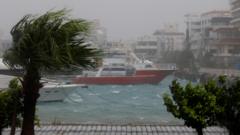
Hundreds of thousands of people have been evacuated from parts of eastern China as Typhoon Bavi approaches the coast, the country's second major storm in a week. The typhoon, which spans up to 1,000km (620 miles) at its widest point — roughly the width of France — is expected to make landfall near the major city of Wenzhou on Sunday morning, and though now weakened to Category 1 it still poses a serious risk owing to the huge volume of moisture in its rain bands. The scale of the evacuations and the storm's arrival so soon after another deadly typhoon underline the growing pressure on the region.
Bavi began as a super typhoon, battering Guam and the Northern Mariana Islands with winds of 290km/h (180mph) before weakening as it crossed the Pacific, striking Japan's Sakishima islands (injuring at least five people) and brushing past northern Taiwan with heavy rain. Landslides linked to the storm earlier killed 17 people in the Philippines, while authorities forecast "exceptionally heavy rains" for Zhejiang and Fujian provinces; Wenzhou is home to around 10 million people. Dozens of flights have been cancelled and schools suspended, and parts of southern China are still recovering from Typhoon Maysak earlier in the week, which killed at least 39 people, caused major agricultural losses and spurred two rare tornadoes in Hubei province.
In short
- Typhoon Bavi nears eastern China, prompting mass evacuations
- Landfall expected near Wenzhou on Sunday, bringing heavy rain
- Second storm in a week after Maysak killed 39
Explained simply
Typhoons are massive rotating tropical storms that form over warm ocean water in the Pacific region. Typhoon Bavi is one of these storms, currently approaching the coast of eastern China with winds and heavy rain that pose a serious danger to millions of people. Hundreds of thousands have been evacuated from their homes ahead of the expected landfall near the major city of Wenzhou, which has a population of around 10 million.
The storm began as an even stronger super typhoon before weakening as it crossed the Pacific Ocean. It has already battered several regions, causing deaths and injuries in the Philippines, Japan and Taiwan, though it has since weakened to Category 1. The sheer size of the storm — spanning up to 1,000 kilometres at its widest point — means it will bring exceptionally heavy rains to large areas of Zhejiang and Fujian provinces regardless of its current wind strength.
Eastern China is still recovering from Typhoon Maysak, which struck earlier this week and killed at least 39 people across the region. The arrival of two major typhoons within days has put enormous strain on authorities dealing with evacuation efforts and emergency response. Schools have been closed and hundreds of flights cancelled as communities prepare for Bavi's arrival.