T. rex could become most expensive fossil ever – but it’s a problem for scientists
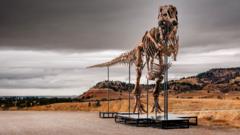
A near-complete Tyrannosaurus rex skeleton nicknamed Gus is due to be auctioned by Sotheby's on Tuesday, with a pre-sale valuation of $30m (about £24m) and the potential to become the most expensive dinosaur ever sold. The sale has revived a long-running debate in the natural history world over whether scientifically important specimens should be reserved for museums, or whether commercial fossil hunters deserve to be rewarded for finding and rescuing them. The concern for many scientists is that soaring prices are pushing such specimens beyond the reach of public institutions and into private hands.
Gus was discovered in the Badlands of South Dakota, 67 million years after the animal lived, and is named after the late cattle rancher Gary "Gus" Licking, on whose land it was found. The team led by Thomas Heitkamp spent three years excavating the fossil, working only during the field season between the ground thawing and refreezing in September, followed by a further three years documenting and reconstructing it in the lab. Bidding must start at no less than $19m; by comparison, the T. rex "Sue" sold for $8m (£6m) to Chicago's Field Museum in 1997, while the current record is held by a Stegosaurus called Apex, which fetched $44.6m in 2024 — eleven times its initial valuation.
- A T. rex called Gus goes to auction Tuesday, valued at $30m.
- It could become the priciest dinosaur ever sold.
- Rising prices risk pricing museums out of key fossils.