Is Donald Trump winning his war against the media?
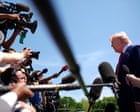
The article examines whether Donald Trump’s intensifying campaign against the US media has actually weakened journalism during the first 17 months of his second presidency. It argues that his administration has escalated pressure on news organisations through lawsuits, regulatory action, restricted access and legal threats, raising serious concerns about press freedom and government accountability. However, the piece suggests the outcome is mixed: while these tactics have created instability and may have diluted the influence of traditional reporters, major outlets are still producing significant critical reporting.
The article lists a series of actions including lawsuits against media companies, FCC pressure on networks such as ABC, reduced press access at the White House and Pentagon, and an EEOC case against the New York Times that the paper called politically motivated. It also highlights reported raids and subpoenas involving Washington Post and Wall Street Journal journalists, as well as New York Times reporters being ordered to testify before a grand jury in New York. Former Meet the Press anchor Chuck Todd says the administration has “diluted” the press corps by elevating pro-Trump influencers, while ownership ties and regulatory approvals involving CBS and CNN have added to fears that some coverage could be softened to avoid conflict with the president.
In short
- Trump has sharply increased pressure on US media outlets.
- Legal and regulatory tactics have raised press freedom concerns.
- Despite this, major news organisations are still reporting aggressively.
Steelman: both sides, in good faith
The strongest fair case each way — we don't pick a winner.
The case for
Donald Trump's administration has deployed coordinated pressure tactics—lawsuits, regulatory threats, access restrictions, and legal challenges—that create a genuine chilling effect on press freedom. Even where outlets continue critical reporting, the environment of harassment and uncertainty represents real institutional deterioration. The deliberate elevation of pro-Trump influencers and efforts to reshape media ownership suggest a strategy to fragment the traditional press corps's unified voice and reduce its collective power to scrutinise government, successfully diluting journalism's institutional accountability function.
The case against
Despite the administration's confrontational stance, major news organisations continue publishing significant critical reporting without demonstrable capitulation or weakening. Many legal and regulatory actions may have substantive bases independent of any desire to suppress press freedom. A diverse media landscape naturally includes varied viewpoints; additional pro-Trump voices reflect plurality rather than weakness. The First Amendment remains robustly protective, and investigative journalism continues at considerable scale and quality, suggesting that claims of successful press suppression are not borne out by actual reporting output or institutional resilience.
Explained simply
Donald Trump's second presidency has seen increased tension between his administration and major American news organisations. Press freedom—the ability of journalists to report on government without fear of retaliation—is considered essential to democracy, as it enables the public to stay informed and hold leaders accountable.
Since taking office in 2025, Trump's administration has taken several actions targeting journalists and media outlets, including lawsuits against news companies, regulatory pressure on broadcasters, restrictions on journalist access at government facilities, and legal investigations involving reporters. These measures have raised concerns about whether the government is attempting to intimidate news organisations or punish critical coverage.
The situation remains contested and complex. Major news organisations continue to publish reporting critical of the administration, though some observers worry that media ownership changes and regulatory uncertainties could influence coverage. The tension reflects broader questions about the proper relationship between government and press in a functioning democracy.