The last retro console I’d expect to run DOOM is the girly pop Casio Loopy, and yet, it can now run DOOM
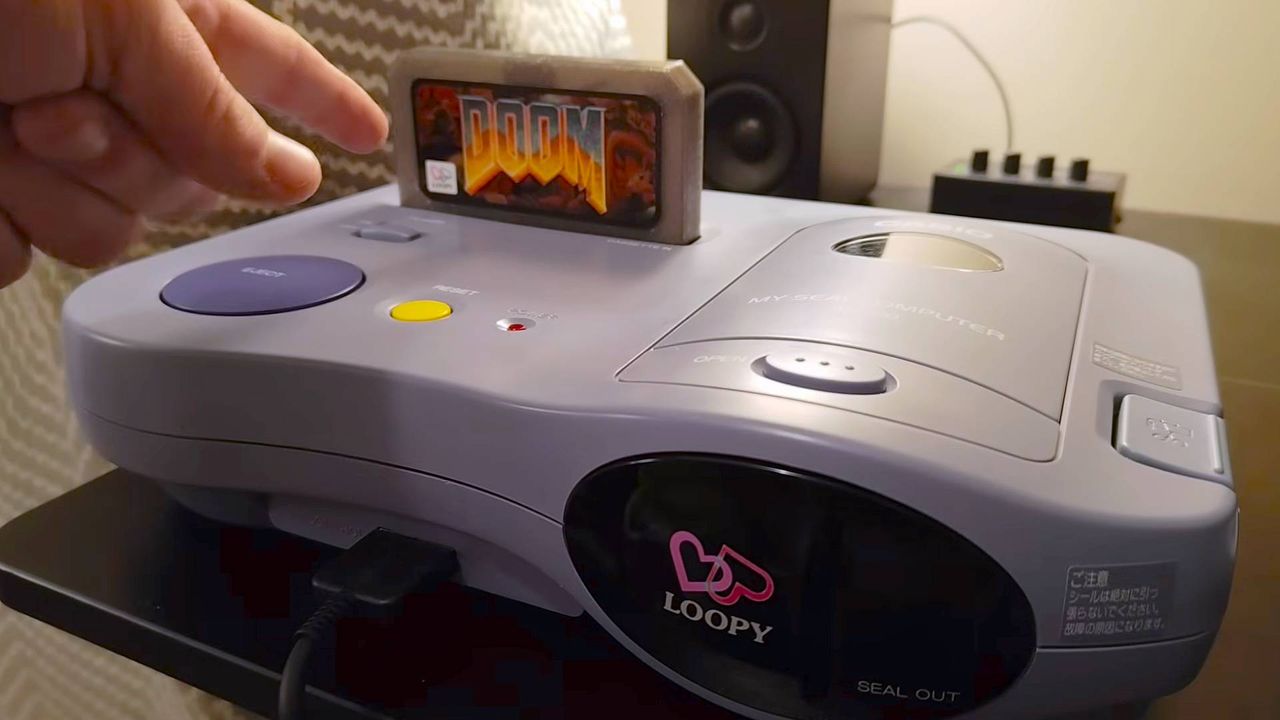
A developer has succeeded in getting DOOM running on the Casio Loopy, an unusual Japan-only 1990s console better known for its built-in sticker printer and marketing towards girls than for action games. The story matters mainly as another striking example of the enduring fascination with porting DOOM to unlikely hardware, but also because it shows how enthusiast homebrew can extend the capabilities of obscure retro systems far beyond their original design.
According to the article, the Loopy is a 32-bit console released in 1995, and the port was created by developer Throaty Mumbo using an open-source flash cartridge called the "Floopy Drive". The developer first ran the game in an emulator, then got it working on real hardware after a further two days of work, including adjustments to deal with MIDI sound differences from DOOM's Roland SC-55 audio setup. GamesRadar says the result looks roughly comparable to the SNES version, despite the Loopy lacking a Super FX-style co-processor, and notes that extra cartridge modding with a Raspberry Pi RP2040 and PCM5102 enabled PCM sound effects alongside MIDI music.
In short
- DOOM now runs on the Casio Loopy
- A homebrew flash cart made the port possible
- The port required extra audio and hardware tweaks
Explained simply
The Casio Loopy is a 32-bit video game console released in Japan in 1995. It was marketed primarily towards girls and is best remembered for its distinctive built-in sticker printer rather than its gaming library, which focused on gentler, more creative titles.
DOOM is one of the most influential video games ever made, released in 1993. There is a long-standing tradition among developers of porting DOOM to unusual and unexpected pieces of hardware as a test of capability, turning it into a sort of running joke in gaming culture.
This latest port demonstrates how enthusiast developers can extend the capabilities of obscure retro systems far beyond what their manufacturers originally intended. Through custom-made cartridges and creative modifications, even systems designed for specific, limited purposes can be repurposed to run games they were never meant to handle.
Art Culture Software Technology