Is tracking your food purchases good for your health?
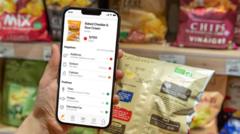
A growing number of consumers are using smartphone apps such as Yuka to scan barcodes and instantly assess how healthy their food and cosmetics purchases are, part of a wider "food tracking" trend that started in France. The apps use traffic-light-style scoring to flag high sugar, saturated fat or additive content, encouraging shoppers to switch to alternatives, though this can push people towards pricier organic products and, as one French mother described, make everyday shopping more stressful for both parent and child.
Yuka, founded in France in 2015, now has 85 million users across 12 countries, drawing on a database of six million products that grows by around 1,200 entries a day. The US has by far the most users (28 million), ahead of France (six million) and the UK (around five million), and the app counts high-profile fans such as US health secretary Robert F Kennedy Jr. The trend also encompasses the crowdsourced Open Food Facts database, launched in 2012, and France's official Nutri-Score labelling system, introduced shortly after Yuka and inspired partly by the UK's existing traffic-light labelling.
- Apps like Yuka score food/cosmetics products for health using barcode scans.
- Yuka has 85 million users worldwide, most in the US.
- Part of wider French-led "food tracking" movement including Nutri-Score labelling.