Culture news and discussion on TalkFuse.
Call for right to grow food on unused public land
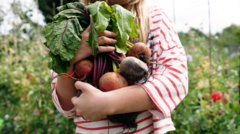
Campaigners in London have called on the Greater London Authority (GLA) to introduce a city-wide "Right to Grow" framework, allowing communities to convert unused public land into allotments, community gardens and orchards. While several boroughs, including Hounslow, Southwark and Hackney, already operate such schemes, campaigners want City Hall to create a standardised model that all 32 boroughs and the City of London could adopt, arguing this would improve food security and biodiversity while cutting through bureaucratic barriers.
A new report from the London People's Assembly on Food, Nature and the Right to Grow sets out 12 demands, including community growing officers in every borough, aiming to make London "greener and more edible" by 2035. The push comes amid severe shortages of growing space: at least 30,500 Londoners are on allotment waiting lists, 16 boroughs are closed to new applicants, and waits in Camden can reach 12 years, according to a 2023 Greenpeace freedom of information request. Deputy mayor Mete Coban said increasing access to green space was a matter of social and environmental justice, citing 640,000 trees planted and a £12m Green Roots Fund, though City Hall has not confirmed whether it will adopt the proposed framework.
Steelman: both sides, in good faith
The strongest fair case each way — we don't pick a winner.
The case for
Londoners face a genuine crisis in accessing growing space, with over 30,000 on waiting lists and waits exceeding a decade, whilst significant tracts of public land lie unused. A standardised "Right to Grow" framework costs comparatively little whilst delivering measurable benefits to food security, mental health, biodiversity and community cohesion. Several boroughs already demonstrate such schemes work; establishing a city-wide model simply removes bureaucratic friction and embeds environmental and social justice into planning.
The case against
Implementing a city-wide standardised framework across 32 demographically and geographically diverse boroughs presents substantial coordination and financial challenges. Councils must sustain ongoing maintenance, liability management, and specialist support at a time when budgets are constrained, potentially diverting resources from other pressing needs. A one-size-fits-all approach risks overlooking local context and may inadvertently accelerate gentrification or alter neighbourhood character in ways existing residents neither sought nor welcome.
Explained simply
London is governed by the Greater London Authority, which includes the mayor and London Assembly, and by 32 borough councils and the City of London Corporation. Public land can be owned or managed by different local and city-wide bodies, so decisions about how it is used vary across London.
Allotments are plots people rent to grow fruit and vegetables, while community gardens and orchards are shared growing spaces. Demand for allotments is high in many areas, and local schemes differ in how people can ask to use unused public land.
The campaign links access to growing space with food security, biodiversity and public green space. A London-wide framework could give boroughs a common approach, but it would need to work across the different landowners and councils.