Renzo Piano’s giant glass cube towers over the rest of the Stirling prize’s samey brick-built shortlist
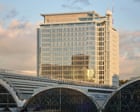
Renzo Piano's 18-storey glass office block, Paddington Square, has been shortlisted for the 2026 Stirling prize, Britain's leading architecture award, standing out as the only non-brick scheme among six finalists otherwise dominated by tasteful, brick-built projects. The building, developed by the late Irvine Sellar (also behind the Shard), was originally conceived as a 72-storey residential tower dubbed the "Paddington Pole" before heritage objections forced a drastic redesign, and its inclusion is seen as a belated vindication for Sellar, who died in 2017.
The tower was scaled down by 54 storeys after Westminster Council rejected planning permission following around 1,800 objections, resulting in the more restrained cube structure that also improves the public space around Paddington station. The Royal Institute of British Architects (Riba) will announce the Stirling prize winner in October, with the remaining shortlisted entries including a brick villa near Epping Forest, a brick housing scheme, two brick extensions to Cambridge colleges, and a brick theatre extension.
In short
- Paddington Square, by Renzo Piano, shortlisted for 2026 Stirling prize
- Once planned as 72-storey "Paddington Pole", cut after objections
- Stands out as shortlist's only non-brick building; winner announced October
Steelman: both sides, in good faith
The strongest fair case each way — we don't pick a winner.
The case for
The inclusion of Paddington Square represents an important recognition of contemporary architectural ambition and innovative design by a world master. Despite being drastically scaled back from the original vision, it demonstrates that bold, striking modern architecture can coexist with heritage concerns, and in a shortlist of conventionally brick-built schemes, it represents the kind of forward-thinking design that pushes the discipline beyond conservative repetition whilst vindicating the vision of developers willing to pursue ambitious projects even under significant constraint.
The case against
The shortlist's emphasis on brick-built schemes reflects a coherent architectural philosophy prioritising contextual sensitivity and integration with Britain's existing built heritage. Rather than representing 'samey' thinking, this consistency suggests careful consensus about how contemporary buildings should respectfully relate to their surroundings and contribute to coherent urban character. A glass tower operates on different design principles—visibility, monumentality, distinctiveness—that may not represent the nuanced, context-aware approach that best serves communities and preserves the character of historic areas.
Explained simply
The Stirling Prize is Britain's most prestigious architecture award, given annually by the Royal Institute of British Architects to recognise outstanding new buildings. This year's shortlist has just been announced with the winner to be decided in October.
Paddington Square is an 18-storey glass office building designed by acclaimed Italian architect Renzo Piano. It stands out among the six shortlisted projects as the only glass structure, in marked contrast to the other finalists which are predominantly brick-built.
The building represents a significant scaling-down of an original conception as a 72-storey residential tower called the "Paddington Pole". Westminster Council rejected the initial proposal after around 1,800 objections, leading to a complete redesign as a glass cube that also improved public space around Paddington station. The inclusion is viewed as belated vindication for its late developer, Irvine Sellar, who also championed The Shard before his death in 2017.