World news and discussion on TalkFuse.
More than 800 Canadian wildfires burning as air quality alerts extend to US
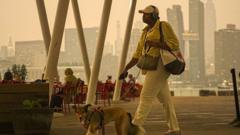
More than 800 wildfires are currently burning across Canada, sending smoke southwards and triggering air quality alerts across large parts of the northern United States. The blazes, most of which are out of control, have made air quality "hazardous" in states including Michigan and Minnesota, with residents advised to stay indoors, while Detroit was ranked the world's worst city for air pollution by tracker IQAir.
Canada's Interagency Forest Fire Centre recorded 857 active fires, including 23 new ones on Thursday, with a large cluster in western Ontario sending thick smoke over Thunder Bay and Toronto and hazier skies as far as New York. Northwesterly winds are expected to keep pushing smoke into the US through the weekend, raising concerns it could reach New Jersey ahead of Sunday's World Cup final, though a shift in wind direction from Monday should steer smoke towards Quebec and ease conditions further south. Separately, a freight train crew near Armstrong, Ontario, had to be rescued after becoming surrounded by fire, according to Canadian National Rail.
In short
- Over 800 Canadian wildfires are burning, most out of control
- US air quality alerts cover the Midwest, Great Lakes and Northeast
- Smoke may reach New Jersey before Sunday's World Cup final
Explained simply
Canada is experiencing a significant wildfire season, with hundreds of fires burning across the country at present. These fires, particularly in western regions, are producing heavy smoke that is being carried southwards by winds towards the United States.
The smoke has created serious air quality problems in northern American states, making the air unhealthy or hazardous for people to breathe. Residents in affected areas have been advised to limit outdoor activity and stay indoors to protect their health, as visibility has also been reduced significantly.
Wildfires of this scale occur periodically in Canada and the northern United States, typically during summer and autumn months when weather conditions are dry. The ability of smoke to travel across borders demonstrates how environmental crises can affect multiple countries and why managing large fires matters for public health on both sides of the border.