Business news and discussion on TalkFuse.
Fraud crackdown on Ghana ID cards makes digital checks compulsory – photocopies banned
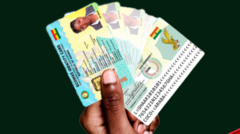
Ghana has made biometric verification of its national identity card compulsory for all businesses and institutions, banning the previous practice of visually inspecting or photocopying the "Ghana Card" for transactions. The change, ordered by the National Identification Authority (NIA), aims to close a loophole that allowed criminals to impersonate cardholders, and reflects the card's growing importance in daily life, as it is required to access banking services, register SIM cards and obtain passports or driving licences.
Under the new rules, organisations must use a mobile app to scan the card and verify data such as fingerprints, iris scans, photographs and signatures. NIA chief Wisdom Yayra Koku Deku said continuing to use photocopies or visual checks is now an offence, with institutions facing fines of up to 24,000 Ghanaian cedis (about $2,100/£1,550) and individuals up to 6,000 cedis (about $525/£390). The agency has urged organisations not yet linked to its digital verification system to connect immediately, and the government is expected to brief the public shortly on how the amended regulations will be enforced.
In short
- Ghana bans photocopying or visual checks of national ID cards
- Biometric app verification now compulsory for all transactions
- Non-compliant institutions face fines up to $2,100
Steelman: both sides, in good faith
The strongest fair case each way — we don't pick a winner.
The case for
Mandatory biometric verification closes genuine loopholes that enable identity fraud and impersonation, which can cause serious harm to victims and institutions alike. Digital verification is objectively more secure than photocopies or visual inspection, and as the Ghana Card has become central to accessing critical services—banking, SIM registration, official documents—enforcement of proper verification standards is a reasonable public safety measure. The regulation clarifies what should have been the standard practice all along, bringing the system into alignment with the card's intended digital infrastructure.
The case against
Whilst the security rationale is sound, rapid enforcement risks excluding millions who lack reliable smartphone access or digital literacy, particularly in rural and low-income areas where such barriers remain significant. The concentration of biometric data—fingerprints, iris scans, photographs—in a centralised system creates substantial privacy risks and potential for surveillance abuse, with minimal public consultation or safeguards outlined. Small businesses and informal sector workers face compliance costs and fines they may not be equipped to meet, whilst vulnerable populations risk being locked out of essential services if they cannot adapt quickly to the new requirements.
Explained simply
The Ghana Card is the country's national identity card and a central part of daily life. Ghanaians must present it to access banking services, register mobile phone connections, obtain passports and driving licences, making it essential for participating in the formal economy and accessing key services.
The card's importance has made it attractive to criminals seeking to commit fraud. Under the previous system, businesses accepted photocopies and visual inspections of the card, which created opportunities for people to be impersonated. The National Identification Authority now believes this loophole requires stricter controls to prevent fraud.