World news and discussion on TalkFuse.
As heatwaves strike, Europeans turn to prized Chinese air-conditioner
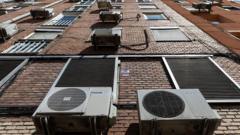
Europeans are increasingly buying Chinese-made air-conditioners as more frequent and severe heatwaves make homes difficult to live in, particularly in countries where domestic cooling has traditionally been uncommon. The demand matters because newer portable split units can avoid drilling and therefore suit European housing and historic-preservation rules, but wider use also raises concerns about electricity demand, emissions and urban heat.
Midea says its sales in France, Spain, Germany and the UK rose by more than 70% year on year, although it did not confirm the figure directly to the BBC; TCL reported sales up over 300% in France, while Gree reported stronger summer demand. Western Europe recorded its hottest June on record, with German temperatures exceeding 40C, and France’s extreme heat closed hundreds of schools. Air conditioning uses about 7% of global electricity and is linked to 2.7% of global fossil-fuel and industrial CO2 emissions, yet France’s power utility has pledged €80m to add cooling in schools and community facilities.
In short
- Heatwaves are driving European demand for Chinese air-conditioners.
- Portable models suit homes where drilling is restricted.
- Cooling brings environmental and electricity-use concerns.
Steelman: both sides, in good faith
The strongest fair case each way — we don't pick a winner.
The case for
As heatwaves become more frequent and intense, air conditioning can protect health and make homes, schools and community facilities usable during dangerous heat. Portable split units that avoid drilling may offer a practical way to cool European buildings where installation is restricted, and their growing availability gives households more options to adapt.
The case against
Wider air-conditioning use could increase electricity demand and emissions, adding to the pressures driving climate change and potentially worsening outdoor heat in cities. Rather than making cooling the default response, policymakers could prioritise building design, shading and other lower-energy measures, while reserving mechanical cooling for places and people most at risk.
Explained simply
Europe is experiencing increasingly severe heatwaves that are making homes uncomfortable to live in, particularly in countries where air-conditioning has historically been uncommon. This is driving a surge in demand for cooling systems, with consumers increasingly turning to Chinese-manufactured air-conditioners.
Chinese manufacturers including Midea, TCL and Gree have seen their European sales rise sharply in recent years. These companies are succeeding partly because their newer air-conditioning units can cool homes without requiring permanent installation or drilling into walls, making them suitable for older European buildings and areas with strict heritage preservation rules.
The expansion of air-conditioning raises important questions for Europe's future energy use and climate impact. Air conditioning already accounts for about 7% of global electricity consumption and is responsible for roughly 2.7% of global emissions from fossil fuels and industry, so widespread adoption of cooling systems across traditionally non-air-conditioned regions could significantly increase both energy demand and carbon emissions.