World news and discussion on TalkFuse.
Verizon Fios boosts its fastest plan to 5Gbps
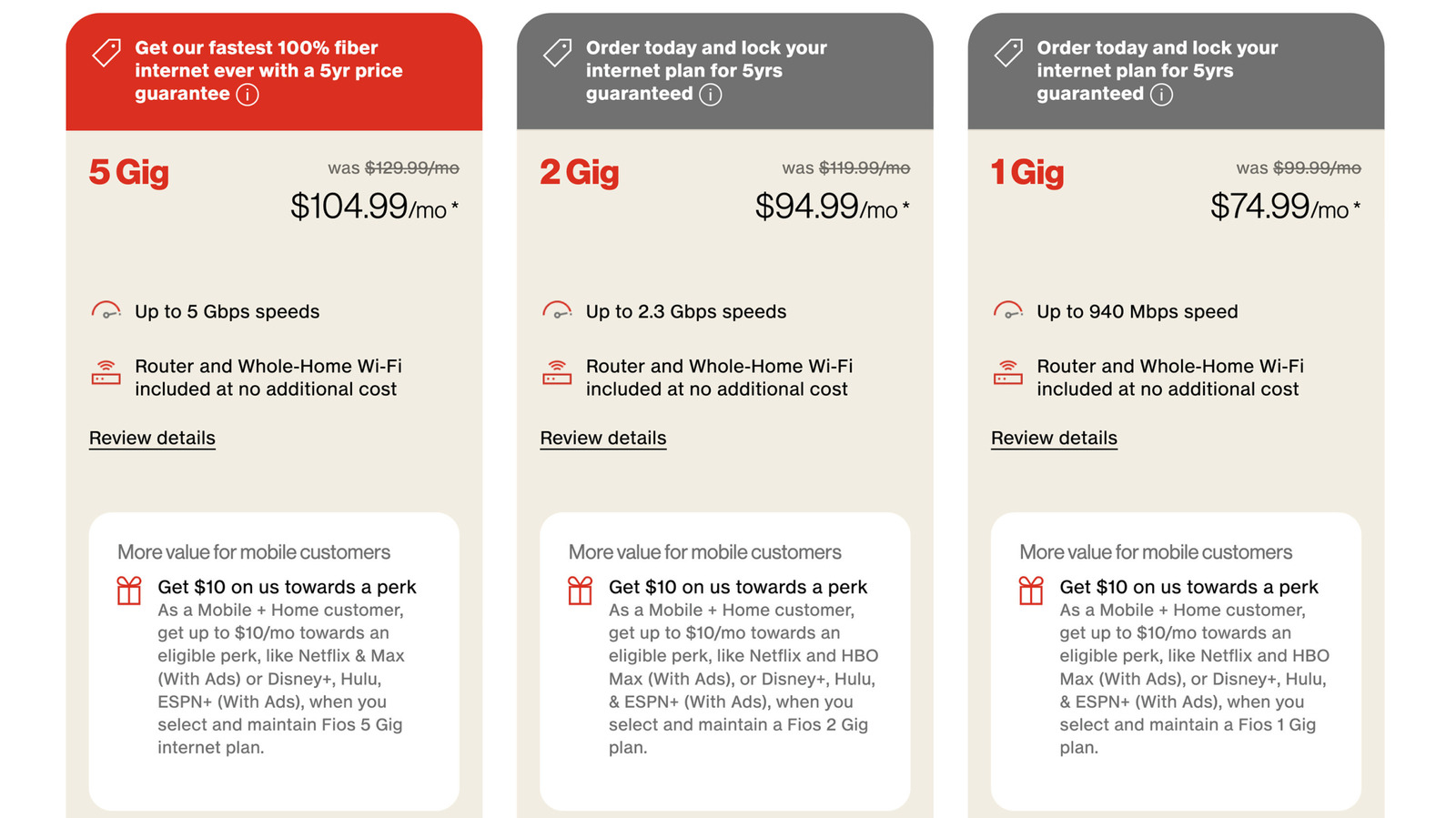
Verizon Fios has introduced a 5Gbps home broadband plan, more than doubling the speed of its previous 2Gbps flagship offering. The move strengthens competition among US fibre providers by offering very high speeds at a lower price than some comparable services, aimed at households with multiple demanding connected devices.
The plan is available in selected areas for $105 per month, while new customers switching from another provider can pay $90 monthly with a five-year price lock. Verizon says 5Gbps is enough to download a 100GB game update in about 2.7 minutes; it compares with Google Fiber’s $100 3Gbps service and AT&T’s $135 5Gbps plan, though Ziply offers a far faster 50Gbps tier for $900 per month.
In short
- Verizon Fios has launched a 5Gbps broadband plan.
- New switching customers can pay $90 monthly for five years.
- The service undercuts several rival ultra-fast fibre plans.
Steelman: both sides, in good faith
The strongest fair case each way — we don't pick a winner.
The case for
This represents genuine competitive innovation that benefits consumers. Household broadband needs have legitimately increased as people simultaneously stream 4K video, work remotely, game online and operate smart home systems. The 5Gbps offering at £90-£105 monthly is competitively priced and demonstrates that fibre infrastructure is becoming robustly competitive, which drives quality improvements across the industry. For households with genuine high-bandwidth demands, this provides valuable choice and incentivises providers to continue improving their services.
The case against
Whilst technically impressive, practical utility remains questionable for most users. Marketing suggests these speeds are necessary when typical household activities require far less bandwidth, which obscures more urgent problems. Millions of Americans still lack basic broadband access altogether, and telecommunications investment should prioritise extending fibre networks to underserved communities rather than pursuing speed races that primarily benefit already well-connected demographics. Resources devoted to ever-higher speeds might be better allocated to closing the access gap.
Explained simply
Fios is Verizon's fibre broadband service, which uses optical cables to deliver internet to homes. Fibre-based services can offer significantly higher speeds than traditional broadband, allowing data to be downloaded and uploaded much faster.
Modern households increasingly demand faster broadband speeds because multiple people and devices now compete for internet access simultaneously, whether for work, streaming video or online gaming. The home broadband market is competitive, with several major providers offering different speed tiers and pricing to attract customers in areas where they operate.
As demand for fast internet continues to grow, broadband providers regularly upgrade their networks and introduce faster packages. This competition can benefit consumers who have access to multiple providers in their area, as companies compete to offer attractive speeds and pricing.