Science news and discussion on TalkFuse.
What this desert city can teach the world about tackling heat deaths
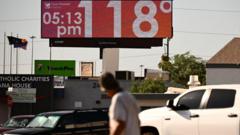
Phoenix, Arizona, has spent years developing policies to reduce heat-related deaths, and officials say the approach is now working and could offer lessons for other regions grappling with increasingly severe heatwaves. Maricopa County, where Phoenix is located, became the first place in the world to appoint a dedicated heat officer in 2021, and has since focused on expanding access to cooling centres and air conditioning, particularly for low-income and homeless residents. The initiative comes as extreme heat causes rising death tolls across the US and Europe, with experts warning that hotter nights mean bodies get less chance to recover from daytime heat.
Heat-related deaths in Maricopa County fell from a peak of 645 in 2023 to 405 in 2025, a decline experts partly credit to the county's policies, including extended and sometimes 24-hour access to cool spaces and a scheme helping eligible residents repair or replace air conditioning units. However, the trend is not guaranteed to continue: as of 11 July this year, the county had recorded 23 confirmed heat deaths with a further 282 under investigation, a pace that could outstrip last year's total. Experts such as Ladd Keith of the University of Arizona argue other places could replicate Phoenix's approach by appointing a designated heat officer to coordinate responses, since without a person responsible, the problem risks being neglected.
In short
- Phoenix cut heat deaths by investing in cooling centres and air conditioning access
- County appointed the world's first heat officer in 2021
- Deaths fell from 645 (2023) to 405 (2025), but 2026 could reverse this
Steelman: both sides, in good faith
The strongest fair case each way — we don't pick a winner.
The case for
Phoenix's policies have demonstrably reduced heat-related deaths from 645 to 405, a substantial decline that experts credit to coordinated interventions including dedicated heat officer oversight, expanded cooling centres, and targeted air conditioning assistance for vulnerable residents. Since other regions face identical and worsening heat threats with rising death tolls, and Phoenix has proven that focused governance and targeted support saves lives, the approach should be replicated wherever resources permit.
The case against
The apparent gains may not persist, as early 2026 data suggests heat deaths could exceed 2025 levels, and the underlying causes of the decline remain unproven rather than definitively traced to Phoenix's policies alone. Moreover, such resource-intensive programmes may be financially and infrastructurally unfeasible for many regions, and concentrating on adaptation through cooling access rather than addressing root causes through climate mitigation risks treating symptoms whilst the underlying problem accelerates.
Explained simply
Extreme heat is causing rising numbers of deaths across the United States and Europe, with experts warning that warmer nights are particularly dangerous because bodies cannot cool down adequately. This growing threat has prompted some cities to develop new approaches to protecting vulnerable people during heatwaves.
Maricopa County in Arizona, which includes Phoenix, has become a pioneer in this area by appointing a dedicated heat officer in 2021 and establishing policies focused on expanding access to cooling centres and air conditioning. The county has provided 24-hour access to cool spaces for residents and created programmes to help low-income and homeless people repair or replace air conditioning units.
The approach appears to have made a difference: heat-related deaths in the county fell from 645 in 2023 to 405 in 2025. Experts suggest other regions facing similar heatwave problems could adopt Phoenix's model by appointing their own heat officer to coordinate responses, since without such dedicated leadership, tackling the issue risks being overlooked.