2,000-year-old treasure discovered beneath former sports field, breaking regional record
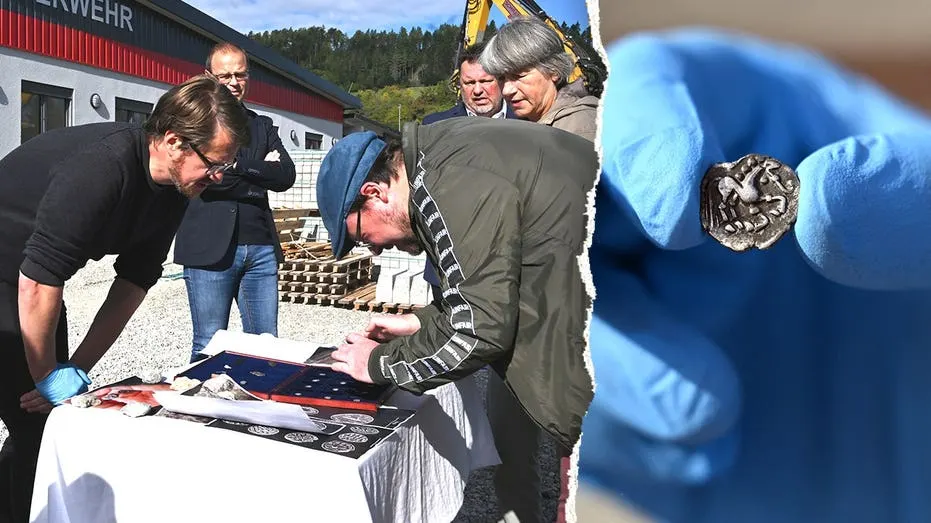
Archaeologists uncovered 11 Celtic coins at Singer Berg in Thuringia, Germany, during work on a former sports field before construction of a fire station. Dated to the first century B.C., the coins form the largest known hoard of their type from that period found in the region.
The coins are Prague-type quinarii, a currency thought to have been minted near Gotha. Around 80 examples had previously been identified across Thuringia; the coins were scattered over an area roughly 19 by 5 feet, probably by ploughing, and may have been buried together in a perishable container. Archaeologists say the find could help clarify ancient trade routes and production centres; other discoveries at the site included a Roman coin, a medieval glass bead and later objects.
- Eleven Celtic coins were found beneath a former sports field in Thuringia.
- The first-century B.C. hoard is the largest of its type known in the region.
- Researchers say it may shed light on ancient trade and coin production.