World news and discussion on TalkFuse.
2026 Lexus ES 500e first drive: A classy sedan with a slow charge
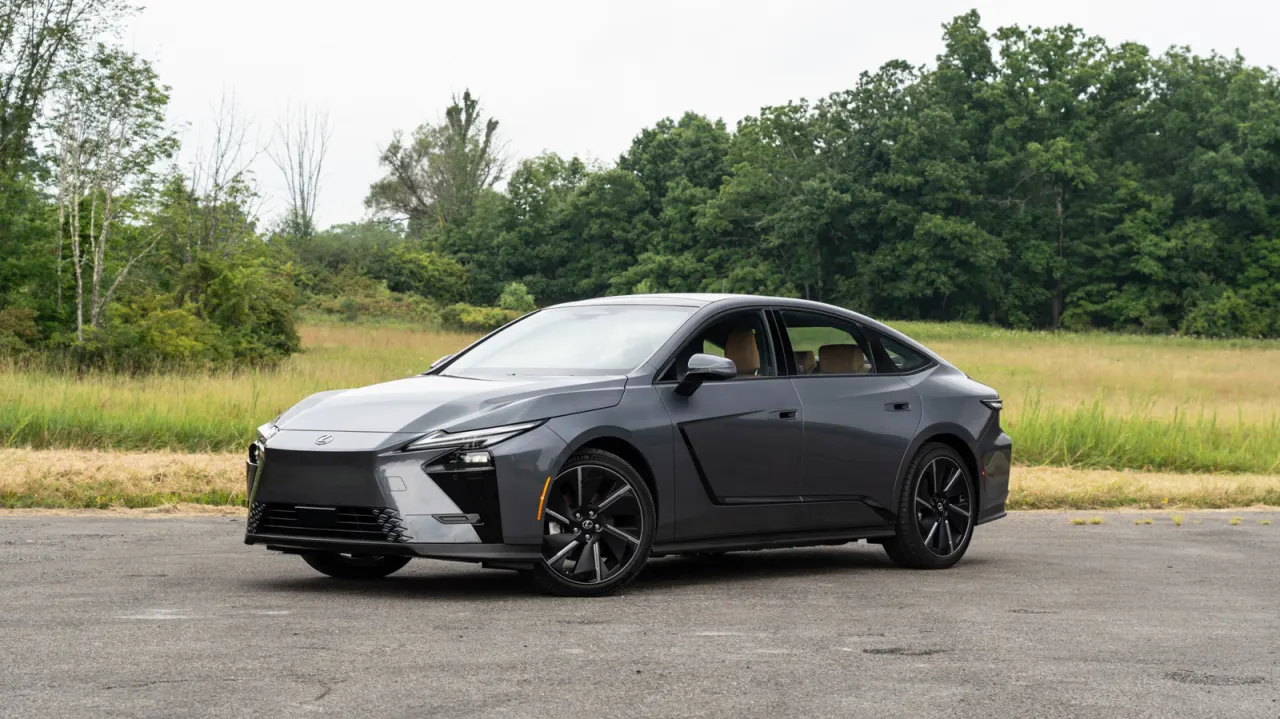
The 2026 Lexus ES has been overhauled to fill the gap left by the discontinued LS flagship, and for the first time offers fully electric variants alongside a hybrid. Reviewer Tim Stevens found the new all-electric ES 500e and ES 350e to be Lexus's most compelling EVs yet, praising their driving manners and upmarket interior, though he flagged the underlying battery and charging technology as a weak point that undercuts the car's otherwise strong appeal.
The lineup now spans a $51,095 ES 350h hybrid (244 horsepower) alongside two electric options: the single-motor ES 350e from $48,895 (221 horsepower, 307-mile range) and the dual-motor ES 500e from $51,895 (338 horsepower, up to 276 miles). Both EVs share a 74.7-kWh battery that is modest for the car's nearly 5,000lb weight, and charging tops out at just 150kW, less than half the rate of rivals such as the Mercedes-Benz C-Class Electric. Despite this, the reviewer was impressed by the cabin's materials, design and touchscreen technology, noting the ES 500e is priced close to a dual-motor Tesla Model 3 but offers a far more luxurious interior.
In short
- Lexus ES gains hybrid and new all-electric variants for 2026
- ES 500e impresses on comfort and driving feel
- Charging tops out at just 150kW, trailing rivals
Steelman: both sides, in good faith
The strongest fair case each way — we don't pick a winner.
The case for
For buyers who prioritise interior sophistication and driving refinement over charging specifications, the Lexus ES 500e presents genuine appeal. Many premium buyers charge overnight at home, making public fast-charging speed less critical to daily use. The substantial interior quality advantage over rival mass-market EVs, combined with pricing close to a Tesla Model 3, represents meaningful value for those who weight luxury and comfort over powertrain specifications.
The case against
Charging capability is fundamental to any electric vehicle's practical value, not incidental. The ES 500e's 150kW charging speed significantly lags contemporary competitors, and its battery capacity appears modest relative to the car's nearly 5,000lb weight. At this premium price point, customers deserve current-generation powertrain technology, not engineering compromises that would be questionable even at substantially lower prices.
Explained simply
Lexus is Toyota’s premium car brand, known for its large, comfortable saloons as well as SUVs. The ES is a four-door saloon, and this new generation expands the range with electric versions alongside a petrol-electric hybrid.
The electric ES comes in two forms: the 350e has one motor, while the 500e has two and more power. Both use the same battery, and their range and charging speed affect how practical they may be for longer journeys.
The ES sits among premium electric saloons from brands including Mercedes-Benz and Tesla. Its appeal depends on how buyers weigh interior comfort and finish against factors such as price, range and time spent charging.