World news and discussion on TalkFuse.
32-year-old “ellipsoid” horror game Ecstatica gets a PC re-release today, showing us an alternative timeline in which polygonal 3D never became dominant
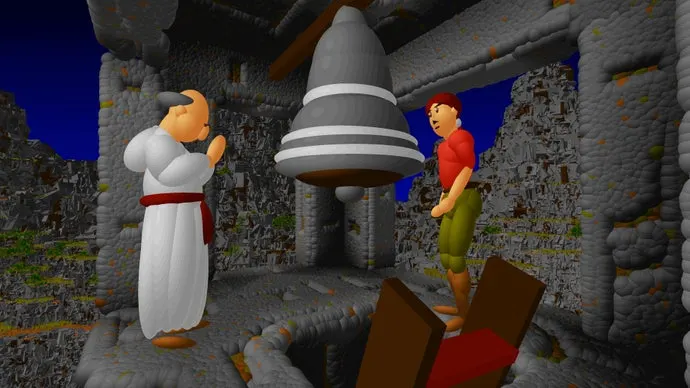
The 1994 horror game *Ecstatica* and its sequel have been re-released on Steam and GOG, bringing back a striking graphics style built around ellipsoids. The games offer a glimpse of an alternative path for 3D visuals, which came to rely chiefly on polygons.
In *Ecstatica*, ellipsoids form characters, many objects and much of the environment, with the game’s engine also able to render some polygons. It is a puzzle-driven, fixed-perspective survival horror game about a wanderer trapped in a village of monsters, released two years before *Resident Evil*. The re-release includes controller support and three graphics modes, including versions resembling the original DOS and 1997 Windows 95 releases.
In short
- *Ecstatica* and its sequel return on Steam and GOG.
- Its graphics use rounded ellipsoids instead of relying mainly on polygons.
- The re-release offers three graphics modes and controller support.
Explained simply
In the 1990s, game makers were exploring ways to create three-dimensional worlds on home computers. Most 3D games came to rely on polygons, flat shapes joined together to form objects and characters. Ecstatica used ellipsoids—rounded, stretched shapes—for much of its visual world, giving it a distinctive look.
The first game puts players in the role of a wanderer trapped in a village populated by monsters. It is a puzzle-led survival horror game, viewed from fixed camera angles, and appeared in 1994, before the better-known Resident Evil series began. The two games’ return gives players a chance to see a less common approach to early 3D graphics.
Americas Entertainment Gaming Horror Software Technology