Technology news and discussion on TalkFuse.
A closer look at Verano, AMD’s first step toward a Zen-based superchip to rival Nvidia’s Vera Rubin
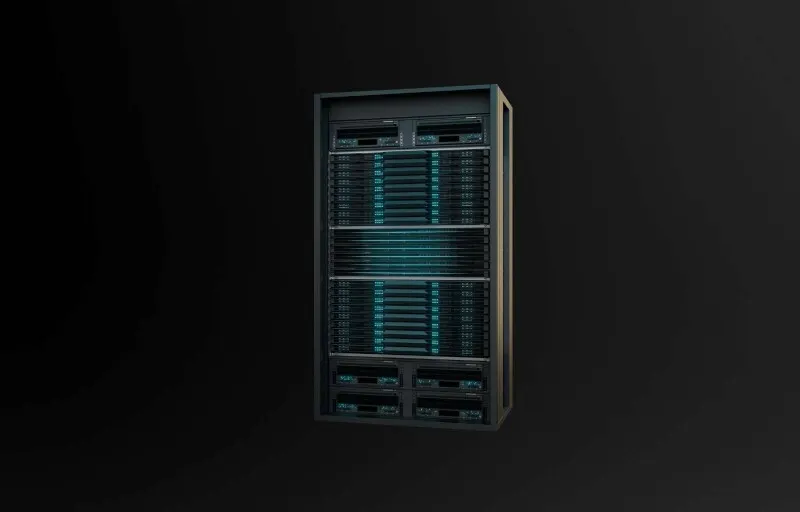
AMD is developing Verano, a specialised processor intended to work with its GPUs in rack-scale AI systems. AMD says the combined CPU and GPU platform will compete with Nvidia’s Vera Rubin superchips, while Verano itself is designed chiefly to keep GPUs supplied with data.
Verano is based on the same broad chip design as AMD’s Venice Epyc processors, but will come in versions with either 72 cores running at up to 5.3 GHz or 192 cores at up to 4.1 GHz. Its LPDDR5X memory is being validated at up to 24 channels and 8,533 MT/s, with theoretical bandwidth of about 800 GB/s. AMD says LPDDR can cut power use by 30 to 40 per cent compared with RDIMMs; the first version will be soldered to the board, though its memory will use removable SOCAMM2 modules.
In short
- Verano is built to support AMD GPU servers.
- AMD frames the CPU and GPU system as a Vera Rubin rival.
- LPDDR5X saves power but limits bandwidth and servicing options.
Explained simply
AI systems use graphics processing units (GPUs) to handle many calculations at once, but those GPUs also need other processors to organise work and feed them data. AMD makes both CPUs, which manage general computing tasks, and GPUs, which are widely used for AI workloads.
AMD’s Epyc family of CPUs is used in servers, including Venice, a design that provides the basis for Verano. Nvidia’s Vera Rubin is a competing system that combines CPUs and GPUs for large-scale AI computing; AMD is developing Verano to work alongside its own GPUs in a similar kind of system.
The choice of processor cores and memory affects how much data can reach the GPUs and how much power the system uses. These design trade-offs matter to companies building AI data centres, where performance and electricity use can shape the cost of running large workloads.