A deep dive into Nvidia’s Vera CPU and the Olympus cores that power it
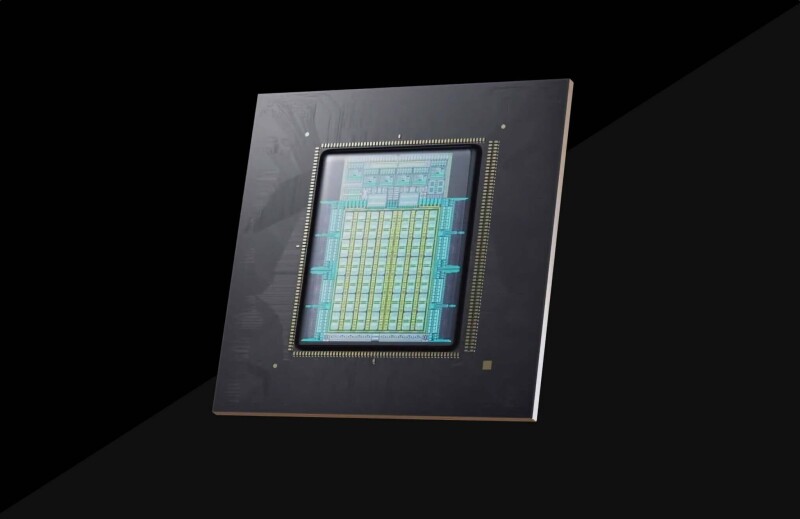
Nvidia has detailed Vera, its first fully custom CPU, marking a direct challenge to Intel and AMD in cloud and datacentre computing. The Arm-based processor is intended both to manage GPUs in forthcoming Vera Rubin AI systems and to run AI-agent workloads, with its design focused on reducing processing bottlenecks. Several major cloud providers, including Alibaba, Meta, Oracle and CoreWeave, have already committed to deploying it.
A Vera chip contains 88 Armv9.2 Olympus cores and 176 threads, supports up to 1.5TB of LPDDR5X memory, and uses a monolithic 3nm compute die alongside separate memory and I/O chiplets. Nvidia’s dual-socket Vera CPU Superchip combines 176 cores, 3TB of memory and 1.8TB/s of bidirectional NVLink connectivity, while providing 2.4TB/s of aggregate memory bandwidth. Nvidia says a liquid-cooled rack could contain up to 128 Superchips, equating to 22,528 cores and 384TB of memory.
- Nvidia’s Vera is its first fully custom standalone CPU.
- It targets AI infrastructure and AI-agent hosting.
- Dual-socket systems offer 176 cores and 3TB memory.
New here? Start with this
Nvidia is best known for making graphics processing units, or GPUs, which have become central to training and running artificial-intelligence systems. These machines also need central processing units, or CPUs, to organise data, run general-purpose software and coordinate the GPUs. Until now, Nvidia has generally paired its accelerators with CPUs designed by companies such as Intel, AMD or Arm-based suppliers.
Vera is Nvidia’s attempt to design that coordinating processor itself, using Arm technology and its own Olympus processor cores. It is aimed at large datacentres, where many chips and vast amounts of memory are linked together to handle cloud services and AI tasks. The design is intended to move data quickly between the CPU, memory and Nvidia’s GPUs, reducing delays that can limit overall performance.
Intel and AMD are the established suppliers of server CPUs, while cloud companies are increasingly building or choosing specialised chips for their own infrastructure. If major cloud providers deploy Vera at scale, Nvidia could offer more of the hardware needed for an AI datacentre as one integrated system, rather than mainly supplying the GPUs.
Both sides, in good faith
The strongest fair case each way — we don't pick a winner.
The case for
Supporters argue that Vera could make AI datacentres more efficient by designing the CPU, GPU interconnect and software stack as a single system. They contend that reducing bottlenecks between processors and providing large, high-bandwidth memory can improve performance for demanding AI-agent workloads while giving cloud providers a more coherent platform to deploy at scale. The underlying value is practical innovation: specialised infrastructure may deliver more useful computing capacity per rack, watt and engineering effort.
The case against
Sceptics argue that a highly integrated Nvidia platform may deepen dependence on one supplier at a time when cloud providers benefit from competition, interoperability and bargaining power. They may question whether the claimed advantages will justify the cost, power, cooling requirements and migration work, particularly for workloads that do not need tightly coupled AI hardware. The underlying value is resilience: maintaining viable Intel, AMD and alternative Arm options can reduce lock-in and encourage lower prices and faster innovation across the market.