Voynich scholars say pages were bound in the wrong order
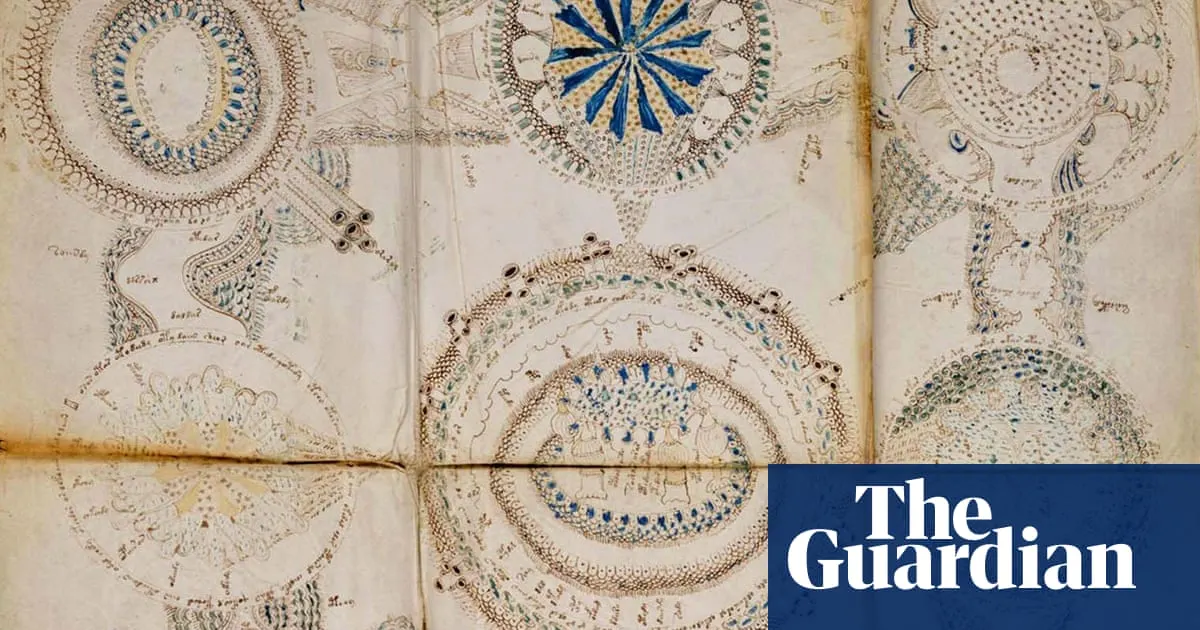
Researchers Colin Layfield and Lisa Fagin Davis argue that the Voynich manuscript’s pages were bound in the wrong order, changing how its drawings and text should be understood. Their theory does not decipher the writing, but suggests the manuscript may have been a communal collection of booklets used to pass information between generations, rather than the work of a lone author.
Using numerical comparisons of text passages, the researchers found links between pages that are separated in the current binding; visual features, including illustrations that appear to continue across page folds, also support their case. The parchment dates to 1404–1438, and the manuscript has resisted interpretation since it entered collectors’ records in the 17th century; past claims that it was written in a proto-Romance language were disputed.
- Researchers say the Voynich manuscript’s pages may be in the wrong order.
- The proposed rebinding suggests it may have been a set of communal booklets.
- The theory offers clues about its structure, but does not decode its text.
New here? Start with this
The Voynich Manuscript is a centuries-old document written in an unknown script, filled with strange illustrations of plants, astronomical charts and other imagery that has defied all attempts at decryption. It remains one of the world's most famous unsolved mysteries, puzzling scholars since it was first documented in collectors' hands during the seventeenth century.
The parchment dates from 1404 to 1438, making it a medieval artefact. Scholars have proposed various theories about what it contains and who created it, with some suggesting it was written in an early form of Romance languages, though none of these claims have been confirmed or widely accepted.
Researchers continue to study the manuscript because even small breakthroughs in understanding its contents or structure could illuminate medieval practices in communication, record-keeping or knowledge transmission. Each new theory about how the document was constructed or organised potentially brings scholars closer to understanding its purpose and meaning.
Both sides, in good faith
The strongest fair case each way — we don't pick a winner.
The case for
The manuscript's centuries-long resistance to interpretation suggests structural rather than merely cryptic origins. Layfield and Davis's numerical text comparisons linking separated pages and their visual evidence of illustrations continuing across page folds provide objective grounds for reconsidering the binding's authenticity. If reordering reveals coherent meaning or a clearer authorial structure, it would vindicate the hypothesis and substantially advance scholarship.
The case against
The manuscript's current binding has anchored centuries of scholarly study, and reordering such a famous artefact demands exceptionally robust evidence before proceeding. Numerical correlations between separated pages and visual connections across folds are subject to interpretive judgment and potential selection bias; without showing that reordering produces demonstrably coherent text rather than patterns emerging from any sufficiently complex comparison, the theory remains speculative. Scholarly caution counsels maintaining the established order whilst subjecting the researchers' claims to rigorous peer review.
Americas Culture Research Science World
Read the full article at the source →
Originally published by The Guardian as “A medieval manuscript has confounded scholars for centuries. Have they been reading it wrong all this time?”.