A migrant gasping for life. A Spanish enclave gripped by fear. If only the no-borders utopians were with me now: IAN GALLAGHER
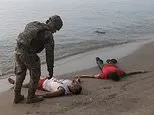
Daily Mail correspondent Ian Gallagher writes a first-hand account from a Spanish enclave gripped by fear amid a migration crisis, describing witnessing a migrant in medical distress and reflecting on what he sees as the gap between "no-borders" advocacy and the reality on the ground. The piece forms part of the paper's wider coverage of escalating tension over irregular migration into Spain's North African territories.
The article sits alongside reporting that Spain has accused neighbouring countries of a "selfish, polarising and unlawful" response as the EU is engulfed in infighting over what is described as an "invasion" involving around 60,000 Moroccans, a crisis said to have already cost 67 lives. The full text of Gallagher's personal account was not available in the supplied article content, which consisted largely of site navigation and links to unrelated stories.
In short
- Reporter describes a migrant crisis scene in a Spanish enclave
- Spain accuses neighbours of "unlawful" response to migration surge
- Crisis linked to around 60,000 Moroccans and 67 deaths
Steelman: both sides, in good faith
The strongest fair case each way — we don't pick a winner.
The case for
Those advocating for stricter migration controls emphasise the humanitarian costs of irregular migration—the deaths, medical emergencies, and desperation visible on the ground. They argue that porous borders encourage dangerous crossings controlled by smugglers, and that managed, legal migration pathways are more genuinely humane than policies disconnected from real-world suffering.
The case against
Advocates for more open migration policies argue that restrictive frameworks themselves drive irregular crossings by closing legal pathways, forcing people into smugglers' hands. They contend that developed nations have both the capacity and moral obligation to accept migrants fleeing poverty and instability, and that focusing on border security over human life perpetuates global inequality.
Explained simply
Ceuta and Melilla are Spanish cities on the North African coast, bordered by Morocco and forming Spain’s land borders with Africa. People sometimes try to enter them without permission by crossing border fences or travelling by sea, and Spain manages their arrival with help from neighbouring countries and the EU.
The people involved include migrants seeking to reach Europe, Spanish authorities responsible for border control and emergency care, and Morocco, which shares borders with both enclaves. The issue matters because it brings together questions of migration, safety and how countries cooperate over borders.