A nosy polar bear and a lucky squirrel: Wildlife Photographer of the Year 2026 shortlist
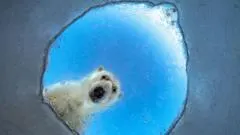
The Wildlife Photographer of the Year 2026 competition has revealed its shortlist of highly commended images, showcasing striking moments from nature captured across the globe. Among the standout entries is Norwegian photographer Audun Rikardsen's "Icy Window", taken from a seal's perspective using an underwater camera rigged beneath a breathing hole, which unexpectedly captured a curious polar bear peering down at 4am. The overall winners will be announced on 13 October 2026, with an accompanying exhibition opening at London's Natural History Museum three days later.
Other highly commended images include a drone shot by Vegard Byrkjeland Aasen of an orca in a Norwegian fjord carrying its deceased calf, behaviour that may indicate an attempt to revive or protect it, echoing similar documented cases elsewhere. Twins Andrea and Maceo Grammatico photographed a mosquito resting on a venomous fer-de-lance viper in Costa Rica, while other entries capture a black vulture and a jaguar contesting a caiman carcass in Brazil's Pantanal, migratory swifts over London, and an Eastern Japanese toad adapting to city streets after rainfall. Rikardsen, who previously won categories in 2019 and 2025, described his reaction to the polar bear image as pure elation.
- Wildlife Photographer of the Year 2026 shortlist unveiled with highly commended entries.
- Norwegian photographer captured a polar bear peering into a seal's breathing hole.
- Winners announced 13 October 2026; Natural History Museum exhibition opens 16 October.
New here? Start with this
Wildlife Photographer of the Year is an international nature photography competition run by London’s Natural History Museum. Photographers submit images of animals and their habitats, and judges select entries across several categories.
The shortlisted pictures show a range of wildlife and behaviour, from animals in remote regions to species living near people. Some moments, such as an orca carrying its dead calf, can be difficult to interpret; photographs record what was seen, while the reasons for an animal’s behaviour may not be certain.
The competition draws attention to both the variety of life around the world and the challenges of documenting it. Its annual exhibition gives visitors a chance to see the selected images in person.