A VERY cold case! Anglo-Saxon man was killed in 1,400-year-old murder mystery, experts reveal
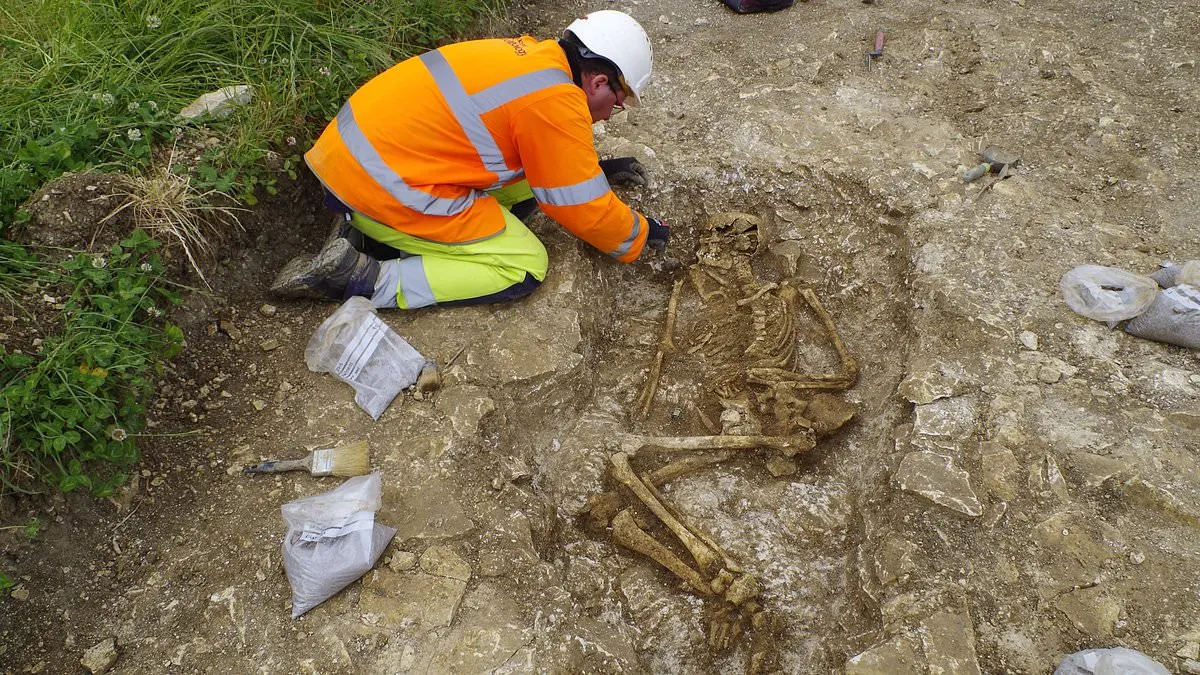
Archaeologists have identified the remains of a man killed in Lincolnshire between 635 and 655, offering evidence of a violent death in an early Anglo-Saxon community. A single severe cut to the back of his neck suggests he was struck from behind, possibly during a brawl or skirmish, though the reason for the attack is unknown.
The man was aged about 35 to 45 and was buried in a cemetery of roughly 20 graves. Isotope and DNA analysis suggests he spent his early childhood in north-eastern Britain, northern France or Germany, then came to Lincolnshire as a child; his knife and buckle indicate he was buried with items like others in the community. Excavations for the Viking Link electricity interconnector took place in 2020 and 2021, and researchers have since analysed the remains.
- A man was killed by a blow to the neck between 635 and 655.
- He was buried in a Lincolnshire cemetery with a knife and buckle.
- Scientific analysis suggests he moved to the area as a child.
New here? Start with this
The Anglo-Saxon period lasted from roughly the 5th to 11th centuries, after Roman forces left Britain. Germanic peoples settled across much of England during this time, forming small communities organised around villages and burial grounds. These cemeteries, where Anglo-Saxon people buried their dead with personal items, are among the best sources of information about how people lived during this era.
Evidence of violence is occasionally preserved in Anglo-Saxon burial sites when people were killed or fatally wounded. Such discoveries are important to archaeologists because violent deaths are relatively rare to identify in ancient skeletal remains, yet they offer direct evidence of conflict within or between early communities. The nature of any wounds can suggest whether violence was common, how it occurred, and what role it played in people's lives.
Scientific analysis of old bones and burial items can reveal where a person was born, where they travelled, and how they were viewed by their community. An individual from an early Anglo-Saxon cemetery in Lincolnshire has been examined using these techniques, revealing details about their origins and final moments. Such findings help historians understand the everyday realities of these early medieval communities, including both peaceful life and the dangers people faced.