‘Academic Barbie’ says students assume she’s a clueless fresher – but she’s a university lecturer with a PhD
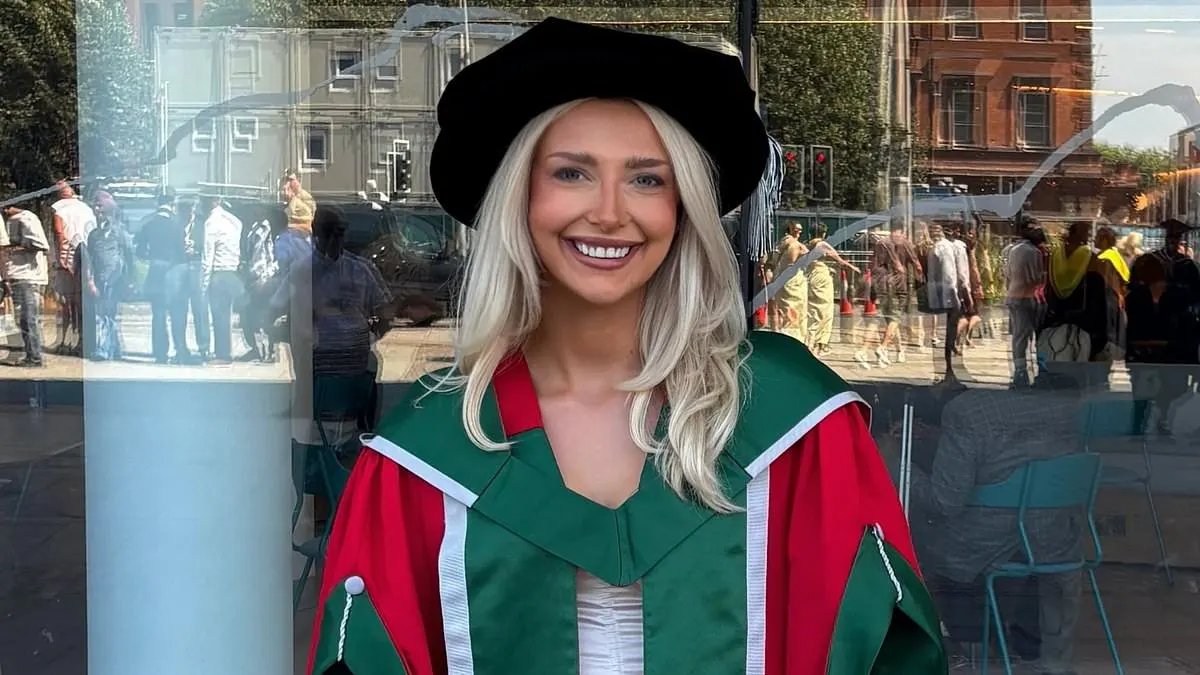
Katie Lloyd, 27, is a PhD lecturer in fashion marketing at Cardiff Metropolitan University who has revealed that students and colleagues frequently mistake her for a first-year student due to her fashionable appearance, blonde hair and meticulously groomed appearance. She challenges the stereotype that academics must look a certain way, arguing that intellectual credibility should not be tied to age or dress code, and that her experience demonstrates the need to broaden perceptions of expertise in higher education.
Lloyd completed her doctorate in March 2026, five years after graduating with a first-class degree and two years after finishing her master's with distinction. Throughout her studies, she worked simultaneously as a bridal model, personal stylist and full-time university lecturer, researching how social media influencers manage online harassment for her PhD thesis by interviewing Love Island and Married at First Sight participants. She refuses to abandon her aesthetic—which draws comparisons to Elle Woods from Legally Blonde—and aims to inspire other young women to pursue academic careers and increase diversity within higher education institutions.
- PhD lecturer regularly mistaken for first-year student due to fashionable appearance.
- Says academia wrongly assumes experts must be older and dress more plainly.
- Hopes her example will inspire more women to pursue academic careers.
New here? Start with this
Universities have traditionally expected academics to conform to certain appearance standards, often associated with older professionals in formal attire. Katie Lloyd, a 27-year-old fashion marketing lecturer at Cardiff Metropolitan University, does not fit this stereotype.
Lloyd holds a doctorate completed in March 2026, along with a first-class degree and a master's degree earned with distinction. She pursued these qualifications whilst working as a bridal model, personal stylist, and university lecturer, and her doctoral research examined how social media influencers manage online harassment based on interviews with reality television participants.
Lloyd's case raises questions about whether professional expertise and academic credibility should be judged on appearance and age rather than on actual qualifications. Her experience highlights potential barriers to diversity within higher education and suggests that the sector's cultural expectations around professional presentation may warrant reconsideration.
Both sides, in good faith
The strongest fair case each way — we don't pick a winner.
The case for
Katie Lloyd's position asserts that appearance is entirely irrelevant to academic credibility and should not influence how colleagues or students perceive professional authority. She argues that the assumptions made about her based on fashionable presentation constitute unfair stereotyping that particularly disadvantages young women in higher education. Her contention is strengthened by her demonstrable achievements—a PhD, a lecturer position, and a distinguished academic record—which prove that appearance bears no relationship to scholarly ability or professional competence. She advocates for meaningful cultural change in academia to normalise diverse aesthetic presentations and reject arbitrary dress-code conventions, positioning this as essential for making higher education genuinely inclusive.
The case against
The alternative perspective acknowledges that whilst appearance should not determine competence, it inevitably functions as a social signal of professional role and authority in practice, and these conventions exist for communicative purposes beyond mere prejudice. From this view, the specific issue of initial misidentification can be pragmatically resolved through clear introduction and communication—ensuring students understand who their lecturer is—rather than requiring systemic change to appearance standards. This position suggests that appearance will remain meaningful in social contexts regardless of what we believe should be true, and that effective inclusion is better achieved by ensuring that aesthetic non-conformity creates no substantive barriers, rather than attempting to make appearance entirely irrelevant.