Acer’s Predator Atlas 7 is the brand’s smaller handheld gaming flagship model
Developing story first seen 1 hour ago
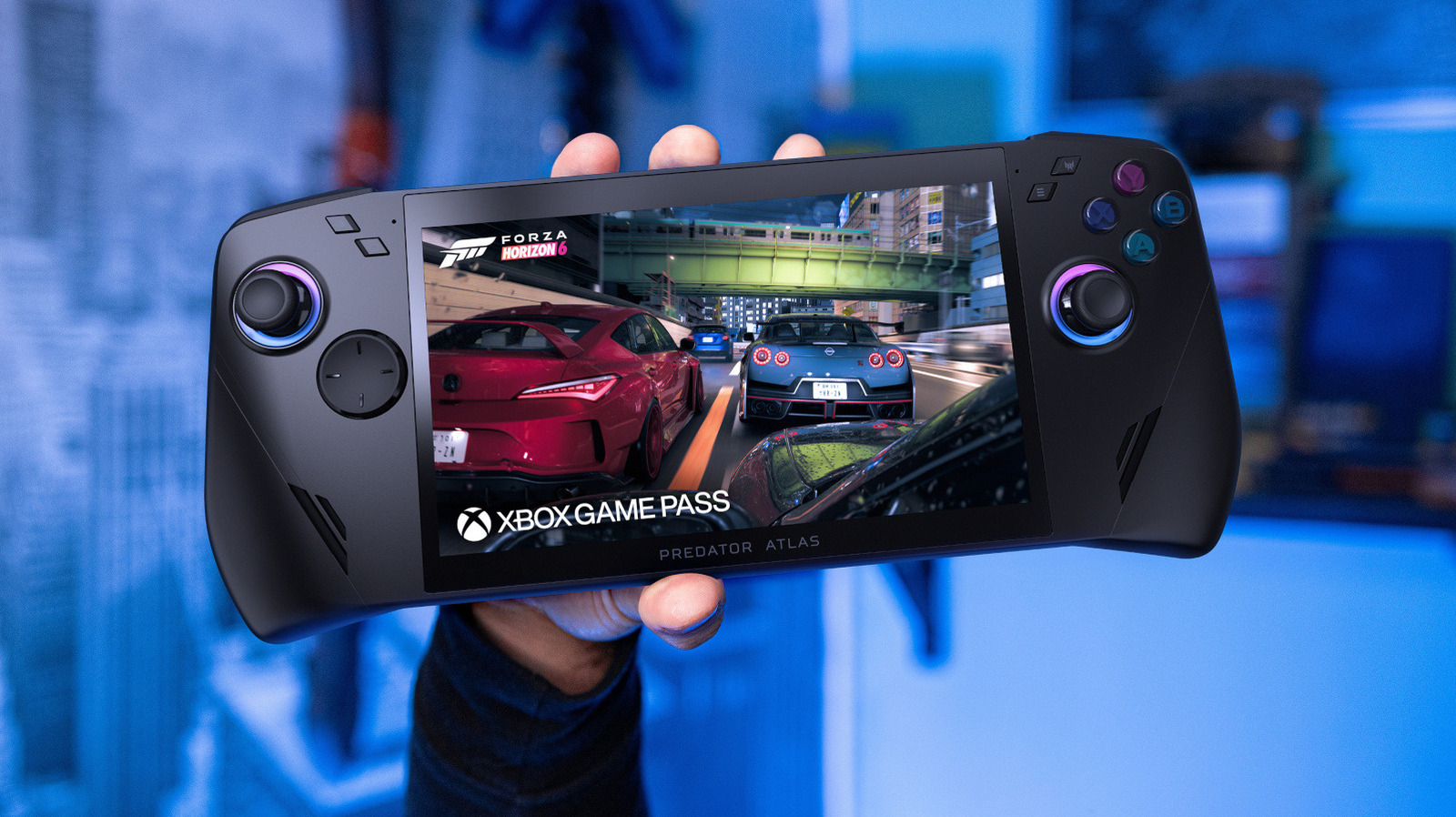
Acer has unveiled the Predator Atlas 7, a more compact version of its Predator Atlas 8 gaming handheld, at this year's IFA conference in Berlin. The company says the new device matches the flagship performance of the Atlas 8, launched in March, while offering a smaller, more ergonomic body with contoured grips, an enlarged palm rest, recessed keys and an anti-slip texture designed to make it easier to hold during long play sessions.
The Atlas 7 carries much of its bigger sibling's hardware, including up to an Intel Arc G3 Extreme processor with Intel Arc B390 graphics, up to 1TB of storage and 24GB of memory, dual-fan cooling, and a 7-inch FHD touchscreen with a 120Hz refresh rate, 500 nits brightness and Corning Gorilla Glass Victus protection. It comes with either an 80Wh battery (weighing under 750g) or a lighter 60Wh option (under 700g), plus dual Thunderbolt 4 ports, a microSD card reader, Wi-Fi 7, Bluetooth 5.4, and two free months each of Xbox Game Pass and PC Game Pass. Pricing has not been announced; the handheld is due in North America in the fourth quarter of 2026 and in EMEA from November, alongside Acer's newly unveiled Project DualPlay Mini concept device.
- Acer reveals Predator Atlas 7, a smaller version of its Atlas 8 handheld
- Same flagship specs, more ergonomic 7-inch body, up to 1TB storage
- Launches Q4 2026 in North America, November in EMEA; price unconfirmed
New here? Start with this
Acer is best known as a mainstream PC and laptop maker, but in recent years it has pushed into handheld gaming devices under its Predator gaming brand, competing with rivals like Asus and Lenovo in a growing market for portable machines that run full PC games. Earlier this year it launched the Predator Atlas 8, a larger flagship handheld, and it has now used the IFA technology trade show in Berlin to introduce a second model aimed at players who want similar power in a smaller, lighter unit.
Handheld gaming PCs occupy a middle ground between traditional games consoles and laptops: they run Windows and PC games but are built to be held in two hands like a console controller, so battery life, weight, cooling and comfort during long sessions are key selling points alongside raw processing power. IFA is one of the largest annual consumer electronics events in Europe, and companies often use it to unveil new hardware ahead of the holiday shopping season.
Full account
Acer has introduced the Predator Atlas 7, a more compact addition to its Predator Atlas line of Windows gaming handhelds, unveiled among the company's hardware announcements at this year's IFA trade show in Berlin. Acer positions the new device as a scaled-down companion to the Predator Atlas 8, which launched in March, promising equivalent flagship-level performance despite the smaller chassis. Although the difference between the two screens amounts to only a single inch, Acer says it used the extra space freed up to rework the handheld's ergonomics, adding more sculpted grips, a bigger palm rest, recessed buttons and a grippier textured finish so the device sits more comfortably in the hands during longer sessions.
Under the hood, the Atlas 7 mirrors much of what its larger sibling offers. It can be configured with up to an Intel Arc G3 Extreme processor paired with Intel Arc B390 graphics, and features a 7-inch, 16:9 Full HD touchscreen running at a 120Hz refresh rate with up to 500 nits of brightness, shielded by Corning Gorilla Glass Victus for added durability. Storage tops out at 1TB with as much as 24GB of memory available, and buyers can choose between two battery options: an 80Wh cell, which keeps the handheld under 750 grams, or a lighter 60Wh version weighing under 700 grams. Both variants retain the Atlas 8's dual-fan cooling setup, and connectivity includes two Thunderbolt 4 ports, a microSD slot, Wi-Fi 7 and Bluetooth 5.4.
On the software side, the Atlas 7 ships with two free months each of Xbox Game Pass and PC Game Pass for cloud and library game streaming, with subscription charges applying once those trial periods lapse. Acer has not yet disclosed pricing for the handheld. It is expected to reach shelves in North America during the final quarter of 2026, while customers across Europe, the Middle East and Africa should see it arrive from November.
Alongside the Atlas 7, Acer also showed off Project DualPlay Mini, an experimental 8-inch device that blends a handheld gaming layout, complete with analogue sticks, a D-pad and Xbox-style face buttons, with a flip-and-swivel mechanism that rotates the screen to reveal a small backlit keyboard underneath, effectively turning it into a pocket-sized productivity machine. Acer has shared few technical details, only confirming an Intel chip and a dual-fan cooling arrangement similar to the Atlas 8's, alongside two rear USB-C ports, one with Thunderbolt support. As a concept rather than a confirmed product, DualPlay Mini has no announced release plans or pricing.
Where outlets differ
The two accounts place very different emphasis on the two devices: the first source treats the Predator Atlas 7 as the headline story and covers its specifications in detail, mentioning Project DualPlay Mini only briefly at the end as a secondary announcement.
The second source (The Verge) does the opposite, focusing almost entirely on Project DualPlay Mini and its hybrid keyboard design, mentioning the Atlas 7 only in passing as context for Acer's existing handheld line.
The Verge's account is written in a hands-on, first-person, opinion-inflected style, with the author expressing scepticism about whether DualPlay Mini's small screen suits serious productivity work and noting they hope to try the device in person at IFA, whereas the first source sticks to a factual rundown of specs and release timing without editorial commentary.
Only the first source provides pricing/availability timing for the Atlas 7 (Q4 2026 in North America, November in EMEA); The Verge does not address Atlas 7 availability or pricing at all.
The Verge offers more design detail on DualPlay Mini specifically (e.g., differences in fan blade thickness compared with the Atlas 8, its flip-and-swivel mechanism), while the first source's description of DualPlay Mini is limited to a single sentence.
More coverage