Business news and discussion on TalkFuse.
Actually, Starliner might fly into space this year
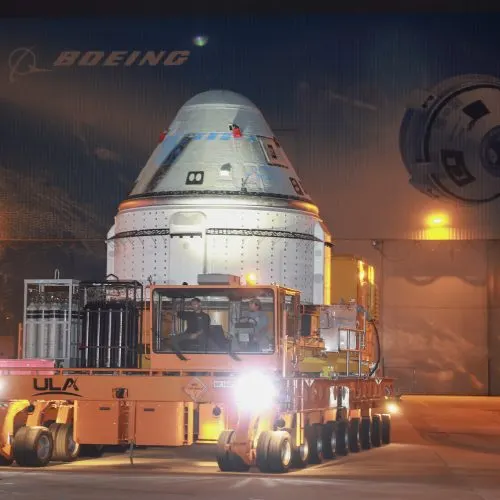
Boeing's Starliner spacecraft could finally return to flight this year, according to comments from CEO Kelly Ortberg during a quarterly earnings call. This follows NASA's formal classification of the 2024 crewed Starliner mission as a serious "Type A" mishap, after propulsion system failures stranded astronauts Butch Wilmore and Sunny Williams at the International Space Station, forcing their return via a SpaceX Crew Dragon in early 2025. A successful launch would mark a significant step for Boeing, which has been working to remediate the vehicle's problems before it can fly again.
Ortberg said the redesign of Starliner's deficiencies, mainly involving its propulsion system, was "going quite well", with the main remaining obstacle being scheduling a cargo flight with NASA rather than technical issues, contingent on docking port and crew availability at the space station. A successful cargo test could pave the way for a crewed mission in late 2027. Boeing has already taken around $2 billion in charges due to Starliner delays under its fixed-price 2014 Commercial Crew contract with NASA, and further delays would add to those losses. The development comes as SpaceX has indicated it plans to retire its Crew Dragon vehicle by 2030, raising questions about future crew transport options for NASA and private space stations.
In short
- Boeing says Starliner's propulsion fixes are going well
- Cargo flight to ISS could launch later this year
- Crewed mission possible in late 2027 if tests succeed
Steelman: both sides, in good faith
The strongest fair case each way — we don't pick a winner.
The case for
A cargo flight this year could show that Boeing and NASA have addressed the propulsion problems and restore confidence in Starliner through a cautious, uncrewed test before astronauts fly again. Completing the programme would give NASA another crew transport option, particularly as it plans for Crew Dragon’s eventual retirement, and could limit further losses on a contract already costly to Boeing.
The case against
The proposed flight remains conditional on scheduling and station availability, and the serious failures on the 2024 crewed mission mean that assurances of progress are not a substitute for demonstrated reliability. Rushing to meet a timetable could put astronauts and a space station at risk; NASA may be better served by requiring extensive testing and relying on existing transport options until Starliner’s fixes are proven.
Explained simply
Boeing's Starliner is a spacecraft designed to carry astronauts to and from the International Space Station, the orbiting facility where international crews conduct scientific research. In 2024, Boeing conducted its first crewed test flight, but the mission encountered serious propulsion system failures that raised concerns about the spacecraft's safety.
The two astronauts on the flight, Butch Wilmore and Sunny Williams, were unable to return home as scheduled. They remained at the space station whilst engineers investigated the problems, eventually returning to Earth in early 2025 aboard a SpaceX spacecraft instead of Starliner.
NASA contracted Boeing to provide an alternative to SpaceX for transporting crews to the space station. Since SpaceX plans to retire its spacecraft by 2030, NASA needs Starliner to operate reliably. The problems with Starliner have already cost Boeing around two billion dollars and raised questions about when—or whether—the vehicle can fulfil its intended role.
Business Celebrity Companies Entertainment Space Technology