Adobe crams multiple AI tools into its experimental camera app
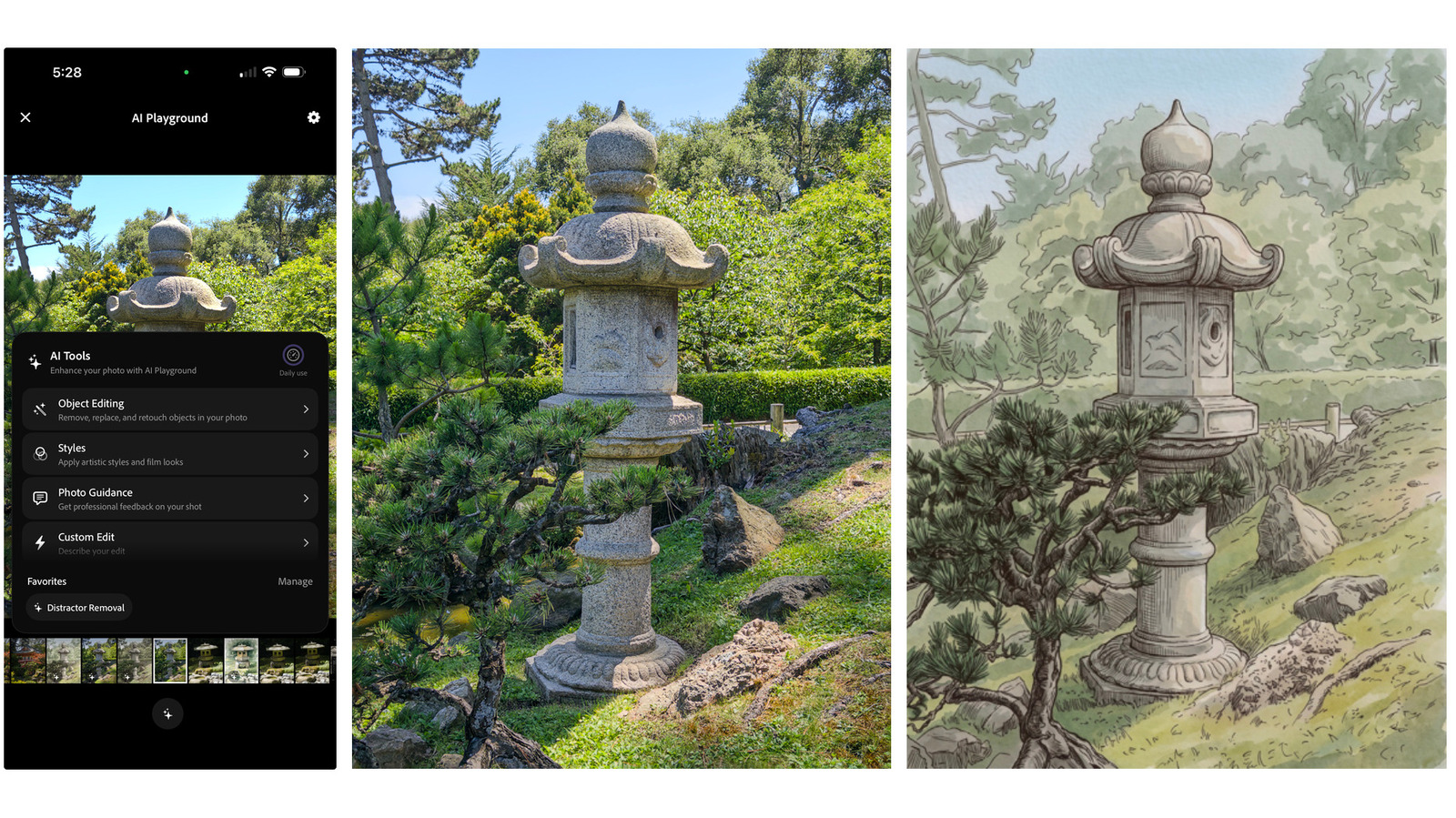
Adobe is adding a suite of generative AI tools to Project Indigo, its experimental smartphone camera app, in a feature set called AI Playground. This marks a shift for the app, which originally focused on giving mobile photographers a "natural SLR-like look," and now embraces AI-driven editing and creative assistance at the point of capture. It matters because it signals Adobe testing how far AI can go in shaping photos before and after they're taken, potentially changing what users expect from a camera app.
AI Playground has four sections: Object Editing (removing distractions like people or cars, and blurring backgrounds), Styles (transforming photos into "pen and ink" or drawing-like effects), Photo Guidance (offering critiques and shooting suggestions), and Custom Edit (prompt-based alterations, such as repositioning a subject and changing lighting). Adobe's Nextcam Team said it currently runs the feature using Google's Nano Banana model but may switch providers later. The tools are free for now but limited to a small percentage of users for a few weeks, with Adobe indicating a paid version could follow if the feature proves popular.
- Adobe adds AI Playground with generative AI tools to Project Indigo camera app.
- Features include object removal, style filters, photo critiques and prompt-based edits.
- Currently free but limited rollout; paid version possible if popular.
New here? Start with this
Adobe's Project Indigo is an experimental smartphone camera app the company has been developing separately from its mainstream editing tools, originally pitched as a way to give phone photos a more traditional, camera-like quality rather than the heavily processed look common on smartphones. Adobe is a major software firm best known for products such as Photoshop and Lightroom, and it has been steadily building more artificial intelligence features into its wider range of creative tools.
The new AI Playground feature adds several generative AI functions to Indigo, covering things like removing unwanted objects from photos, applying artistic styles, offering shooting advice, and making changes to an image based on typed instructions. Notably, Adobe is using an AI model made by Google, rather than only its own technology, to power some of these tools, which shows how companies in this space sometimes rely on each other's systems rather than building everything in-house.
This matters because it reflects a broader trend of AI being built directly into everyday tools like cameras, changing how photos are captured, edited and shared, and raising questions about how much of an image is "real" versus AI-generated or altered. Adobe is currently testing the feature with a small number of users for free, with the possibility of introducing a paid version later depending on how popular it proves.
Both sides, in good faith
The strongest fair case each way — we don't pick a winner.
The case for
Advocates see this as a natural evolution of photographic tools, putting powerful creative capabilities directly into the hands of everyday phone photographers who lack access to professional editing skills or software like Photoshop. Features such as object removal, background blurring and style transformation lower the barrier to producing polished, expressive images, while Photo Guidance offers a form of mentorship that can help people learn composition and technique. Since the tools are currently free, optional and limited to a small test group, supporters argue Adobe is responsibly experimenting rather than forcing a wholesale change on users, and that offering choice expands what a camera app can do without taking anything away from those who prefer a straightforward, unedited shot.
The case against
Critics worry that blending AI generation so deeply into the capture process erodes the basic trust that a photograph represents something that actually happened, particularly when tools can reposition subjects, alter lighting or remove people and objects from a scene. They note that Adobe is relying on a third-party model, Google's Nano Banana, raising questions about data handling, consistency and long-term control over a tool marketed under Adobe's own brand. There is also concern that positioning heavily AI-assisted images as the new standard for mobile photography could discourage people from developing genuine photographic skill, and that today's free trial is a likely precursor to a paid tier, meaning meaningful creative control may eventually come with a subscription cost.