After Doom director Hugo Martin denied reports that id Software had been gutted, “current and former employees” are disagreeing with his optimism
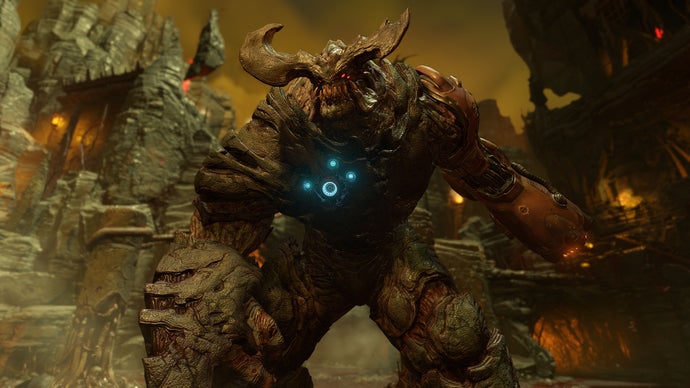
Doom director Hugo Martin recently pushed back against reports that id Software had been gutted by Microsoft's wave of 3,200 layoffs across its Xbox division, insisting the studio hadn't been reduced to a mere support outfit. However, "current and former employees" have since contradicted his optimistic framing, according to a Game Developer report citing anonymous sources who say roughly two-thirds of the remaining Doom (2016) team were let go earlier this month, including staff considered central to the veteran studio.
Sources told Game Developer that Martin's comments felt dismissive of laid-off staff's contributions, with one describing the team as "half here, half thrown away." They pointed to the gruelling seven-year development of Doom (2016) – born from the cancelled Doom 4 – as evidence of the sacrifices made by those now cut, while another source noted that Martin's benign comparison only holds because id Software was already depleted by a "massive turnover and exodus" between 2010 and 2011, before later rebuilding with new hires and outside studio support. The cuts raise questions about whether a smaller id Software can produce another triple-A shooter independently, even as Xbox leadership reportedly remains keen on future Doom and Quake titles, and shortly after the studio released its Doom: The Dark Ages Revelations DLC.
In short
- Sources dispute Doom director's claim id Software wasn't gutted by layoffs
- Roughly two-thirds of remaining Doom 2016 team reportedly laid off
- Studio's future uncertain despite Xbox's stated interest in more Doom games
Steelman: both sides, in good faith
The strongest fair case each way — we don't pick a winner.
The case for
The term "gutted" implies complete functional destruction, whereas id Software retained its leadership, including director Hugo Martin, and maintains Microsoft's backing for future projects. A studio experiencing significant layoffs is not necessarily rendered incapable of producing games, particularly when key creative personnel remain and the company continues to invest in major franchises like Doom and Quake. Studios regularly restructure through workforce reduction without ceasing to operate effectively.
The case against
Losing approximately two-thirds of the core team that laboured seven years on the previous title represents a fundamental degradation of creative capacity and institutional knowledge, regardless of formal survival. The experienced developers who understand the franchise, engine, and vision have largely departed, necessitating rebuilding with new staff—a pattern of instability exacerbated by the studio's prior exodus between 2010 and 2011. Such scale of disruption to a veteran creative team reasonably constitutes "gutting" in practical terms, even if the studio's legal entity persists.
Explained simply
id Software is a veteran video game studio best known for the Doom franchise, one of the industry's most influential game series. The studio is owned by Microsoft and has recently experienced significant workforce reductions.
The studio has experienced substantial workforce changes throughout its history. Between 2010 and 2011, id Software endured major staff losses before gradually rebuilding with new hires and support from external studios. The development of Doom (2016) took seven years, demonstrating how much the studio had managed to rebuild by that time.
The situation matters because Microsoft wants new Doom and Quake games, but whether id Software can make these large-scale projects with a significantly smaller workforce is unclear. These franchises have been historically important both to the studio's identity and to the broader video game industry.
Art Culture Entertainment Gaming Software Technology