Politics news and discussion on TalkFuse.
After Midterms Disaster, Tech Bros Dumping GOP Like A Cheap Hooker
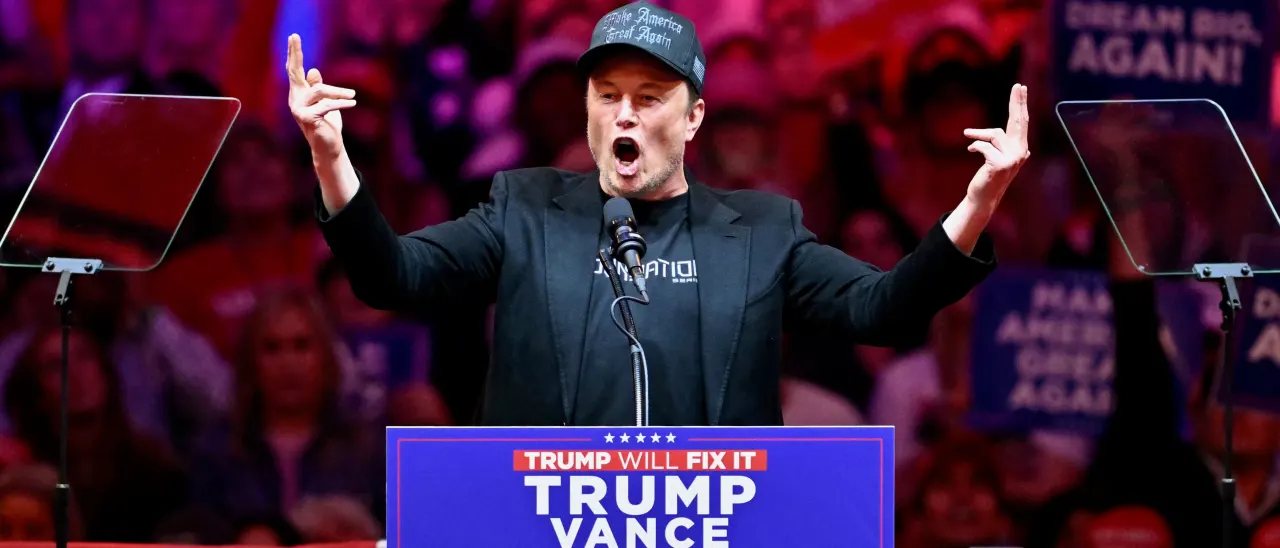
Elon Musk has distanced himself from the MAGA label after spending heavily on Republican candidates in the 2026 midterms, which the article says brought little return as Democrats are expected to regain control of Congress. His remarks suggest a shift towards presenting himself as politically moderate and supportive of checks and balances.
At the New York Times DealBook Summit, Musk said he felt “pretty foolish” about spending so much without seeing much for it, while arguing money had only a limited effect on election results. The article also points to SpaceX returning to the name “Gulf of Mexico” and Palantir chief Alex Karp stressing his Democratic roots and balanced political giving, despite the company’s federal contracts and past criticism of Democrats. The supplied article ends mid-sentence while discussing Karp’s objections to Trump’s immigration crackdown.
In short
- Musk says his costly midterm spending had little visible return.
- He describes himself as moderate and rejects blind party loyalty.
- Palantir chief Alex Karp emphasises bipartisan giving and progressive roots.
Steelman: both sides, in good faith
The strongest fair case each way — we don't pick a winner.
The case for
Musk and other technology leaders have reason to reconsider close ties to the GOP if heavy political spending brought little electoral return and the party’s direction no longer reflects their views. Emphasising moderation, checks and balances, or a broader political identity may also help them serve employees, customers and investors across the political spectrum.
The case against
Their apparent distancing may be more strategic repositioning than a principled break: prominent executives can protect their public standing and business relationships when a party loses influence, while retaining access to government and continuing to support candidates on both sides. From this perspective, changing labels or gestures such as adopting a familiar geographic name do not by themselves show a substantive shift in policy or political commitments.