After this World Cup, here’s what I feel: a kind of messy hope | Jonathan Liew
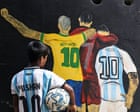
Jonathan Liew reflects in the Guardian on the 2026 World Cup, arguing that far from reinforcing nationalism, the tournament exposed how flimsy and fluid national allegiance has become. He notes that supporters worldwide adopted teams with no personal connection to them, treating national identity as something disposable rather than fixed, which challenges the long-held assumption that international football is the ultimate stage for patriotic fervour.
He cites examples such as Bangladesh's mass adoption of Argentina, central Asian friends in London backing Uzbekistan, and the Arab diaspora rallying behind Morocco and Egypt, alongside high-profile figures like Mike Tyson and Trevor Noah wearing rival kits at the MetLife Stadium final. The piece also highlights how squads themselves reflect globalisation and migration rather than clear-cut nationhood, noting that 40 of the 48 competing nations included overseas-born players, with only one member of Curaçao's squad actually born there and Cape Verde's team featuring several players born in Rotterdam.
- Guardian column argues the World Cup showed national identity as flimsy, not fixed
- Fans worldwide adopted teams unconnected to their own nationality
- 40 of 48 squads featured players born overseas, reflecting migration and diaspora