Entertainment news and discussion on TalkFuse.
Against all odds, SpaceX finally tugs Starship into port after 24 days at sea
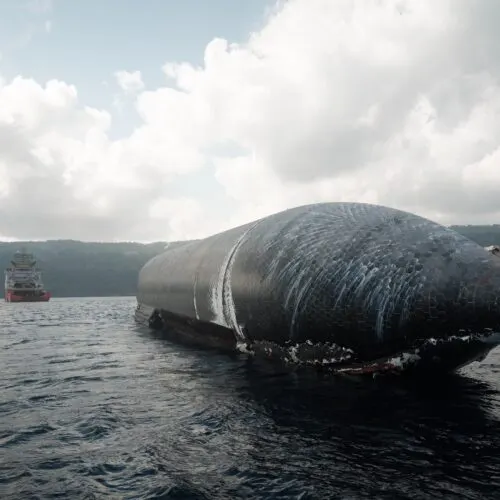
SpaceX has successfully towed its most recent Starship prototype to Christmas Island, an Australian territory, after it survived splashdown in the Indian Ocean and remained intact for 24 days at sea. Previous Starships have disintegrated after tipping over post-splashdown, so recovering an intact vehicle gives engineers a rare chance to physically inspect hardware, particularly the heat shield, rather than relying solely on onboard sensor data. This matters because SpaceX is trying to perfect Starship's reusability, and hands-on inspection could accelerate fixes that data alone cannot reveal.
The spacecraft, which splashed down after its July 24 test flight, was towed several hundred miles by a recovery ship using inflatable Yokohama fenders to keep it afloat in rough seas; Elon Musk had said last week that recovery looked doubtful. Engineers will now examine the vehicle, over 170 feet long, near Christmas Island before deciding how to return it to Starbase in South Texas, more than 10,000 miles away, likely by sea since it is too large for aircraft. This particular ship, its roughly 18,000 heat-shield tiles and structure exposed to corrosive salt water, won't be reused, but future vehicles are meant to be caught directly at the launch tower for rapid turnaround.
In short
- SpaceX recovered an intact Starship from the Indian Ocean after 24 days
- Vessel towed to Christmas Island for inspection before return to Texas
- Rare chance to physically examine heat shield and structural performance
Steelman: both sides, in good faith
The strongest fair case each way — we don't pick a winner.
The case for
Recovering an intact Starship after 24 days at sea represents valuable engineering progress. Physical inspection of the heat shield tiles and structural degradation patterns reveals insights that onboard sensors cannot capture, providing data that directly accelerates improvements to reusability. These lessons learned from hands-on examination will inform how future recovered vehicles are maintained and processed, making each recovery mission a meaningful step towards perfecting rapid reuse cycles.
The case against
Whilst the recovery demonstrates impressive technical capability, it raises fair questions about resource allocation. This particular vehicle will not fly again, and future Starships will be caught at the launch tower anyway, making ocean recovery a transitional approach. The environmental and financial costs of deploying ships thousands of miles across the Indian Ocean and transporting the salt-corroded vehicle 10,000 miles back to Texas warrant scrutiny; similar insights about heat shield degradation might be obtained more cost-effectively through enhanced sensors and simulation.
Explained simply
Starship is SpaceX’s large spacecraft and rocket system, designed to carry people and cargo and eventually be reused. Its test flights help engineers learn how the vehicle performs, especially when it returns through the atmosphere and lands at sea.
SpaceX is led by Elon Musk, and its engineers are working to make Starship reusable so it can fly again with less rebuilding. Earlier test vehicles broke apart after splashdown, limiting what engineers could inspect directly; an intact vehicle offers a closer look at its heat shield and structure.
That matters because sensors can record how a flight went, while physical inspection may reveal damage or faults the data cannot show. The recovered prototype has been exposed to seawater and is not intended to fly again, but what engineers learn could inform future versions.
Celebrity Entertainment Space Technology