Nikon names Nguyen Nam Nhat new winner after AI rules breach
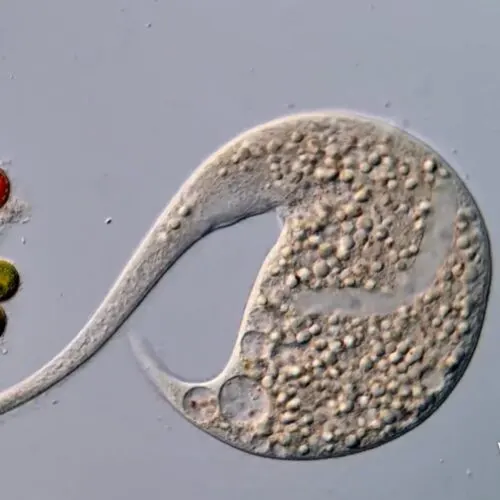
Nikon has disqualified the original winner of its Small World in Motion competition after finding the entry did not meet its rules on generative AI. The decision makes Nguyen Nam Nhat of Vietnam the new winner, with a video showing a tiny roundworm and a single-celled organism.
Researchers had questioned abnormalities in the disqualified video, including features that seemed to appear and disappear, and apparent AI watermarks in source files. Ning Xu said AI helped distinguish and visualise features in reconstructed images, but denied using it to generate the experimental film or the cilia and their movement. The other finalists have each moved up one place, and Nikon says the case has prompted it to review competition rules and evaluation procedures.
- Nikon disqualified the original winner over generative AI rules.
- Nguyen Nam Nhat of Vietnam is the new winner.
- Nikon plans to revisit its rules and judging procedures.
New here? Start with this
Nikon's Small World in Motion is a prestigious annual competition that showcases close-up videos of tiny life forms filmed through microscopes. It celebrates scientific imaging and microscopy, attracting submissions from researchers and imaging professionals worldwide. The competition has recently become caught up in a wider debate about artificial intelligence in image creation and whether such tools should be permitted in professional competitions.
The core issue is that generative AI can now enhance, reconstruct, or alter images and videos in ways difficult for judges to detect. This year's competition revealed suspicious elements in one winning entry that suggested AI may have been used to generate or substantially alter the video. These concerns raised questions about whether the competition's existing rules adequately addressed AI use and what should count as acceptable practice.
The controversy reflects a broader tension across photography, art, and scientific communities about whether AI assistance is acceptable. Many worry that AI-generated or AI-altered content could undermine the credibility of scientific imaging, where authenticity is paramount, whilst others see AI as a legitimate modern tool. How competitions handle these questions is significant because their decisions influence standards across these fields and shape expectations for responsible AI disclosure.
Both sides, in good faith
The strongest fair case each way — we don't pick a winner.
The case for
A scientific imaging competition must maintain credibility by enforcing strict standards around authenticity. The presence of abnormal features that appeared and disappeared, combined with AI watermarks in source files, raised legitimate concerns about data integrity. Such competitions represent not just technical skill but trustworthiness in scientific visualisation, and upholding rules against generative AI use—even when boundaries are uncertain—protects the integrity that makes the award meaningful.
The case against
The distinction between using AI to enhance and visualise existing microscopy data versus generating false imagery is practically important, yet the competition rules and evaluation process failed to articulate this distinction clearly. Ning Xu appears to have used AI responsibly to clarify real biological features rather than to fabricate footage, a use case that distinguishes legitimate scientific practice from rule-breaking. Without explicit guidance on what computational enhancement is permissible, disqualifying an entry based on this ambiguity seems unfairly harsh and could discourage valuable use of modern tools in scientific communication.
Read the full article at the source →
Originally published by Ars Technica as “AI disqualification yields new Nikon Small World in Motion winner”.