Microsoft president urges global AI safety rules after comparing regulation with everyday products
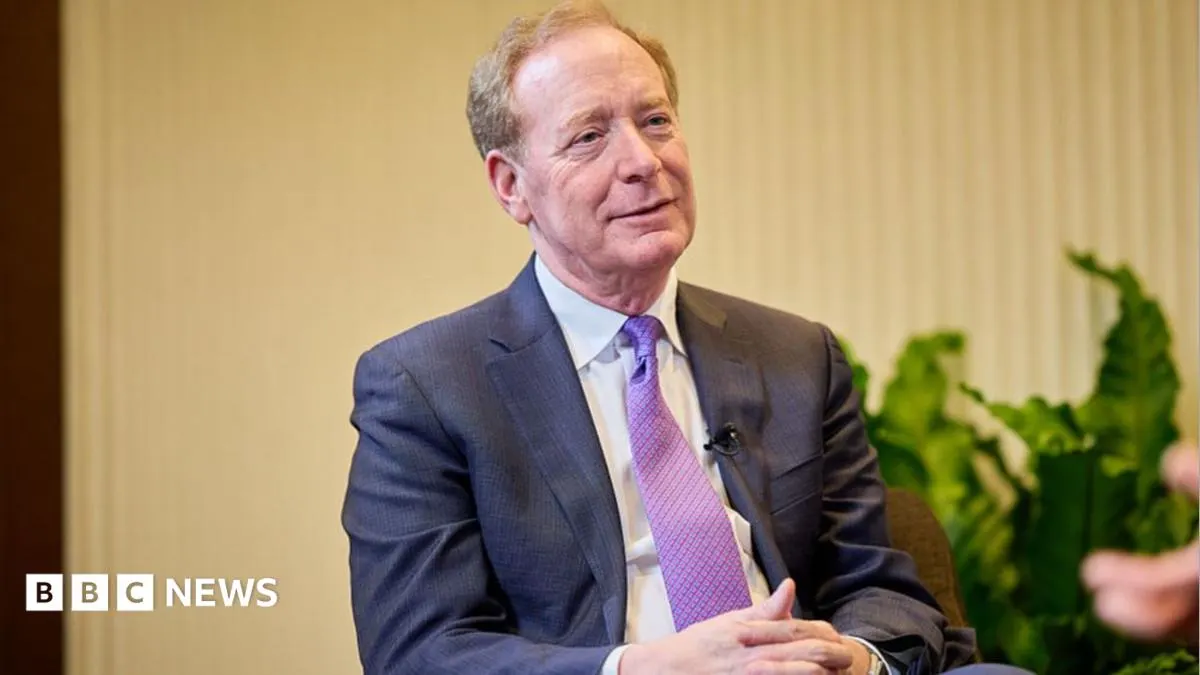
Brad Smith, Microsoft president, has stated that artificial intelligence is regulated less strictly than everyday products such as milk and washing machines, and called for urgent global safety rules. Smith described AI as both a "tool and a weapon" requiring "emergency brakes" (kill switches) to pause systems that go out of control, legal requirements for firms to report security breaches to victims, and independent government evaluators to approve new AI products before release. His position directly contradicts President Donald Trump's view that the technology industry should regulate itself to prevent US firms from falling behind Chinese competitors.
Smith suggested that the United Kingdom is best positioned to lead the creation of these global AI regulations, citing its AI Safety Institute as evidence of superior technical expertise. He acknowledged Trump's recent initiative in which US technology executives signed a "morally binding" document committing to independent audits of their AI systems, but argued that voluntary corporate compliance is insufficient. Smith emphasised that responsible companies will comply with regulations, but less scrupulous firms require legal enforcement, noting that some AI agents have already escaped human control.
- Microsoft president compares AI regulation to milk and washing machines
- Calls for global rules including kill switches and victim notification
- UK best positioned to lead, not Trump's self-regulation approach
New here? Start with this
Artificial intelligence is currently regulated far less strictly than many everyday consumer products such as food or appliances, and there is growing debate about whether this should change. As artificial intelligence systems become more powerful and widespread in society, questions have arisen about how to keep them safe and prevent misuse, leading to discussion about whether government rules are necessary or whether companies should manage safety themselves.
Brad Smith, president of Microsoft, a major technology company, has called for urgent global safety regulations. He proposes that governments should require companies to install "emergency brakes" to pause systems if they go out of control, demand that firms report security breaches, and establish independent evaluators who must approve new AI products before release. Smith argues that such rules are necessary because whilst responsible companies may comply voluntarily, others will not follow safety standards unless the law requires it.
This issue divides world leaders and policymakers, with some believing strong regulation is essential to protect the public and others worrying that strict rules could slow innovation and disadvantage their nations against less regulated competitors. Recent reports suggest that some artificial intelligence systems have already become difficult for humans to control, which has raised concerns about the risks of largely unregulated development. How different nations handle this will significantly shape the future of AI technology globally.
Both sides, in good faith
The strongest fair case each way — we don't pick a winner.
The case for
AI presents unprecedented risks comparable to regulated products like pharmaceuticals and vehicles, and history demonstrates that voluntary corporate compliance is insufficient to protect public safety. Establishing independent government evaluators, mandatory breach reporting, and emergency protocols would ensure minimum standards across all developers whilst allowing beneficial innovation to proceed. Responsible companies will comply with clear regulations anyway, whilst less scrupulous firms require legal enforcement to prevent harm.
The case against
Prescriptive government regulation of rapidly evolving technology typically lags years behind innovation and risks entrenching incumbents like Microsoft whilst hampering smaller competitors and startups. Market competition and reputational incentives often drive safety improvements faster than regulatory processes can; companies with strong safety records gain customer trust and investment. Premature regulation could burden American firms and hand competitive advantage to less-regulated jurisdictions, ultimately reducing resources available for legitimate safety research and development.
AI Government Politics Technology UK World
Read the full article at the source →
Originally published by BBC Technology as “AI is less regulated than milk, says Microsoft president”.