Technology news and discussion on TalkFuse.
AI surge could strain US capacity and overheat economy, Fed’s Goolsbee says
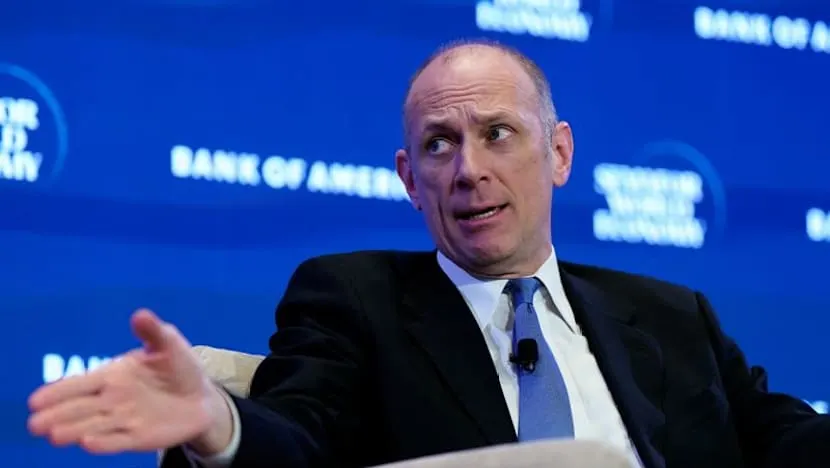
Chicago Federal Reserve President Austan Goolsbee warned that the rapid expansion of artificial intelligence could push the US economy beyond its capacity and add to inflation, making it harder for the Fed to bring price rises down. He said the surge in business investment, especially in data centres, risks driving demand ahead of what the economy can supply.
Goolsbee cited a reported $1.5 trillion Anthropic IPO as a further factor, saying how investors use newly accessible funds could affect the wider economy. US inflation remains above the Fed’s 2 per cent target, and Goolsbee said the evidence does not show it returning there on its own. The Fed is expected to raise rates by a quarter-point at its December 8-9 meeting, though he said all options remain open.
In short
- Goolsbee says AI investment could overheat the US economy.
- Data-centre spending may add to inflation above the Fed’s target.
- The Fed is weighing rate rises at its December meeting.
Steelman: both sides, in good faith
The strongest fair case each way — we don't pick a winner.
The case for
Rapid AI investment, including spending on data centres, may push demand beyond the economy’s ability to supply workers, equipment and energy in the near term. With inflation still above target and not clearly falling on its own, the Fed could reasonably treat this surge as an additional risk and keep interest rates high enough to contain price pressures.
The case against
AI investment may expand productive capacity over time by improving efficiency and enabling new products, so strong spending does not necessarily mean the economy is overheating. Raising rates in response to a projected demand surge could restrain investment and broader activity before inflationary effects are established, particularly if supply capacity grows alongside demand.
Explained simply
The Federal Reserve, often called the Fed, is the US central bank. It aims to keep prices stable, with an inflation target of 2 per cent, and uses interest rates to influence borrowing and spending across the economy.
Austan Goolsbee leads the Federal Reserve Bank of Chicago and helps set US monetary policy. Artificial intelligence has prompted heavy business spending, including on data centres, the buildings and equipment that power computing services.
If spending grows faster than the economy’s ability to provide workers, goods and services, prices can rise. That matters because inflation is still above the Fed’s target, and interest-rate decisions affect households and businesses as well as investment.
AI Americas Business Economy Technology World