AI will help find cure for cancer ‘within our lifetimes’, says Arm Holdings chief
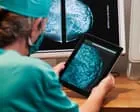
Rene Haas, chief executive of the Cambridge-based chip designer Arm Holdings, has claimed that artificial intelligence will help find a cure for cancer "within our lifetimes", arguing that modelling how DNA markers are affected by cancer is currently too complex for both humans and existing AI systems, but that increasingly sophisticated computers will eventually solve it. The claim matters because Arm is a hugely influential force in the global chip industry, and Haas's remarks reflect growing confidence among tech executives that AI-driven modelling could accelerate breakthroughs in medicine, building on existing uses such as AI-powered tools already speeding up NHS lung cancer diagnoses.
Haas, who left the board of AstraZeneca in April, made the comments to the BBC and also predicted that AI would enable widespread use of humanoid robots capable of learning and adapting to new tasks within five years, though he said chip shortages were currently holding back progress. Arm, listed in New York but headquartered in Cambridge, supplies chip designs to roughly 500 customers worldwide including Apple, Samsung, Qualcomm and Nvidia, employs more than 7,000 people, and is valued at $269bn (£199bn), making it Britain's biggest technology company. Haas, who became Arm's chief executive in 2022, has also recently been named head of SoftBank's international business and stands to become a billionaire under a pay scheme tied to turning Arm into a trillion-dollar company.
In short
- Arm boss says AI will help cure cancer within our lifetimes
- Predicts widespread humanoid robots within five years, chip shortages permitting
- Arm is Britain's biggest tech firm, valued at $269bn
Steelman: both sides, in good faith
The strongest fair case each way — we don't pick a winner.
The case for
AI could help researchers analyse vast, complex patterns in DNA and cancer biology that are beyond the reach of current methods, potentially revealing targets for new treatments. Existing AI tools are already helping speed up some diagnoses, and continued advances in computing could make ambitious medical breakthroughs more achievable within a generation.
The case against
Finding effective cancer treatments involves more than modelling DNA: cancers vary widely, and promising results must be tested for safety and effectiveness through lengthy clinical research. A confident prediction from a technology executive is not evidence that AI will deliver a cure on that timescale, and framing the goal as a single cure may overstate what progress against many different diseases can mean.
Explained simply
Arm designs the basic plans for chips used by companies such as Apple, Samsung and Nvidia. Its chief executive, Rene Haas, is a prominent figure in the technology industry, and he has also served on AstraZeneca’s board.
Cancer involves changes to DNA that can affect how cells grow and behave. Researchers are exploring whether AI can help analyse these complex patterns; some AI tools are already being used to speed up NHS lung cancer diagnoses.
Haas’s prediction reflects wider hopes that more powerful computers could help researchers find treatments. A cure for cancer would have major medical consequences, but cancer includes many different diseases, and the claim is a forecast rather than an established scientific conclusion.
AI Art Business Culture Health Medicine Software Technology