Albanian opposition lawmakers disrupt parliament with smoke flares and furious attacks on socialist PM
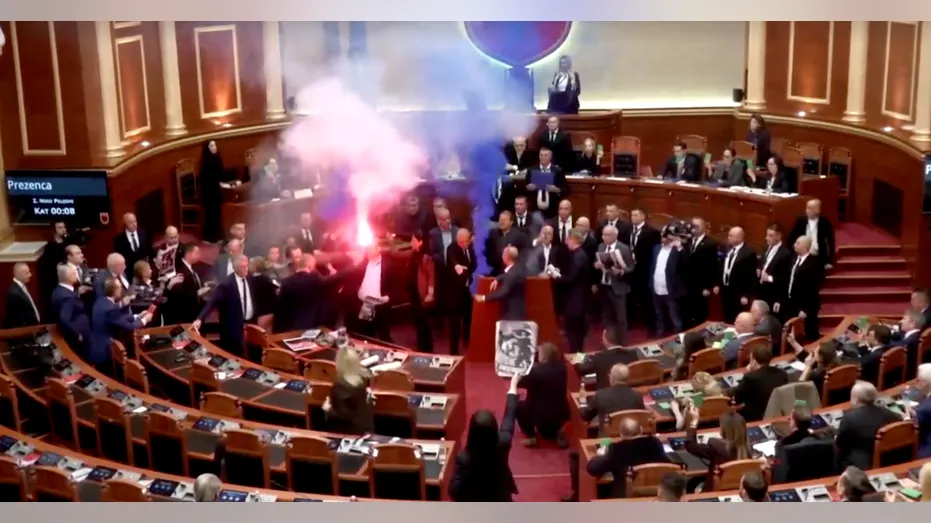
Albanian opposition lawmakers set off coloured smoke flares and blocked the podium during a parliamentary vote on Thursday, bringing the session into chaos. The disruption escalated tensions after weeks of student-led protests calling for Prime Minister Edi Rama to resign over alleged corruption and economic and education concerns.
Opposition leader Sali Berisha accused government lawmakers of criminality before his microphone was cut off, while colleagues displayed images of protesters injured by police rubber bullets. The demonstrations began on 13 October and have spread beyond Tirana, with clashes and fires reported; Rama has alleged foreign involvement and introduced fines of about $6,000 for people participating in protests that turn violent. Another demonstration is planned for Saturday.
In short
- Opposition lawmakers filled parliament with coloured smoke.
- Student protests demand Prime Minister Edi Rama’s resignation.
- Rama introduced fines of about $6,000 for violent protests.
Steelman: both sides, in good faith
The strongest fair case each way — we don't pick a winner.
The case for
Opposition lawmakers can argue that forceful disruption was justified to draw attention to serious public concerns about alleged corruption, living costs and education, especially after weeks of protests and reports of injuries. Parliamentary protest can be seen as a way to challenge the government and demand accountability when opponents believe ordinary debate is being ignored.
The case against
The government and critics of the disruption can argue that setting off flares and blocking the podium obstructs democratic proceedings and risks public safety, weakening the institutions needed to investigate allegations and resolve disputes. They may also contend that protest is legitimate only when it remains peaceful, while fines for violence can be defended as a way to protect people and public order.
Explained simply
Albania is a parliamentary republic, where elected lawmakers pass laws and the prime minister leads the government. Edi Rama, leader of the Socialist Party, has been prime minister since 2013; Sali Berisha leads the opposition Democratic Party and previously served as both president and prime minister.
Albanian politics has long been divided between the two parties, and accusations of corruption have been a recurring source of dispute. Student-led protests have also raised concerns about education and the cost of living, linking those issues to demands for political accountability.
The protests have spread from the capital, Tirana, to other parts of the country. Disputes over allegations of police force and the government’s response have added to tensions between protesters and the authorities.
Americas Art Culture Government Politics World