Business news and discussion on TalkFuse.
Universal Credit work exemptions rose by 486,000 in a year
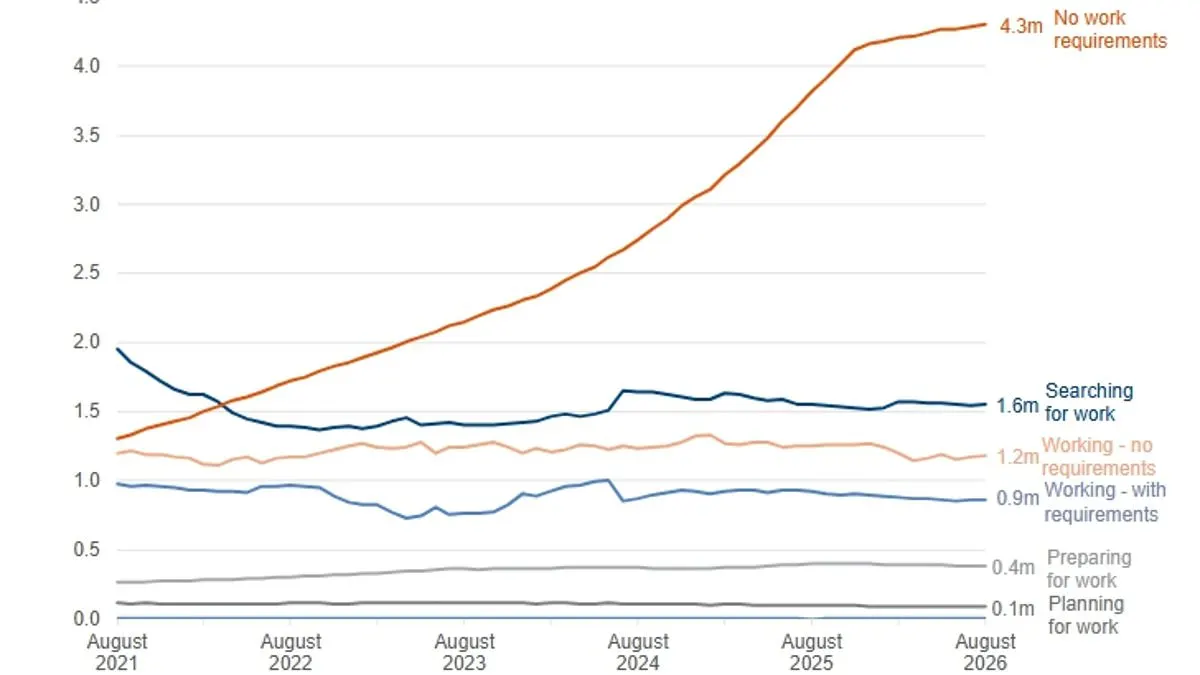
Department for Work and Pensions figures show that 4.3 million Universal Credit claimants had no work-related requirements in August, up by 486,000 over a year. They made up 51.4 per cent of the 8.4 million people receiving the benefit, prompting questions about who the system expects to work and how it supports claimants.
The category includes people in full-time education, those over state pension age, parents of children under one, and people assessed as having no prospect of work; some other claimants must take steps such as attending interviews or seeking jobs. The department says much of Universal Credit’s growth reflects transfers from older benefits, but of the 124,000 increase in claimants with no requirements between January and August 2026, only 1,700 had transferred from the legacy system. Separate figures show the child element was paid for 1.6 million more children in May after the two-child limit was removed in April 2026.
In short
- 4.3 million Universal Credit claimants had no work requirements in August.
- They represented 51.4 per cent of all Universal Credit claimants.
- The two-child benefit cap was removed in April 2026.
Steelman: both sides, in good faith
The strongest fair case each way — we don't pick a winner.
The case for
The rise in claimants with no work-related requirements may reflect people whose circumstances make job-search obligations inappropriate, including parents of infants, students and people assessed as having no prospect of work. Exemptions can protect health and caregiving responsibilities, while adequate support for children and people in hardship is a legitimate purpose of the benefit system.
The case against
A sharp rise in exemptions can prompt reasonable questions about whether the system is helping people who could work to move towards employment, and whether its rules and assessments are being applied consistently. With most of the reported recent increase not explained by transfers from older benefits, scrutiny of the causes, costs and employment support available is justified.
Explained simply
Universal Credit is a means-tested benefit for people on low incomes, including those who are out of work or in work but need financial support. It replaced several older benefits, and people receiving it may face different work-related requirements depending on their circumstances.
Some claimants are not required to look for work or take other work-related steps. This group includes people caring for a child under one, people in full-time education, those over state pension age and people assessed as having no prospect of work; others may have to attend interviews or seek jobs.
The Department for Work and Pensions runs Universal Credit and sets the rules for these requirements. The figures matter because they show how many claimants are outside work-related conditions, while changes to eligibility and support can affect household incomes and expectations about work.
Read the full article at the source →
Originally published by Daily Mail as “Almost half a million people signed on to unemployment benefits without any obligation to look for work in the last year”.