An entire settlement destroyed in just seconds: Video shows huge torrent of floodwater bulldoze through buildings in Nepal as people try to outrun certain death
Developed over time first seen 2 months ago
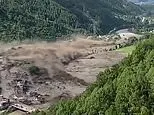
Flash floods and mudslides have killed at least 95 people and devastated settlements along Nepal’s border with Tibet, with footage showing torrents of water and mud sweeping through homes and roads within seconds. The disaster matters because it has caused extensive loss of life, displaced communities and left large numbers of local people and visitors unaccounted for across a 30-mile area.
Officials believe a 4.4-magnitude earthquake triggered an ice avalanche that dammed the Lhende river, before the accumulated water burst downstream. More than 300 tourists and at least 90 Nepali citizens were reported missing, including foreign pilgrims travelling towards Mount Kailash in Tibet, while rescue teams warned that the death toll could rise.
- Nepal floods killed at least 95 people.
- An earthquake-linked ice avalanche may have caused the flooding.
- Hundreds of locals and tourists remain unaccounted for.
New here? Start with this
Nepal’s northern border with Tibet includes high mountain valleys where rivers can rise suddenly after heavy rain, landslides or ice collapses. Communities and roads in these areas are often built close to river channels, leaving little time to escape when water and debris surge downstream.
The Lhende river runs through a remote part of this Himalayan region. An ice avalanche can block a river temporarily, forming a lake behind the blockage; if it gives way, the released water can become a powerful flash flood carrying mud, rocks and parts of buildings.
Mount Kailash, in Tibet, is an important pilgrimage destination for followers of several religions, including Hindus and Buddhists. The route attracts visitors from Nepal and other countries, while the rugged terrain and damaged transport links can make search and rescue work difficult.
Full account
Video from the Nepal–China border shows a sudden surge of water, mud and debris sweeping through a riverside settlement, with people running across nearby fields as buildings and trees are engulfed. The footage is reported to have been filmed near Gyirong in Tibet, close to Nepal’s border.
The flooding affected the Bhote Koshi and Lhende Khola river systems, leaving extensive damage to roads, homes and border infrastructure. Reports said at least 95 bodies had been recovered in Nepal, while rescue teams continued searching areas covered by mud and debris.
Authorities and experts were examining whether a magnitude-4.4 earthquake triggered an ice and rock avalanche that blocked a river before the accumulated water burst through. Officials also warned that another flood could be possible if a remaining blockage failed.
Tourists, trekkers and local residents were among those reported missing. Rescue operations involved Nepali and Chinese authorities, while India and the European Union were reported to have offered assistance. The US State Department said it was monitoring the impact on American citizens and liaising with local agencies.
Where outlets differ
Source 1 presents the disaster principally through the video and describes a 30-mile trail of destruction, while Source 2 concentrates more on the suspected earthquake-and-avalanche mechanism and the official response.
The reported missing-person totals are not consistent: Source 1 cites 341 foreign nationals and at least 93 Nepalis unaccounted for, whereas Source 2 says Nepal’s tourism authority reported 484 missing tourists.
Source 1 gives differing figures for British nationals within its own account, initially referring to 33 Britons missing but later listing 12 people from the UK. Source 2 says at least three US citizens were missing, while noting unconfirmed reports that the number could be higher.