Politics news and discussion on TalkFuse.
Andy Burnham says Russell Brand committed ‘horrifying’ crimes against women as Labour faces questions about support for rapist
Developing story first seen 2 hours ago
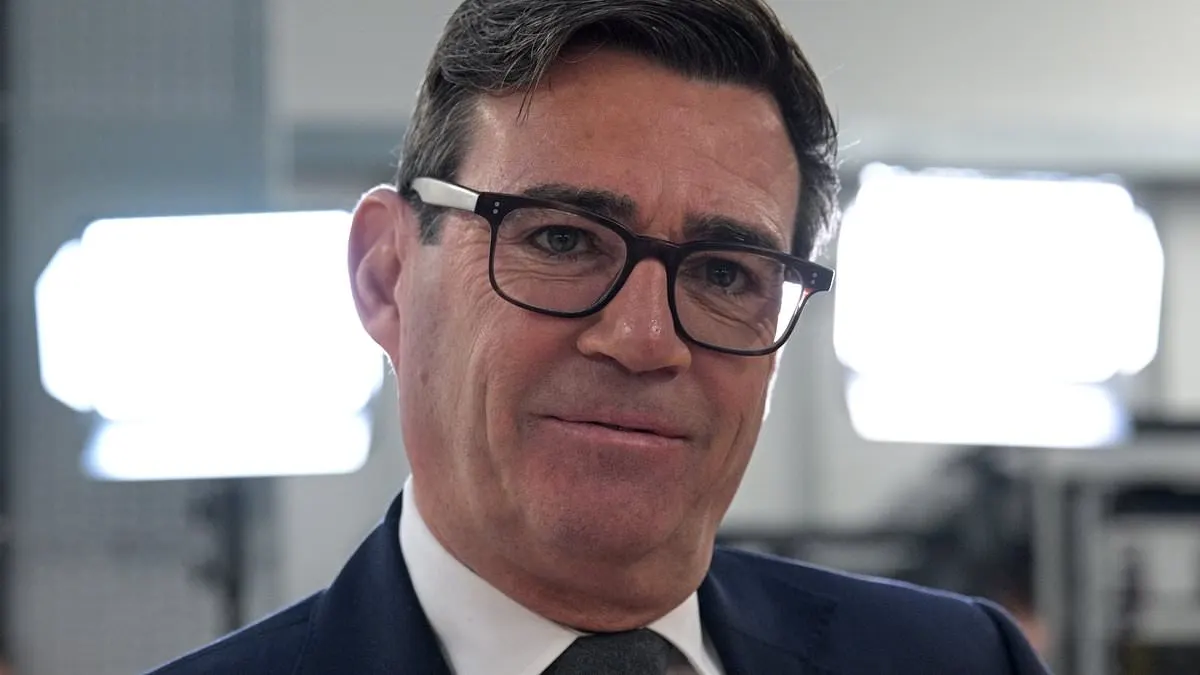
Andy Burnham has condemned Russell Brand’s crimes against women as “horrifying” and praised the victims who came forward. The comments come as Labour faces renewed scrutiny over politicians’ past efforts to engage Brand and his large following.
Burnham praised Brand on social media in 2014, and Ed Miliband interviewed him before the 2015 election. The article also revisits Brand’s 2012 appearance at a parliamentary committee, arranged by Labour MP Keith Vaz, who later resigned after being suspended from the Commons over offering to buy drugs for male sex workers. The Prime Minister said his past support for Brand was more than a decade ago and that he did not know the full extent of his conduct.
- Sources
- 2
- Outlets
- 2
- Left · Centre · Right
- 0 · 1 · 1
In short
- Burnham called Brand’s crimes against women horrifying.
- Labour politicians’ past links with Brand are under scrutiny.
- The article revisits his 2012 committee appearance arranged by Keith Vaz.
How this story developed
- 2 hours ago Andy Burnham has called Russell Brand’s crimes against women “horrifying” and praised the victims who came forward, as Labour faces renewed questions about prominent figures’ past support for the comedian.
- 2 hours ago Andy Burnham has condemned Russell Brand’s crimes against women as “horrifying” and praised the victims who came forward. The comments come as Labour faces renewed scrutiny over politicians’ past efforts to engage Brand and his large following.
Full account
Andy Burnham has described Russell Brand’s crimes as “horrifying” and praised the women who came forward, as Labour faced renewed questions about its past association with the comedian. Brand was found guilty of one count of rape and three counts of sexual assault. He was acquitted of two further rape counts and one count of attempted indecent assault. The allegations heard at trial concerned six women and incidents said to have taken place between 1999 and 2009.
Burnham’s comments followed scrutiny of a supportive social media post he made in 2014, when he was Labour’s shadow health secretary. Asked about it, he said he had not known the full extent of Brand’s conduct or what he would go on to do. He also said that people do not always know everything about public figures, while stressing that wrongdoing should be exposed and that Brand had rightly been held to account. The Prime Minister likewise credited the victims for their courage and praised journalists who brought the allegations to light.
Labour figures had sought Brand’s attention when his political following was growing. Ed Miliband, then party leader, was interviewed by Brand ahead of the 2015 general election; Brand subsequently endorsed Labour, despite previously dismissing voting. Miliband has since said he regrets taking part in the interview. Burnham’s 2014 post came amid media criticism of Brand over his housing arrangements. One account links it to a newspaper claim about rent and a landlord based in a tax haven, alongside Brand’s campaigning against tax avoidance. Burnham’s post criticised what he called a media effort to discredit someone who challenged its conventions and urged Brand to continue.
The renewed attention has also brought back a 2012 appearance by Brand before the Commons Home Affairs Committee, at the invitation of its then chair, Labour MP Keith Vaz. Brand attended to discuss addiction and recovery. The session became combative and drew criticism for its theatrical tone; Brand traded remarks with MPs, including David Winnick, who accused him of turning it into a variety show. Vaz was criticised at the time for inviting the already controversial comedian. Years later, Vaz left Parliament after a standards inquiry and suspension over an incident involving an offer to buy drugs for male sex workers.
Brand was refused bail after the verdict and faces the prospect of a lengthy prison sentence. The accounts describe a sharp contrast between the public figure courted by politicians for his reach and the criminal convictions now prompting calls to account for those past associations. Burnham’s response focused on what he said he knew at the time and on the courage of those who pursued justice; the reporting also revisits how prominent Labour figures engaged with Brand while he was politically influential.
Where outlets differ
From the full account, which is AI-written from the sources:
Source 1 foregrounds the political embarrassment and spectacle around Brand, including his appearance before the Home Affairs Committee, Vaz’s later fall from office and the broader question of Labour courting Brand. Source 2 centres more on Burnham’s explanation of his 2014 post, provides context for what may have prompted it, and sets out the trial verdicts and acquittals more explicitly.
Source 1 describes Burnham’s condemnation and praise for victims but does not give the same direct account of his explanation as Source 2. Source 2 attributes the fuller remarks to a Friday BBC interview and includes the Prime Minister’s comments; Source 1 reports the Prime Minister’s response in a separate framing.
Source 1 characterises the committee hearing as a circus and emphasises Brand’s dress, jokes and exchanges with MPs. Source 2 gives less colour on the hearing and instead details Brand’s political profile, Miliband’s interview and Brand’s later endorsement of Labour.
Centre outlets 1
Only here: aware, horrific
Right-leaning outlets 1
Only here: andy, russell, committed, horrifying, women
Every side used: burnham, brand, crimes
Headline columns compared word for word; nothing in them is AI-written.
Steelman: both sides, in good faith
The strongest fair case each way — we don't pick a winner.
The case for
Labour’s past engagement with Brand merits scrutiny because public praise and high-profile platforms can confer legitimacy, and voters may reasonably ask what politicians knew and whether they took concerns seriously. Acknowledging the history can support accountability and reassure victims that their experiences are not being sidelined for political convenience.
The case against
Past engagement should be judged in its context: the reported praise and interview took place years before the crimes were fully known, and politicians may have had no basis then to understand Brand’s conduct. Treating those contacts as evidence of support for rape risks conflating an earlier public persona with later-established crimes and may turn a serious issue into partisan point-scoring.
Explained simply
Russell Brand is a British comedian and broadcaster who later built a large online audience. He has faced criminal proceedings over allegations of sexual offences; the case has prompted renewed attention to how public figures and political parties dealt with him while he was prominent.
Labour politicians sought contact with Brand when he had a substantial following. Andy Burnham praised him on social media in 2014, and then Labour leader Ed Miliband interviewed him before the 2015 general election. Labour MP Keith Vaz arranged Brand’s appearance at a parliamentary committee in 2012.
The story matters because it raises questions about how politicians engage with influential public figures and what they knew about their conduct at the time. It also recalls Vaz’s later resignation after a Commons suspension linked to offering to buy drugs for male sex workers.
Coverage · 2 sources
Bias meters
From 2 rated sources.