Culture news and discussion on TalkFuse.
Animal Farm review – Andy Serkis’ Orwell adaptation slaughters the classic farmyard satire with sugar
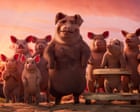
The Guardian’s review judges Andy Serkis’ animated adaptation of *Animal Farm* to be a major misfire, arguing that it strips away the anger, satire and political force of George Orwell’s original allegory. The critic says the film replaces the novel’s bleak warning about Stalinism and failed revolution with a softened, family-friendly story and a conventionally upbeat ending, which matters because it changes the meaning of one of the 20th century’s best-known political fables.
The 94-minute film, written by Nicholas Stoller, reportedly shifts Orwell’s pivotal scene so it arrives about an hour in, then adds a new final act in which Napoleon is overthrown by young animal rebels and the farm burns down. Voice actors include Seth Rogen as Napoleon, Laverne Cox as Snowball and Glenn Close as a newly invented corporate human character, Pilkington. The review also criticises the film’s inexpensive digital look and says its revised ending muddies the original story’s political parallels, including the contrast between Napoleon and Snowball.
In short
- Review says the adaptation softens Orwell’s political bite.
- A new happy-style ending changes the story’s meaning.
- Cast includes Seth Rogen, Laverne Cox and Glenn Close.
Steelman: both sides, in good faith
The strongest fair case each way — we don't pick a winner.
The case for
Filmmakers have creative freedom to adapt classic works for different mediums and audiences, with animation necessarily requiring different storytelling approaches than 1940s political allegory. A family-friendly film can still explore themes of power, resistance and corruption whilst making these ideas accessible to younger viewers, and choosing a hopeful ending where tyranny is actually overcome is a valid artistic choice. Literary works remain vital precisely because each generation reinterprets them—there's nothing inherently wrong with offering an alternative vision of what a story about animals fighting for freedom could mean.
The case against
Animal Farm's entire purpose was to warn against the corruption of revolutionary ideals, with the tragic ending central to this political allegory—Orwell showed how the pigs become indistinguishable from human oppressors, capturing why revolutions so often fail. By changing this ending so the animals triumph instead, the adaptation transforms Orwell's cautionary tragedy into an optimistic narrative, fundamentally altering what the story means and why it matters. This isn't a minor adjustment but a wholesale replacement of the original's artistic and political intention with softened entertainment.
Explained simply
George Orwell's Animal Farm, published in 1945, is a satirical novella that uses a farmyard uprising as an allegory for the Russian Revolution and the rise of Stalinism. The story has become one of the 20th century's most widely read political works, studied in schools and universities as a warning about how revolutionary ideals can be corrupted by authoritarian leaders.
In the novel, farm animals overthrow their human owner and establish their own society based on equality. Two pigs, Napoleon and Snowball, initially lead together but eventually clash for control, with Napoleon consolidating power through violence and propaganda. Their conflict mirrors the real-world power struggle between Stalin and Trotsky following the Russian Revolution.
The story's ending is crucial to its political meaning: the pigs become indistinguishable from the human oppressors they replaced, leaving the reader with a bleak message about failed revolution. Any adaptation of Animal Farm is significant because changes to its ending or tone potentially alter the work's core message about how power corrupts idealistic movements.