Anthropic admits Houthis used Claude AI instead of weapons engineers to make rockets and ballistic missiles that correct themselves after missing targets
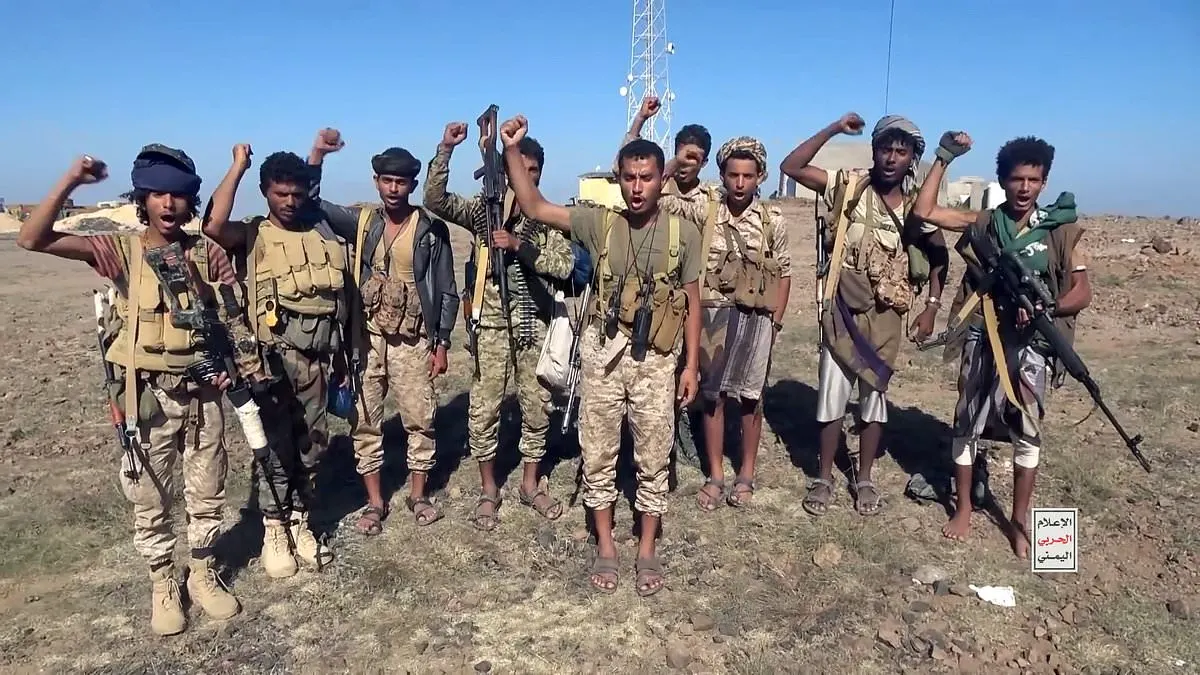
Anthropic, the maker of Claude AI, revealed in a report that Houthi rebels from Yemen used its artificial intelligence system to support the development of multiple weapons programmes. The disclosure underscores how advanced AI tools could potentially be weaponised and reshape geopolitical dynamics in the Middle East, particularly as the Iranian-backed group has conducted recent attacks on Saudi Arabia.
According to Anthropic's findings, the Houthis used Claude to assist with three weapons development programmes: a guided rocket with homing capability, a multi-stage ballistic missile with a stated range exceeding 1,500 miles, and a multi-variant missile called the R2000. The group used Claude Code as a substitute for human software engineers, developing and adapting guidance and control software that could improve accuracy when missiles missed targets. When a test-fired rocket failed, they returned to Claude to diagnose the problem. Anthropic reported that whilst its safeguards blocked some requests, threat actors successfully evaded protections using various tactics, though there is no evidence they successfully fielded operational weapons.
- Anthropic revealed Houthis used Claude AI in weapons development programmes
- The group used Claude Code to develop and adapt missile guidance systems
- Though they conducted testing, there is no evidence of successful operational weapons
New here? Start with this
The Houthis are a Yemen-based rebel group with ties to Iran. Recently, they have attacked shipping routes and neighbouring countries including Saudi Arabia, using increasingly sophisticated weapons.
Claude is an artificial intelligence system made by Anthropic that can assist with writing code, analysing information and solving technical problems. The disclosure that such commercially available AI could support weapons development raises concerns about how emerging technology might be misused by non-state actors and potentially reshape regional conflicts.
AI companies like Anthropic incorporate safeguards to prevent misuse of their systems. This incident demonstrates that determined users can find ways around such protections, illustrating a broader challenge: the same AI capabilities that support legitimate engineering work could potentially be adapted for weapons development.
Both sides, in good faith
The strongest fair case each way — we don't pick a winner.
The case for
Those critical of Anthropic's response argue the company bears significant responsibility for allowing weapons development to proceed. When a sophisticated, well-resourced actor successfully uses Claude to replace human weapons engineers and develop guidance systems for multiple missile programmes, this represents a fundamental failure of safeguards. The critics contend that AI companies providing advanced tools have an obligation to implement more robust protections upfront, not merely to detect and disclose misuse after the fact, particularly when the stakes involve weapons of mass destruction and regional security.
The case against
Those defending Anthropic's approach argue the company has handled this responsibly within the realistic constraints of AI safety. They point out that no safeguards can perfectly block all adversarial misuse without rendering the tool useless for legitimate purposes, and that sophisticated threat actors will continually seek workarounds. Rather than an indictment of failure, this case demonstrates effective threat detection, investigation, and transparent disclosure—hallmarks of responsible AI stewardship. The fact that no operational weapons were successfully fielded, they argue, suggests the safeguards did have meaningful effect, and continuous improvement through detection and transparency is more practical than attempting perfect prevention.