Apple defies memory shortage with new Mac minis
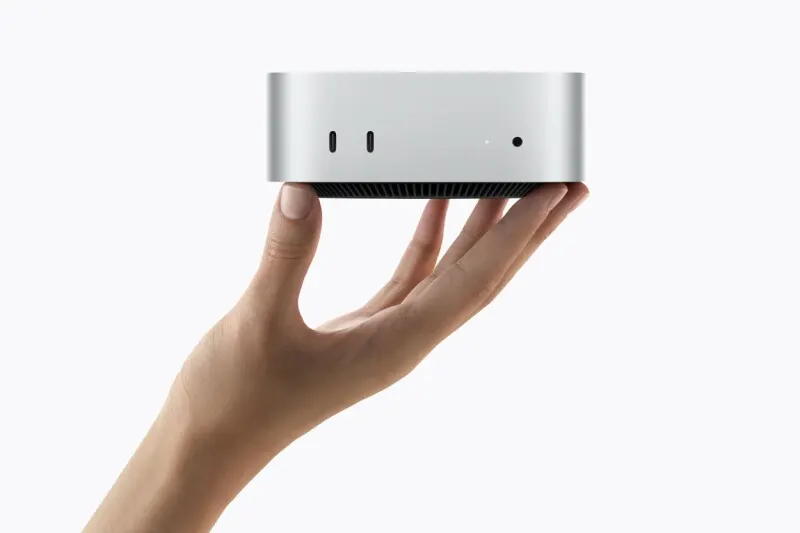
Apple has unveiled refreshed Mac Studio and Mac mini desktops, positioning both as strong performers for local AI inference despite steadily rising memory prices. The update comes as demand for on-device AI has surged, with the Mac mini in particular gaining popularity among AI enthusiasts for running agents and open-weight models thanks to its unified memory architecture, which lets the CPU and GPU share the same fast RAM rather than splitting between system memory and limited GPU VRAM.
The Mac Studio, now Apple's flagship following the Mac Pro's retirement in March, comes with M5 Max ($2,499) or M5 Ultra ($5,499) chips, the latter supporting up to 512GB of unified memory (available from October) and 1.2TB/s of bandwidth, with a maxed-out configuration costing $18,299. The Mac mini, billed as an "always-on agentic device," starts at $899 with the new 2nm M6 chip or $1,699 with the M5 Pro, though stepping up from the base 16GB to 32GB of memory adds $400. Both machines support Thunderbolt 5 for clustering multiple units together, and ship with Wi-Fi 7, Bluetooth 6 and macOS 27; pre-orders are open now for delivery from 22 September 2026.
- Apple refreshes Mac Studio and Mac mini for local AI inference
- Mac Studio M5 Ultra offers up to 512GB unified memory, from $5,499
- Mac mini starts at $899; memory upgrades remain expensive
- Both ship 22 September 2026 with macOS 27
New here? Start with this
Apple’s Mac mini is a small desktop computer, while the Mac Studio is a larger, more powerful model aimed at demanding work. Both use Apple-designed chips and unified memory, which the processor and graphics hardware share. That can help when running AI models directly on a computer, without sending requests to an online service.
Local AI has drawn interest from people who run models and automated software, known as agents, on their own machines. The amount of memory available can limit which models a computer can handle, and memory prices have been rising. Apple’s computers therefore matter to buyers weighing performance, memory capacity and cost for running AI locally.