Technology news and discussion on TalkFuse.
M6 Mac Mini turns Apple’s compact computer into an AI powerhouse
Developed over time first seen 2 months ago
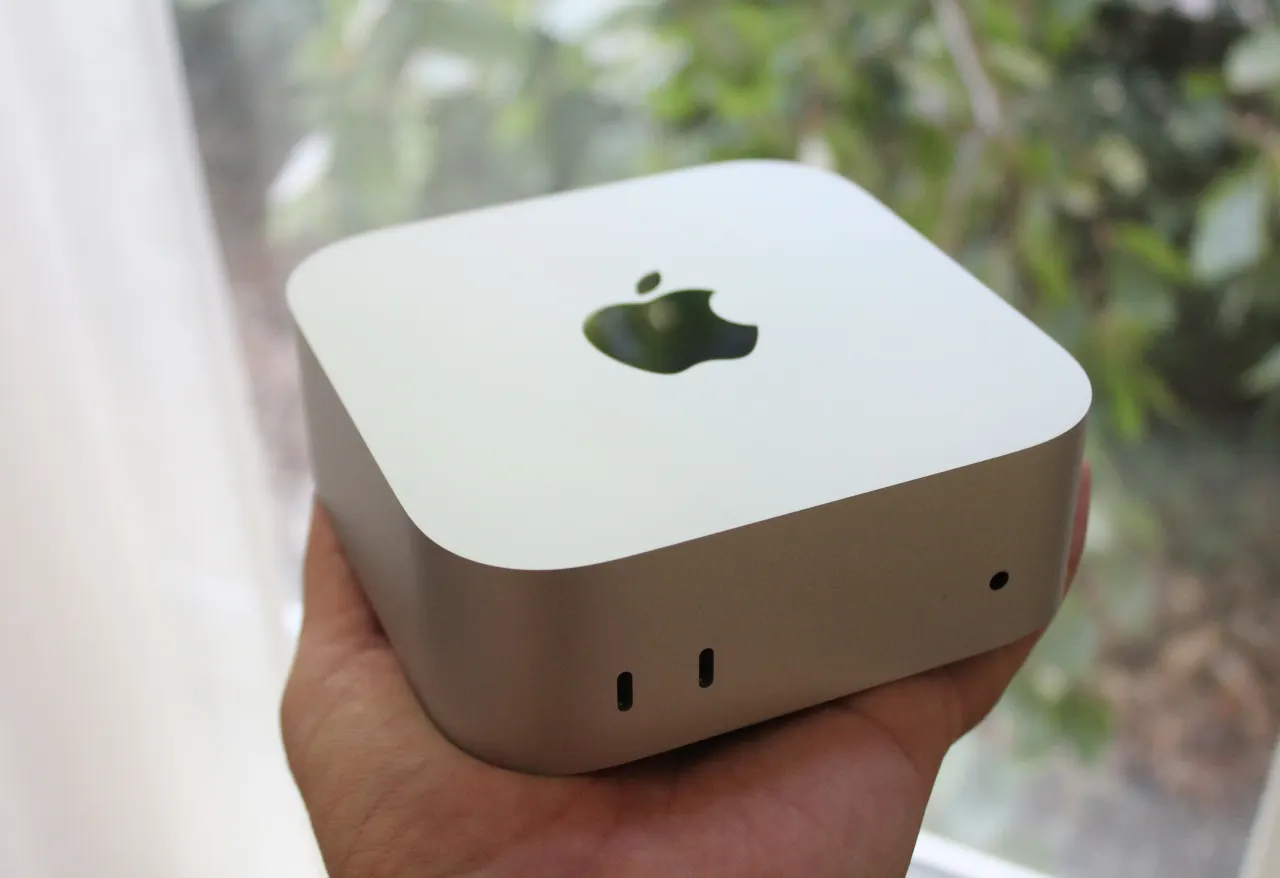
Apple’s Mac Mini has shifted from an overlooked, affordable starter computer to a sought-after machine for running AI models. Demand surged after the emergence of agentic AI frameworks in early 2026, reportedly leaving the computer sold out for much of the year and catching Apple off guard; the M6 version now returns with substantially upgraded performance.
The redesigned Mac Mini retains its compact 5-by-5-inch chassis, built-in power supply and broad display support, but still lacks an SD card slot and places the power button underneath the device. Its M6 chip is Apple’s first built on a 2-nanometre process, with 46 billion transistors and 12 CPU cores—two more than the M4—delivering claimed gains of 21 per cent in single-threaded performance and 36 per cent in multi-threaded performance, although its fan can become audible under heavy workloads.
- Sources
- 2
- Outlets
- 2
- Left · Centre · Right
- 0 · 0 · 0
In short
- Mac Mini demand surged as agentic AI tools became popular.
- The M6 chip brings major performance and efficiency improvements.
- Compact design remains strong, but some ports and usability choices disappoint.
How this story developed
- 2 months ago Despite performance gains that prove incremental against larger Apple systems, the Mac Mini has established itself as a must-have device for artificial intelligence work, capitalising on the exceptional demand that emerged during its year-long stock shortage.
- 2 months ago The M6 Mac Mini's performance improvements—21 per cent faster single-threaded and 36 per cent faster multi-threaded performance than its M4 predecessor—appear less significant when compared against the M5 chips integrated into the MacBook Air and MacBook Pro lines.
- 2 months ago Apple's Mac Mini has undergone an unexpected transformation from an overlooked starter computer to a highly desired platform for artificial intelligence, driven by the emergence of agentic frameworks in early 2026 and causing sustained shortages before the M6-equipped model finally returned to shelves.
Full account
Apple's Mac Mini has undergone a remarkable transformation in status over the past year, shifting from a neglected entry-level machine to an unexpectedly sought-after computing device. Until early 2026, the compact desktop occupied an unassuming position in the company's product portfolio, so marginal to Apple's priorities that it had foregone the typical annual refresh cycle. However, the proliferation of AI-driven software frameworks throughout the first half of 2026 suddenly established the Mac Mini as an appealing platform for running sophisticated machine learning models. Demand surged dramatically, leaving Apple scrambling to meet unexpected orders, with stock depleting rapidly across most retail channels.
The physical design remains fundamentally unchanged from the 2024 M4 iteration, which itself represented the computer's first substantial redesign in nearly fifteen years. The revised enclosure adopts a compact cubic form measuring just five inches square, small enough to fit comfortably in one's hand, yet houses the power supply internally to eliminate bulky external adapters. The port configuration includes two USB-C connections (10 Gbps) and a headphone jack on the front fascia, whilst the rear accommodates three Thunderbolt 4 ports, HDMI 2.1, Ethernet, and the power inlet. The system employs active cooling via a bottom-mounted fan assembly, permitting sustained performance at higher clock speeds compared to passively cooled Apple Silicon devices. Critics continue to lament several absent refinements: no SD card slot for creative professionals, no colour variants, and most notably, the retention of the awkwardly positioned rear-mounted power button.
The M6 silicon architecture represents Apple's inaugural implementation of a two-nanometre manufacturing process, delivering meaningful performance enhancements over its predecessor. The new processor unlocks genuine capability improvements that venture beyond the routine incremental gains of standard annual updates, positioning the device as materially more powerful for demanding computational workloads.
The refresh presents a crucial value proposition inflection point. Whilst the M4 Mac Mini established itself as exceptional value at £599 with 16GB memory and 256GB storage, the new M6 model commands £899 for identical specifications—a considerable fifty per cent price increase that reflects broader semiconductor supply constraints affecting the industry in 2026. Reviewers note this pricing divergence represents a departure from Apple's customary formula of delivering technological advancement at consistent price points, transforming the M6 into a more marginal proposition from a consumer economics perspective, despite its enhanced capabilities.
Where outlets differ
From the full account, which is AI-written from the sources:
SOURCE 1 frames the M6 as a heroic transformation driven by AI adoption and treats it as a remarkable comeback story; SOURCE 2 characterises it as routine Apple incremental update with disappointing value economics
SOURCE 1 emphasises performance improvements and new M6 capabilities; SOURCE 2 focuses heavily on the £300 price increase and compares unfavourably to the M4 value proposition
SOURCE 1 highlights demand surge and stock depletion; SOURCE 2 makes no mention of supply constraints driving demand, instead blaming the price increase on 'unprecedented memory crunch'
SOURCE 1 concentrates on design positives and port specifications; SOURCE 2 provides technical context about active cooling and explains Thunderbolt 5 capabilities on the higher-tier M5 Pro variant
SOURCE 1 adopts an enthusiastic, positive tone about the M6's potential; SOURCE 2 adopts a critical stance questioning whether the upgrade justifies the cost increase
Steelman: both sides, in good faith
The strongest fair case each way — we don't pick a winner.
The case for
The M6 Mac Mini offers unusually strong AI performance in a small, relatively affordable desktop, with more cores, higher transistor density and improved single- and multi-threaded speeds. Its compact design, integrated power supply and support for several displays could make it an attractive local platform for developers, researchers and enthusiasts running AI models without relying entirely on cloud services.
The case against
The description of the Mac Mini as a must-have AI powerhouse may overstate its significance, particularly since its gains over M5-based MacBooks are modest and real-world AI workloads may depend more on memory, software support and specialised accelerators than headline specifications. Persistent omissions such as the lack of an SD card slot and awkward power-button placement, together with the possibility that cloud services or more powerful desktops offer better value, weaken the case that it is essential.
Explained simply
The Mac mini is Apple’s small desktop computer, sold without a built-in screen, keyboard or mouse. It has traditionally been viewed as an affordable entry point to the Mac range, but the growing use of AI software has increased demand for compact computers that can run models locally.
The M6 is Apple’s latest processor for the machine and is built using a smaller 2-nanometre manufacturing process. It adds CPU cores and more transistors, which can improve performance when handling both everyday tasks and demanding workloads such as AI model development.
The computer remains a five-by-five-inch box with its power supply built in and support for several external displays. Its appeal is balanced by familiar limitations, including a less accessible power button and no SD card slot, while the performance improvement over earlier chips may be less noticeable for people comparing it with newer MacBook models.
Coverage · 2 sources
Read the full article at the source →
Originally published by Wired as “Apple Mac Mini (M6) Review: For the AI Curious”.