Apple TV’s Last Seen favours character depth over conventional mystery mechanics
Developed over time first seen 2 months ago
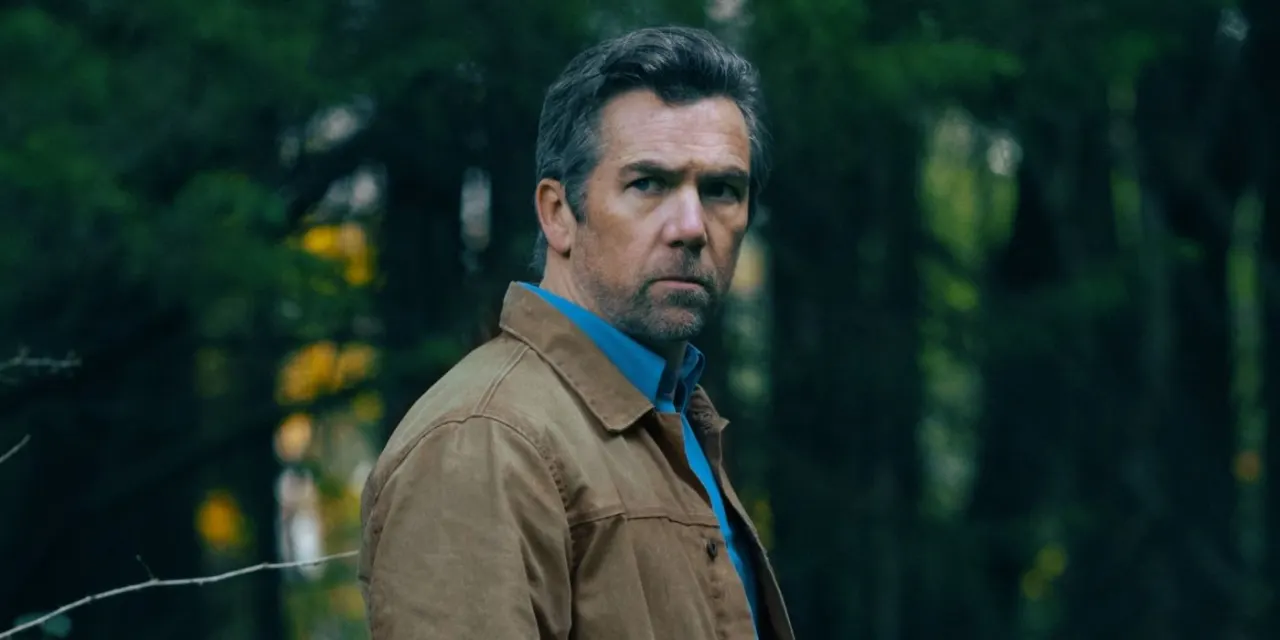
Apple TV's new six-episode drama "Last Seen" prioritises character depth and emotional complexity over the mechanics of a traditional mystery, according to reviews, even as critics flag significant plot holes and logical leaps. The series stars Australian actor Patrick Brammall as Ian Ridley, an alcoholic police dispatcher who becomes convinced his abducted daughter is still alive more than a decade after her disappearance derailed his life. Adapted by Kris Mrksa from Ryan David Jahn's novel "The Dispatcher" and directed by Christian Schwochow, the show has invited comparisons to Harlan Coben-style thrillers despite its unrelated source material, with critics ultimately concluding it succeeds on the strength of its cast rather than its narrative coherence.
The story picks up with Ian more than eleven years after daughter Maggie's kidnapping, which ended his marriage to Deb (Jessica Wren) and cost him his post leading the Criminal Investigative Unit in the fictional Port McKenna. Six months sober and now working as an emergency dispatcher, his fragile stability unravels when human remains surface in nearby woods following a storm, pushing him to abandon both sobriety and proper procedure as he pursues leads involving reclusive farm family Henry (Brendan Cowell), Jenna (Maxine Peake) and their teenage daughter Sarah (Chloe Jean Lourdes). Reviewers noted the show sacrifices some mystery-genre plausibility for character-driven momentum, with Ian's rapid unravelling treated as a psychological study rather than a puzzle to be solved.
- Sources
- 2
- Outlets
- 2
- Left · Centre · Right
- 0 · 0 · 0
In short
- "Last Seen" favours character study over tight mystery plotting
- Patrick Brammall stars as a dispatcher hunting his "dead" daughter
- Critics praise the cast despite acknowledging notable plot holes
How this story developed
- 2 months ago Further reviews consolidated around the same verdict, crediting the series' character-driven approach to the missing-child genre and its propulsive pacing while reiterating that structural weaknesses in the plot keep it from fully realising its thematic ambitions.
- 2 months ago Apple TV launched the six-episode drama "Last Seen," with critics praising Patrick Brammall's lead performance as a grieving alcoholic dispatcher even as they flagged notable plot holes and abrupt shifts in his character's behaviour.
Full account
Apple TV+'s new six-part thriller Last Seen centres on Ian Ridley (Patrick Brammall), a former police detective now working as an emergency dispatcher in the fictional Australian coastal town of Port McKenna. Eleven years after his three-year-old daughter, Maggie, vanished from the family home, Ian's life remains defined by the loss: his marriage to Debbie (Jessica Wren) collapsed, his relationship with their son Dean (Tobias Muhafidin) is strained, and he is a recovering alcoholic trying to hold on to six months of sobriety. The series, adapted by Kris Mrksa and directed by Christian Schwochow, is loosely based on Ryan David Jahn's novel The Dispatcher, relocating the story from East Texas to the Australian coast.
The plot is set in motion when a teenage girl rings the emergency line Ian staffs and tearfully suggests she may be the missing 'Mags' he has spent over a decade searching for. Convinced this could finally be his daughter, Ian begins unofficially reopening leads the original investigation never followed up, putting him at odds with the case's current officer, Detective Senior Sergeant Izzy Pena (Zahra Newman), and worrying his sponsor, Donald Reid (Daniel Henshall). His ex-wife and son remain far more doubtful that the girl could really be Maggie. Running in parallel, and unknown to Ian, is the quiet domestic life of Donald's brother Henry (Brendan Cowell) and his wife Jenna (Maxine Peake), who are raising a teenage daughter, Sarah (Chloe Jean Lourdes), at an isolated farmhouse — a thread that hints at a connection to the central mystery. One account of the series also notes that a storm dislodges human remains that may belong to a young girl, reopening Ian's old wounds just as he had begun to rebuild a steadier life.
Coverage of the show diverges chiefly on how well its mystery plotting holds up. One review frames Last Seen as deliberately moving away from a conventional whodunit, arguing that it favours a 'whydunit' approach that reveals its major turns as the story unfolds rather than saving them purely for a late shock, and that its real interest lies in tracing how one act reverberates through two families and how hidden secrets inevitably resurface. A second review is considerably more mixed, likening the series to the twisty missing-persons dramas associated with Harlan Coben and complaining of noticeable plot holes, contrivances and moments that strain credulity — while crediting Brammall and the wider cast with carrying the material regardless. That review also pushes back on Apple's own marketing, suggesting the official premise centres on an event that occurs a third of the way through the series and is, by the time it happens, no longer genuinely in doubt.
Both pieces situate Last Seen within a busier 2026 for Brammall, though they draw on different parts of his résumé to make the point. One highlights his turn opposite Anne Hathaway in The Devil Wears Prada 2 and the fact that Last Seen arrives the same month as the final season of Colin from Accounts, the Paramount+ romantic comedy he co-created and co-writes with his real-life partner and co-star Harriet Dyer. The other instead references his role in the drama Evil and his voice work as Uncle Rad in the children's series Bluey, and goes further by explicitly recommending viewers watch Colin from Accounts — in which Brammall and Dyer play a couple brought together by a disabled dog — ahead of Last Seen, casting the thriller as the lesser of his two current showcases despite praising his performance within it.
Where outlets differ
From the full account, which is AI-written from the sources:
One outlet frames Last Seen as a deliberate, largely successful subversion of the missing-child mystery genre (a 'whydunit' focused on emotional fallout), while the other is more critical, describing notable plot holes and implausible turns that are only offset by strong performances.
The second outlet explicitly ranks Colin from Accounts above Last Seen as the better of Brammall's two concurrent shows and questions whether Apple's promotional framing of Last Seen as a 'mystery' is accurate, since the pivotal event it markets around occurs early and isn't really left in doubt; the first outlet does not make this comparison or critique.
The two accounts cite different parts of Brammall's career to establish context — one points to The Devil Wears Prada 2, the other to Evil and his voice role as Uncle Rad in Bluey.
Only the second account mentions the detail of human remains surfacing after a storm as a specific plot trigger; the first account centres its plot summary on the emergency phone call from the teenage girl.
Steelman: both sides, in good faith
The strongest fair case each way — we don't pick a winner.
The case for
Character-driven drama that prioritises psychological depth and emotional authenticity over conventional mystery mechanics represents a legitimate and often rewarding creative choice, particularly with strong performances to carry the narrative. Audiences frequently find genuine human complexity—grief, addiction, obsession—more compelling and meaningful than formulaic puzzle-solving. By treating Ian's deterioration as a serious psychological study rather than mere plot mechanics, the series engages with deeper emotional truths that may ultimately prove more memorable to viewers than a perfectly constructed mystery.
The case against
A drama marketed as a mystery thriller has a fundamental obligation to audiences to maintain narrative coherence and logical consistency. Plot holes and logical leaps are not minor trade-offs; they actively undermine suspension of disbelief and contradict the genre's core contract. Whilst strong character work has value, relying on cast quality to compensate for structural flaws represents a failure of craft. Audiences deserve mysteries that function properly as mysteries, not character pieces that happen to be dressed in mystery trappings.
Explained simply
Last Seen is a new six-part drama on Apple TV, built around a father's search for his daughter years after she was abducted. It centres on Ian Ridley, played by Australian actor Patrick Brammall, a former police detective who lost his job and marriage after the case and now works as an emergency dispatcher while struggling with alcoholism.
The show is based on Ryan David Jahn's novel "The Dispatcher" and adapted for television by Kris Mrksa, with Christian Schwochow directing. It is set in the fictional town of Port McKenna and also features Brendan Cowell and Maxine Peake in supporting roles as isolated rural characters drawn into Ian's renewed investigation.
The programme matters within the crowded field of mystery thrillers because it takes a different approach, focusing on its central character's emotional state and psychology rather than tightly plotted detective work. This has shaped how critics have received it, with reviewers weighing strong performances against a storyline they say does not always hold together logically.