Culture news and discussion on TalkFuse.
Archaeologists unearth secret church tied to Council of Nicaea, Christianity’s defining moment
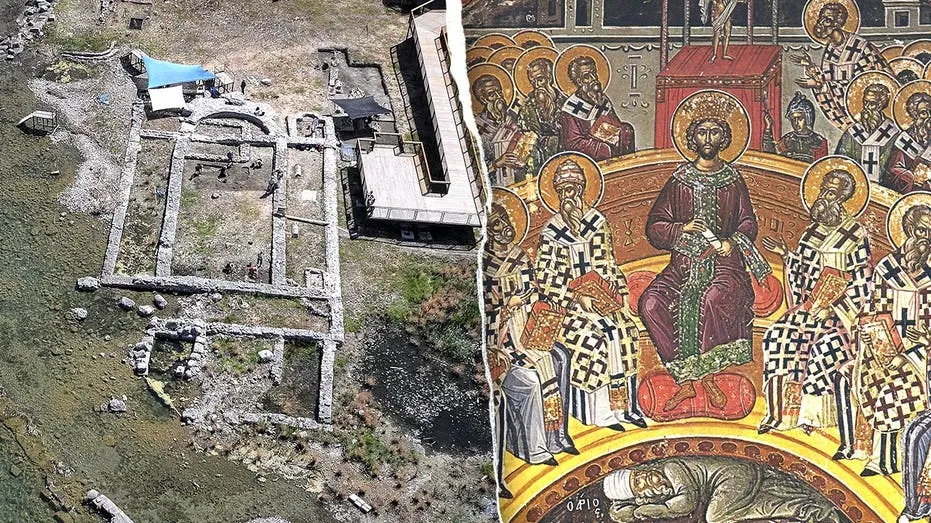
Archaeologists in Turkey say they may have uncovered the remains of a church linked to the First Council of Nicaea, the landmark 4th-century gathering that helped shape the doctrinal foundations of Christianity. The find, made in the region of ancient Nicaea (modern-day İznik), is being hailed as a significant discovery for both religious history and biblical archaeology, offering a tangible connection to one of the faith's most consequential events.
The Council of Nicaea was convened in 325 AD under the Roman Emperor Constantine and produced the Nicene Creed, a foundational statement of Christian belief still recited today. Researchers believe the newly identified structure may have hosted or been closely connected to the historic gathering, though further excavation and analysis will be needed to confirm the site's exact role. The discovery adds to a string of recent archaeological finds in Turkey and the wider region shedding new light on early Christian history.
In short
- Turkish dig may have found a church tied to the Council of Nicaea
- The 325 AD council produced Christianity's Nicene Creed
- Further excavation needed to confirm the site's exact role
Explained simply
Nicaea, now called İznik, was an important city in the Roman Empire. In 325 AD, Emperor Constantine brought Christian leaders there for a meeting known as the First Council of Nicaea.
The council addressed disagreements over Christian belief and produced the Nicene Creed, a statement of faith still used by many churches. Its decisions helped shape Christian teaching, so the meeting remains significant to religious history.
Archaeologists study the remains of early Christian buildings to learn how the faith developed and where important events took place. A building’s connection to the council would need to be established through further excavation and research.