World news and discussion on TalkFuse.
Archaeology breakthrough as mysterious ‘sand body’ unearthed at Anglo-Saxon burial site
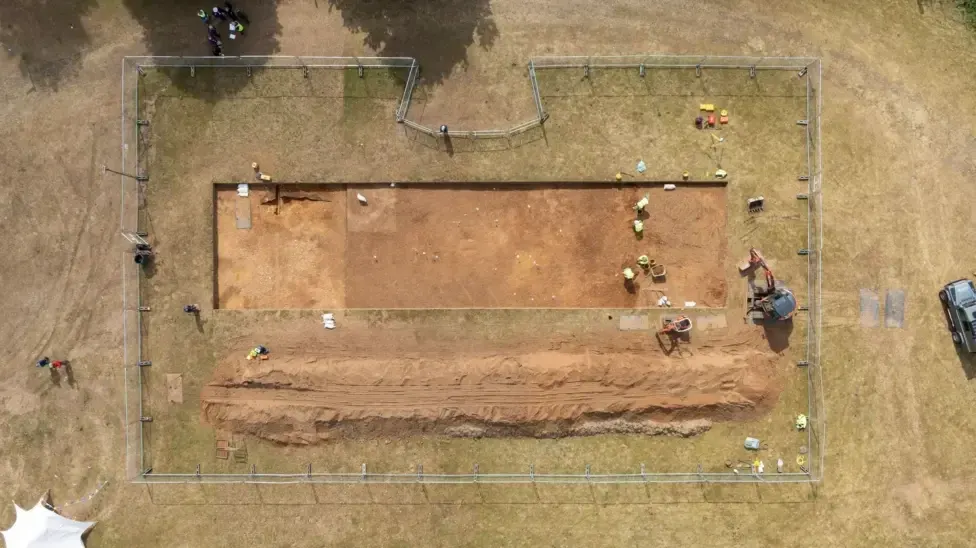
A month-long excavation at Sutton Hoo has uncovered a “sand body”, an imprint left in the earth by a decomposed corpse, alongside an Anglo-Saxon grave that may conceal an earlier burial. The discoveries shift attention beyond the site’s famous royal burials to the cemetery and lives of ordinary people in early medieval East Anglia.
The Time Team dig took place in Garden Field in 2025, near Woodbridge, Suffolk. Finds included beads, tweezers, a knife and a brooch, while archaeologists also investigated the Bromeswell Bucket, a rare Byzantine artefact whose missing fragments were recovered in 2024. The results raise questions about the cemetery’s age, scale and burial practices; a four-part documentary is being released on YouTube during November.
In short
- A new “sand body” was found at Sutton Hoo.
- A grave may sit above an earlier interment.
- The dig explored Garden Field and the Bromeswell Bucket.
Explained simply
Sutton Hoo is an Anglo-Saxon burial site near Woodbridge in Suffolk, best known for richly furnished graves, including a ship burial dating to the early seventh century. It offers evidence about the people, beliefs and connections of the kingdom of East Anglia in the early medieval period.
The site was a cemetery, and its graves can reveal differences in how people were buried and what objects they used or valued. Beads, knives and brooches found in burials help archaeologists piece together daily life as well as status and trade.
The Bromeswell Bucket, found at Sutton Hoo, is a rare vessel made in the Byzantine world, showing that objects travelled long distances. Studying less prominent graves alongside famous ones can help establish how large and old the cemetery was, and how burial customs changed over time.