Arctic power play gives top US adversary new opening with Russia as US stakes grow
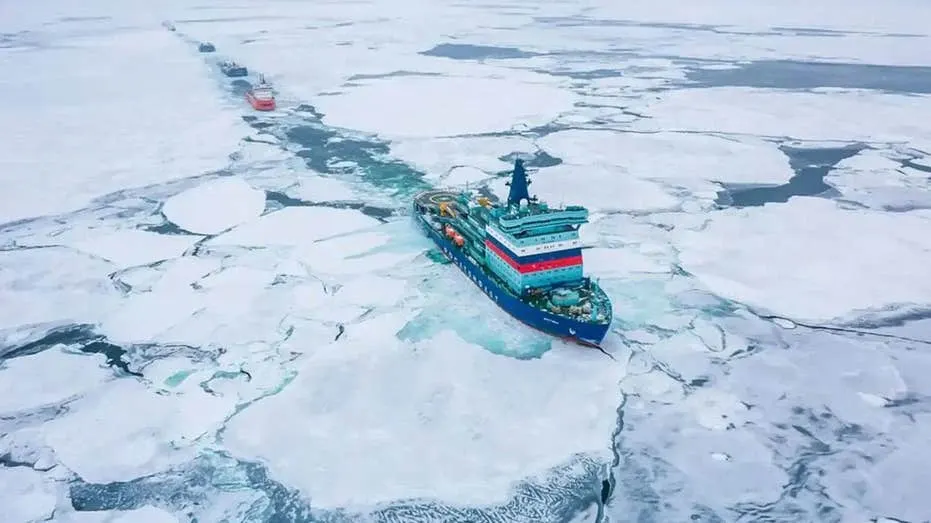
China has launched a regular seasonal container shipping service to Europe via Russia's Arctic north coast, in a move analysts say signals a deepening strategic and commercial partnership between Beijing and Moscow in a region Washington increasingly regards as critical to US security. Although the route remains modest in scale for now, China analyst Gordon Chang told Fox News Digital that its significance lies less in current cargo volumes and more in what it reveals about China's long-term ambitions to establish a foothold in the Arctic, an area where US strategic presence has lagged.
The new service is limited, with just over eight voyages planned for this season, but Chang argues it forms part of a broader Chinese push into the Arctic driven by several strategic motives, including access to shorter trade routes and closer ties with Russia amid Moscow's growing economic isolation. The development adds to concerns in Washington that China is exploiting the Arctic opening, partly enabled by melting sea ice and Russia's willingness to deepen ties with Beijing, to expand its global influence, with analysts warning the US needs to bolster its own regional presence in response.
In short
- China launches seasonal Arctic container shipping route to Europe via Russia
- Analyst warns it reflects deepening China-Russia strategic cooperation in Arctic
- Experts say US needs stronger Arctic presence to counter the shift
Steelman: both sides, in good faith
The strongest fair case each way — we don't pick a winner.
The case for
The deepening China-Russia partnership in the Arctic represents a significant geopolitical realignment that warrants serious Western attention. As sea ice melts and new shipping routes become viable, China is establishing a foothold in a strategically critical region where the US presence has historically lagged, whilst Russia—increasingly economically isolated—appears willing to facilitate this expansion. This commercial partnership signals Beijing's long-term ambitions to expand its influence in regions previously peripheral to great power competition.
The case against
This development amounts to modest commercial activity that naturally follows from climate-induced Arctic ice melt and should not be mistaken for a major strategic threat. Russian and Chinese firms pursuing legitimate trade opportunities represent ordinary international commerce rather than inherently hostile geopolitical manoeuvring; the current scale of operations—just over eight annual voyages—hardly constitutes an overwhelming strategic presence. Viewing every expansion of non-Western economic activity through a security lens risks converting normal commercial development into unnecessary tensions.
Explained simply
The Arctic is the area around the North Pole, including northern parts of Russia and other countries. As sea ice melts, some ships can travel along Russia’s northern coast between Asia and Europe, a route that may be shorter than traditional sea lanes, though conditions and access vary.
China is a major trading nation seeking more routes for its goods, while Russia controls much of the northern coastline and has been building closer economic ties with Beijing. The two countries’ interests overlap in shipping and regional influence, even as the new service remains small.
The Arctic matters to the United States because it is important for security and access between continents. China’s growing activity there, alongside Russia, has drawn attention in Washington to how the region is changing and to the US role in it.
Americas Asia Entertainment Europe TV World